.svg)


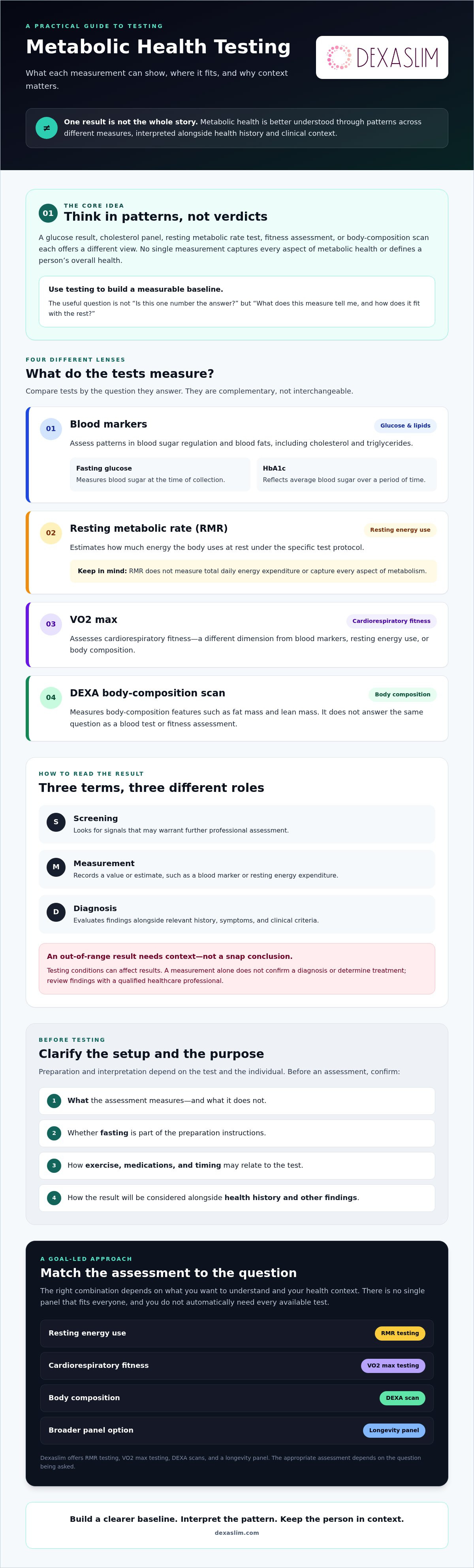
Metabolic health testing is most useful when you understand what each measurement can tell you, and what it cannot. A glucose result, cholesterol panel, or body-composition scan can reveal useful information, but none tells the full story alone. If online advice has left you unsure which markers matter or which “ideal” range to trust, you’re not alone. Look at how different measures fit together rather than treating one result as a verdict.
This guide explains the main categories of testing and what each can show, from blood markers such as glucose and lipids to resting metabolic rate, VO2 max, and DEXA body-composition measurements. You’ll learn how these results may complement one another, why a single biomarker can’t define your overall metabolic health, and what context a qualified clinician needs to interpret your results. Use the information to build a clearer baseline, distinguish metabolism tests from broader health screening, and prepare focused questions about appropriate next steps. The goal isn’t to chase a perfect number. It’s to understand the pattern your measurements reveal.
Key Takeaways
• Metabolic health reflects patterns across multiple measures, not body weight or one lab result alone.
• Blood markers, resting metabolic rate, VO2 max, and DEXA scans answer different questions and aren’t interchangeable.
• Use metabolic health testing to build a measurable baseline, then interpret results alongside your health history and clinical context.
• Before testing, confirm what the assessment measures and ask about fasting, exercise, medications, and timing.
• Match the assessment to your goal: Dexaslim offers RMR testing, VO2 max testing, DEXA scans, and a longevity panel.
What Is Metabolic Health Testing, and What Can It Reveal?
Metabolic health testing measures selected indicators related to how the body regulates energy and performs essential metabolic functions. Depending on the test, it can provide information about glucose regulation, blood lipids, resting energy expenditure, or body composition. These are distinct areas, not interchangeable measures. A blood test, for example, doesn’t reveal the same information as a resting metabolic rate test or a body-composition scan.
Metabolic health is broader than body weight or any single laboratory value. Measurements need to be considered together and in context, including relevant health history and the reason for testing. Some clinical discussions focus on Metabolic syndrome, a cluster of risk factors involving measures such as blood sugar, blood pressure, and blood lipids. But no one result or universal “metabolic health score” captures every aspect of a person’s health.
A metabolic health assessment brings together selected measurements; a single-test result is only one data point. Testing can establish a baseline or flag a finding for follow-up. It doesn’t, by itself, confirm a diagnosis or determine treatment. Those decisions require appropriate clinical assessment.
Which aspects of metabolic health can testing assess?
Different tests answer different questions. Glucose-related blood markers provide information about blood sugar regulation, while a lipid panel measures fats in the blood, such as cholesterol and triglycerides. Resting metabolic rate testing estimates energy used at rest. Body-composition testing assesses features such as fat and lean mass. Together, these measures can add perspective, but none replaces the others.
The right combination depends on the purpose of testing and the individual’s health context. You don’t automatically need every available test, and there isn’t one panel that fits everyone. Before choosing an assessment, clarify what you want to learn and whether the test measures it directly.
Screening, measurement, and diagnosis are not the same
Screening looks for signals that may warrant further professional assessment. Measurement records a value or estimate, such as a blood marker or resting energy expenditure. Diagnosis involves evaluating findings alongside relevant history, symptoms, and clinical criteria.
An out-of-range result deserves context, not a snap conclusion. Results can be affected by testing conditions, and the significance of a finding depends on the person and the test. Review results with a qualified healthcare professional. Ask what the measurement can establish, what it can’t, and whether further assessment is appropriate. That’s how metabolic health testing can inform decisions without turning one number into a verdict.
What Do Metabolic Health Tests Measure?
Different tests measure different parts of physiology. Compare them by the question they answer, not as interchangeable scores. Blood tests assess circulating markers, resting metabolic rate (RMR) testing estimates energy expenditure at rest, VO2 max testing assesses cardiorespiratory fitness, and DEXA measures body composition.
Blood tests help assess glucose and lipid patterns; RMR estimates resting energy use; VO2 max evaluates cardiorespiratory fitness; DEXA measures body composition. Each result offers a specific view, and none alone provides a complete measure of metabolic function. For a broader clinical frame, the National Heart, Lung, and Blood Institute describes metabolic syndrome as a group of conditions that raise health risks.
Blood biomarkers: glucose regulation and lipids
Blood testing may include fasting glucose, which measures blood sugar at the time of collection, and HbA1c, which reflects average blood sugar over a period of time. A lipid panel reports blood fats, typically including cholesterol and triglycerides. These markers can help a clinician assess patterns relevant to metabolic health, but no single lipid result provides a complete picture.
Panel contents and interpretation can vary. A result’s significance depends on factors such as the reason for testing, personal health history, and other findings. Confirm what a panel includes and review results with a qualified healthcare professional rather than applying a universal range without context.
RMR, VO2 Max, and body composition measurements
RMR testing estimates how much energy the body uses at rest under the specific test protocol. It can inform an estimate of resting energy needs, but it doesn’t measure total daily energy expenditure or capture every aspect of metabolism. Follow the provider’s preparation instructions so the result can be interpreted in light of the conditions under which it was collected.
VO2 max assesses the body’s capacity to use oxygen during exercise. It provides information about cardiorespiratory fitness, not blood glucose control. DEXA scans provide body-composition measurements, such as estimates of fat and lean mass. They don’t measure circulating biomarkers. Keep these categories distinct: a result in one area doesn’t settle questions in another.
Dexaslim offers RMR testing, VO2 Max Performance Testing, DEXA scans, and a longevity panel. These are separate assessment options, not substitutes for one another or for clinical diagnosis. If you’re comparing measurements, review Dexaslim’s metabolic testing options and confirm what each assessment measures, its protocol, and how results are reviewed.
How Do Different Metabolic Health Tests Fit Together?
Metabolic health testing works best as a set of targeted measurements, not a contest to find one “best” test. Start with the question you want answered. A clinician may consider blood tests for selected biomarkers, RMR testing for resting energy expenditure, VO2 Max testing for cardiorespiratory fitness, or DEXA for body composition. Each provides a different piece of information.
| Test type | What it measures | What it cannot establish |
|---|---|---|
| Blood biomarkers | Selected markers, such as glucose-related measures and blood lipids. A Comprehensive Metabolic Panel (CMP) measures substances in the blood that can provide information about several aspects of health. | A single panel cannot summarize fitness, resting energy use, or body composition, or independently establish a diagnosis. |
| RMR test | An estimate of energy used at rest under the test protocol. | Total daily energy needs, blood glucose control, or overall metabolic health. |
| VO2 Max test | Cardiorespiratory fitness, based on the body’s capacity to use oxygen during exercise. | Blood sugar or lipid status, or body composition. |
| DEXA scan | Body-composition measures, including estimates of fat and lean mass. | Blood biomarkers, resting energy expenditure, or cardiorespiratory fitness. |
Choose tests based on the question, not the trend
For questions about glucose or lipids, discuss appropriate blood testing and screening with a qualified healthcare professional. For resting energy expenditure, RMR testing is the relevant measurement. Choose VO2 Max testing to assess cardiorespiratory fitness, or DEXA when the question concerns body composition. A test is useful when it matches the question, not simply because it’s popular or available.
Why one result cannot summarize metabolic health
A normal result in one domain doesn’t rule out concerns in another. A favorable blood marker doesn’t reveal resting energy use; an RMR estimate doesn’t show lipid levels. Each result reflects a specific measurement, method, and moment in time. Protocol, current health status, and measurement variability can also affect how findings should be understood.
A combined assessment can add useful perspective when it answers a specific clinical or personal question, but more testing isn’t automatically better for everyone. Consider the purpose, limitations, and context of each measure with a qualified clinician. No test is universally superior. The right one is the one that fits the question being asked.
How Should You Prepare for Testing and Understand Your Results?
Preparation depends on the test. Don’t assume fasting, exercise restrictions, or medication changes apply to every assessment. Use this sequence to get clear instructions and results that can be interpreted in context.
1. Clarify the question.
Decide what you want to learn, such as resting energy expenditure or a blood-marker pattern. Share that goal with the test provider or clinician.
2. Confirm the test and its protocol.
Ask exactly what it measures, how it’s performed, and whether you need to fast or follow any other preparation steps.
3. Follow provider instructions.
Ask whether recent exercise, illness, medications, or the time of day could affect the measurement. Don’t stop or change prescribed medication unless the clinician who manages it advises you to.
Questions to ask before booking a metabolic test
Get the practical details first. Ask what the test measures, whether preparation is required, how results will be reported, and who can explain them. Mention medications, recent illness, and recent exercise, then ask whether any could influence the test. Instructions may differ between a blood draw, an RMR assessment, a fitness test, and a DEXA scan, so confirm them for the specific assessment you’re booking.
How to use results without overinterpreting them
Check the measurement method, units, reference information, and any stated limitations. A result without that context can be easy to misread. Reference ranges may help orient the discussion, but they aren’t a complete assessment of your health or a personalized target on their own.
Look at findings alongside the reason for testing, relevant health history, and other results. If a measurement is unexpected, ask the provider or a qualified clinician what it may mean and whether follow-up is appropriate. Avoid diagnosing yourself or making significant changes to diet, medication, or treatment based on one number.
Use results as a starting point for a focused professional conversation. If you’re considering an RMR assessment, explore Dexaslim’s resting metabolic rate testing and confirm the current protocol and result-review details before booking.
Where Can Dexaslim's Metabolic Testing Fit in a Broader Assessment?
Choose an assessment based on the question you want to answer. Dexaslim offers a Resting Metabolic Rate (RMR) Test, VO2 Max Performance Testing, DEXA scans, and a Longevity Panel. These options measure different things. They can establish useful baselines, but they aren’t interchangeable, and none should be treated as a substitute for clinical diagnosis.
Match an assessment to your goal
If your question is how much energy your body uses at rest, an RMR assessment estimates resting energy expenditure under its testing protocol. For a closer look at what this measurement can and cannot tell you, read the Resting Metabolic Rate Test guide.
For questions about aerobic capacity, VO2 Max testing measures cardiorespiratory fitness. It doesn’t measure blood glucose or diagnose a metabolic condition. If you want information about body composition, DEXA scans assess features such as fat and lean mass. That’s distinct from blood biomarker testing, which measures selected substances in a blood sample. Explore the DEXA body composition scan guide for more detail on that assessment.
Dexaslim also offers a Longevity Panel. Confirm its biomarkers with the provider before testing so you know what the panel measures and whether it fits your goal. A panel name alone doesn’t tell you which results it includes or how those results will be interpreted.
Take a clear, low-pressure next step
Start with one practical question: What do I want this measurement to clarify? Then confirm the test’s contents, preparation instructions, and result-reporting process directly with the provider. Ask who can explain the results and whether interpretation or follow-up is available. These details matter because protocols and support can vary by assessment.
Use metabolic health testing to build a more informed baseline, not to collect numbers without a plan. You may need one assessment, several, or none at this time. The right choice depends on your health context and the decision you’re trying to make. If Dexaslim’s assessment types align with your question, compare the available tests and confirm current details before booking.
Turn Your Results Into a Clear Next Step
Metabolic health testing is most useful when each result is matched to the question it can answer. Blood biomarkers, resting metabolic rate, VO2 Max, and DEXA scans measure different aspects of health, so one result can’t represent the whole picture. Interpret findings in context and discuss unexpected results with a qualified clinician before making major changes.
Build from a clear baseline. Dexaslim offers RMR and VO2 Max testing, DEXA body-composition scans, and longevity panels. The right assessment depends on what you want to measure. Confirm test contents, preparation requirements, and result-review details with the provider.
Ready to identify the assessment that fits your goals? Explore Dexaslim’s testing options and confirm which assessment matches the question you want answered.
Frequently Asked Questions
What is metabolic health testing?
Metabolic health testing measures selected indicators related to how the body regulates energy and performs metabolic functions. Depending on the question, it may include blood markers such as glucose and lipids, a resting metabolic rate assessment, fitness testing, or body-composition measurement. These tests provide different kinds of information. Consider results alongside relevant health history and clinical context, rather than treating one number as a complete verdict.
What tests are used to assess metabolic health?
Tests vary with the health question and may include fasting glucose, HbA1c, or a lipid panel. Clinicians may also consider measures such as blood pressure and waist circumference when assessing metabolic risk. RMR testing estimates energy use at rest, VO2 Max testing assesses cardiorespiratory fitness, and DEXA scans measure body composition. These methods aren’t interchangeable, and not everyone needs every test. A qualified clinician can help select appropriate assessments.
Can metabolic health testing diagnose diabetes or another condition?
A test can provide evidence that may contribute to a diagnosis, but one measurement shouldn’t be interpreted in isolation. Diagnosis depends on the specific test, relevant clinical criteria, and personal context. If a result is abnormal or unexpected, discuss it with a qualified healthcare professional, who can determine whether repeat testing or further assessment is appropriate. Don’t self-diagnose or change medication based only on a screening result.
Is an RMR test the same as metabolic health testing?
No. An RMR test estimates the energy your body uses at rest under the test protocol. Metabolic health testing is a broader term for selected assessments that may examine blood markers, resting energy expenditure, fitness, or body composition. RMR testing can help address a question about resting energy needs, but it doesn’t measure blood glucose, lipids, or total daily energy expenditure. Choose the assessment that matches the question you want answered.
How should I prepare for metabolic health testing?
Preparation depends on the test, so confirm instructions with the provider before your appointment. Ask whether you need to fast, adjust exercise, or consider the timing of the test. Tell the provider about medications and any recent illness that could affect the measurement. Don’t stop or change prescribed medication unless the clinician managing it advises you to. Following test-specific instructions helps make results more useful to review.
How often should metabolic health be tested?
There’s no single testing schedule that suits everyone. Timing depends on the purpose of the test, personal health history, previous results, and a clinician’s recommendations. Some measurements may be repeated to assess change, while others may not need frequent retesting. Before scheduling another assessment, ask what question it will answer and whether repeating the same test under comparable conditions would provide useful information for your care or tracking goals.
Can body composition testing show whether my metabolism is healthy?
No. Body-composition testing, including DEXA, provides information about body composition, such as estimates of fat and lean mass. It doesn’t measure blood glucose, lipid levels, or resting energy expenditure, and it can’t establish overall metabolic health by itself. Use the result for the question it addresses, then discuss whether other measurements are relevant with a qualified clinician. Body composition is one part of a broader assessment, not a standalone metabolic verdict.