.svg)

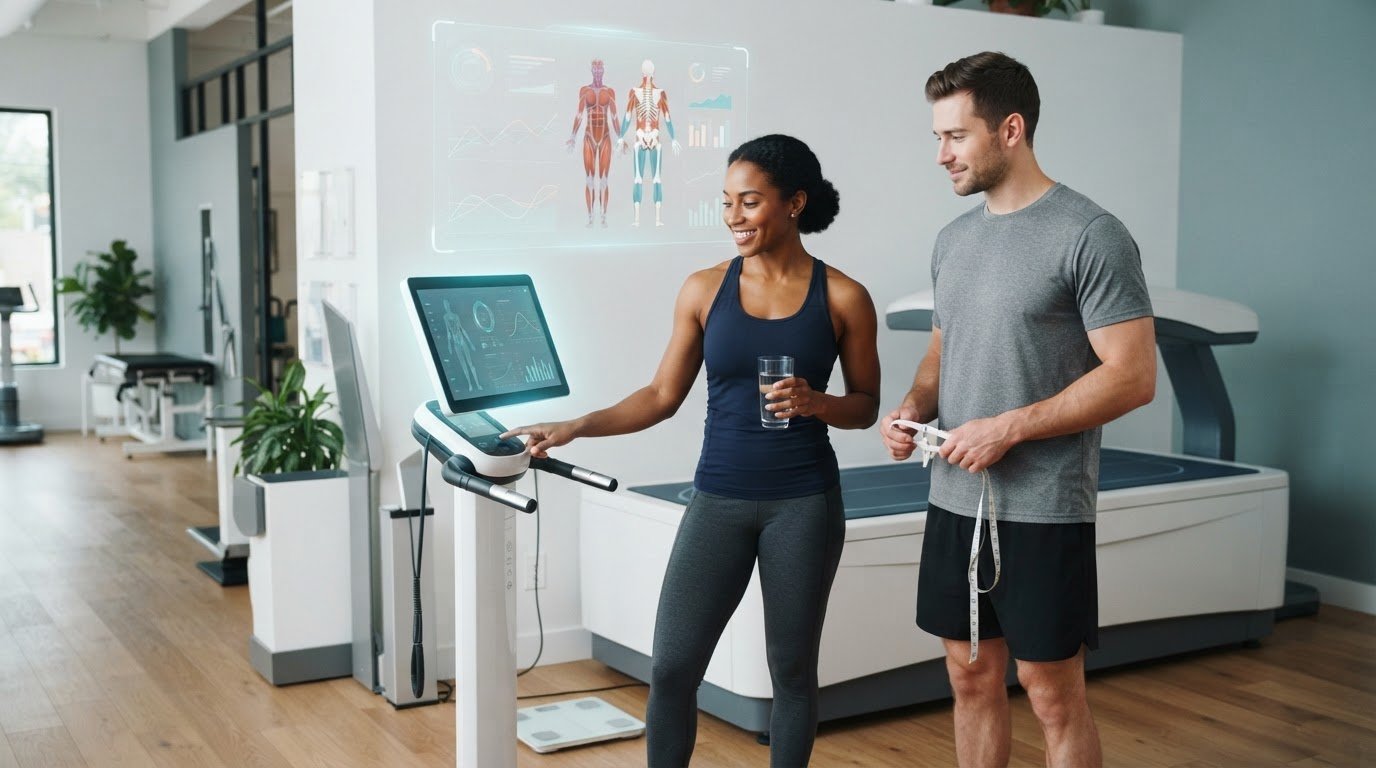
The scale can stay the same while your body composition changes, or jump after a shift in hydration. That’s why lean muscle mass measurement takes more than watching body weight. The right method can reveal useful trends, but no single reading tells the whole story.
If device results seem inconsistent, it’s reasonable to question them. Smart scales can be affected by hydration, and lean body mass isn’t the same as muscle mass: it includes non-fat tissue beyond muscle. DEXA provides regional estimates of fat, lean tissue, and bone, making it a useful baseline when weight alone falls short. It estimates lean tissue; it doesn’t directly measure muscle.
This guide explains what common measurements represent, how to choose a method that fits your goal, and how to standardize readings so comparisons are meaningful. You’ll also learn to distinguish lasting change from normal fluctuation. Measure consistently, compare trends over time, and use the data to guide your next step rather than react to one number.
Key Takeaways
• Lean body mass includes more than skeletal muscle, so interpret each metric according to what the method actually estimates.
• Compare DEXA, bioelectrical impedance, circumference or skinfold measurements, and formula estimates to find an approach that fits your tracking goal.
• Make lean muscle mass measurement more useful by keeping the method, device, settings, and testing conditions consistent.
• Prioritize repeated readings and the direction of change over a single result that may reflect normal fluctuation.
• Build a tracking plan around one measurable goal, a clear baseline, and context from training, nutrition, recovery, and body weight.
What Lean Muscle Mass Measurement Actually Measures, and What It Does Not
Lean body mass is the portion of total body weight that is not classified as fat; it includes skeletal muscle, organs, bones, body water, and other non-fat tissues. It is not a direct synonym for skeletal muscle. A lean-mass result describes a broader body compartment, not a precise measurement of muscle tissue alone.
Everyday phrases like “lean muscle” can blur the distinction. Measurement methods also use terms differently, so read the exact label on a result instead of assuming every device reports the same tissue. This overview of lean body mass introduces related definitions and measurement approaches.
For a visual overview of how lean body mass is estimated, watch this video:
Lean body mass, fat-free mass, and skeletal muscle: what is the difference?
Lean body mass generally means body weight minus fat mass. Fat-free mass refers to everything classified as non-fat; in stricter technical definitions, lean body mass may include essential lipids that fat-free mass excludes. In practice, reports and methods may use these terms differently. Skeletal muscle is the muscle attached to bones that supports movement. It’s usually the tissue people mean when they talk about building muscle.
Consider two people at the same body weight. One may have more fat mass and less lean tissue; the other may have less fat mass and more lean tissue. A body-composition method estimates compartments, but it doesn’t necessarily isolate every tissue or directly count skeletal muscle. Check what the specific result represents before treating it as a muscle measurement.
Why body weight alone cannot measure muscle change
The scale reports total mass, not its composition. If body weight stays stable while fat mass decreases and lean tissue increases, the number may not change. A weight increase doesn’t prove muscle gain, and a decrease doesn’t prove muscle loss.
Water and glycogen add another layer. Glycogen stored in muscle is associated with water, so changes in carbohydrate intake, hydration, or recent training can shift body weight without an equivalent change in muscle tissue. A single reading can’t separate these effects. Use lean muscle mass measurement to assess a defined estimate, then interpret it in context rather than treating scale movement as proof.
How to Choose a Lean Muscle Mass Measurement Method
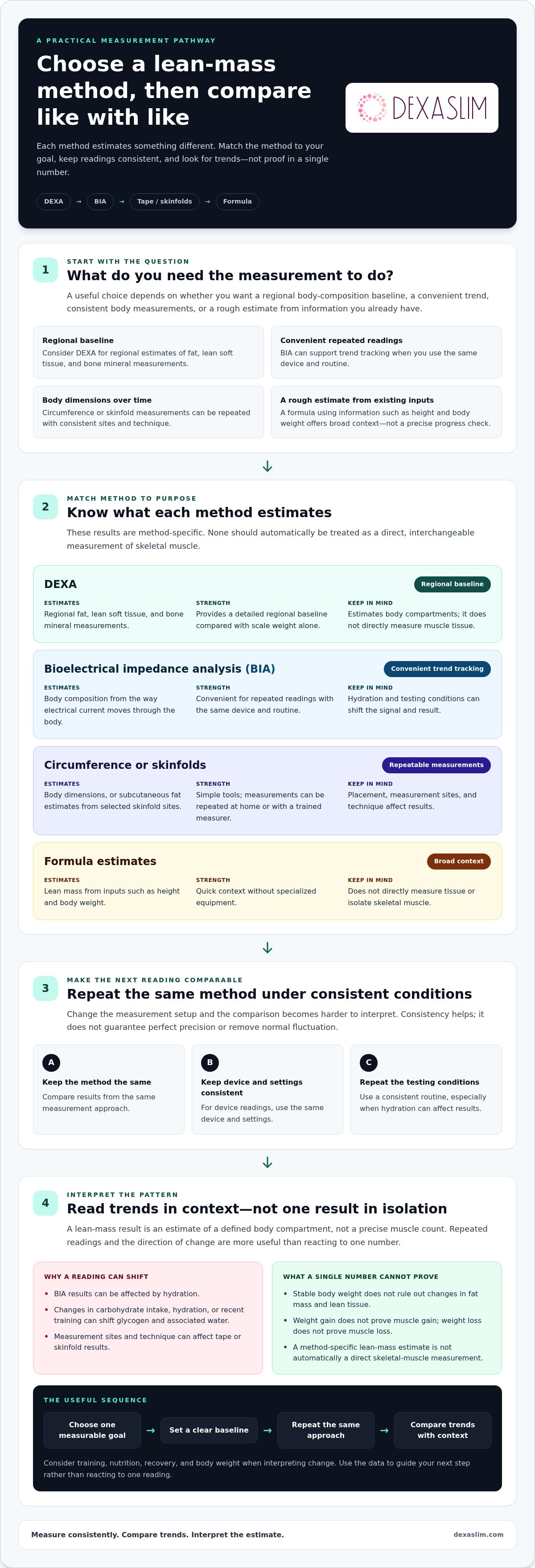
The best method depends on the question you need answered. Do you want a regional body-composition baseline, a convenient way to monitor a trend, or a rough estimate from information you already have? Each approach measures or estimates different things. Treat the result as method-specific, not as a direct, interchangeable reading of skeletal muscle.
What DEXA, BIA, and tape measurements can tell you
DEXA estimates regional fat, lean soft tissue, and bone mineral measurements. It can provide a more detailed baseline than scale weight, but it does not directly measure muscle tissue. Read its terminology carefully. The DEXA body composition scan guide explains the scan approach in more depth.
Bioelectrical impedance analysis (BIA) estimates body composition by measuring how electrical current moves through the body. Hydration affects that signal, so testing conditions can shift the result. Tape measurements track body dimensions, while skinfold calipers estimate subcutaneous fat at selected sites. Both rely on consistent placement and technique. For definitions of body-composition components, see the Obesity Action Coalition’s guide to understanding body composition.
| Method | What it estimates | Strengths | Limitations | Suitable tracking use |
|---|---|---|---|---|
| DEXA | Regional fat, lean soft tissue, and bone mineral measurements | Detailed regional baseline | Estimates compartments, not muscle directly | Periodic body-composition comparison |
| BIA | Body-composition estimates from electrical impedance | Convenient for repeated readings | Sensitive to hydration and testing conditions | Trend tracking with the same device and routine |
| Circumference or skinfolds | Body dimensions or estimates based on skinfold thickness | Simple tools and repeatable at home or with a trained measurer | Technique and measurement sites affect results | Monitoring consistent measurements over time |
| Formula estimates | Estimated lean mass from inputs such as height and body weight | Quick context without specialized equipment | Doesn’t directly measure tissue or isolate skeletal muscle | Broad estimates, not precise progress checks |
When a calculator estimate is useful, and when it is not
A formula can offer a rough starting point if you know your height and weight. It can’t tell whether a change came from muscle, water, or another component, and it shouldn’t be treated as a precise skeletal-muscle reading. For lean muscle mass measurement, choose the approach that matches your goal, then repeat that same method under consistent conditions. Dexaslim’s medical-grade DEXA body-composition scan can establish a measured baseline when you want more than scale weight alone.
How to Measure Lean Muscle Mass Consistently: A Repeatable Protocol
A useful lean muscle mass measurement depends on more than choosing a device. Build a repeatable process so each result can be compared on similar terms. Consistency improves comparisons, but it can’t guarantee perfect precision or eliminate normal measurement variation.
Set a useful baseline before changing your routine
Capture a starting point before changing your training or nutrition plan. Record the date, method, device, body weight, and every body-composition output available. Note recent training, meals, hydration, and other conditions that could affect the reading. One baseline is a reference point, not a complete assessment of health, fitness, or muscle status.
Retest under comparable conditions
Repeat the measurement with the same method and device, using the same settings and similar timing. For scan-based testing, follow the facility’s preparation instructions and log relevant details, such as when you last ate or trained. Don’t switch methods mid-trend and assume the numbers match directly.
Use this five-step workflow:
Choose a method.
Match the tool to your goal, whether that’s a regional body-composition baseline or a convenient way to follow trends.
Establish a baseline.
Save the date, body weight, method, device, settings, and reported measurements.
Standardize conditions.
Keep timing, hydration, recent meals, and exercise as similar as practical. For scans, follow the facility’s preparation guidance.
Record each result.
Keep the original values and notes together. Don’t rely on memory or compare numbers with different labels as if they measure the same thing.
Retest on a planned schedule.
Choose an interval that fits your goal and method. Compare follow-up readings with the baseline, not with yesterday’s number.
For example, if you use a home BIA device, measure at a similar time and under similar hydration conditions each session. If you use DEXA, keep the report and note the testing date and relevant preparation details. The goal isn’t to make every condition identical. It’s to reduce avoidable differences that can obscure the trend.
Review change across repeated measurements rather than reacting to daily shifts. If a result differs unexpectedly, check whether the method, device, settings, or testing conditions changed. A standardized record helps you distinguish a plausible trend from a reading that needs more context.
How to Interpret Lean Muscle Mass Results Without Overreading Them
A measurement is a result. Its meaning depends on what the method estimates, how consistently it was used, and what else changed between sessions. A lean-tissue estimate from one tool may not match a skeletal-muscle estimate from another because they describe different compartments. Compare like with like, and treat a single reading as a data point, not a verdict.
Why readings can change without equivalent muscle gain or loss
Lean-mass estimates can shift with body water and glycogen. Glycogen is stored with water, so changes in food intake, hydration, or recent exercise may influence a reading without an equivalent change in muscle tissue. BIA results are especially sensitive to hydration. Other methods have their own assumptions, algorithms, and protocols, which can produce different estimates.
Start with the trend. Compare repeated readings taken with the same method under similar conditions. If one result moves unexpectedly, check your notes for differences in timing, hydration, meals, training, device, or settings before drawing conclusions. Don’t diagnose muscle loss or a health condition from one measurement. Look for a consistent pattern and consider the full context.
Use body-composition data alongside other useful measures
Pair body-composition results with practical indicators: strength, training performance, daily function, and body-weight trends. If a lean-tissue estimate changes while your strength and training capacity remain steady, that context can help you avoid overreacting. These indicators add perspective, but they don’t replace body-composition assessment or prove exactly which tissue changed.
Energy needs also depend on more than a lean-mass number. Resting metabolic rate testing measures energy expenditure at rest; it doesn’t directly measure muscle mass. Explore the resting metabolic rate test guide to understand how that measurement can inform energy planning.
There’s no universal muscle-mass target that fits every body size, training history, or goal. Focus on your own baseline and direction of change. For a more detailed body-composition reference point, a medical-grade DEXA scan can estimate regional fat and lean tissue. It does not directly measure muscle, so interpret its results as estimates and compare follow-up scans using the same approach.
Use a DEXA body-composition scan to establish a measured baseline beyond scale weight.
Build a Lean Muscle Mass Tracking Plan You Can Maintain
A tracking plan works when it answers one clear question and fits your routine. Start by defining a measurable goal, such as monitoring estimated lean tissue during a training phase. Choose one method that suits that goal, then record a baseline before making changes. Keep the report or device output so future comparisons use the same metric.
Turn measurements into a practical review routine
Set a follow-up interval that allows time for meaningful change. Frequent checks can magnify normal fluctuations and distract from the broader pattern. Log the date, method, device, result, body weight, and relevant context, including training, nutrition, and recovery. Review the record on a planned schedule rather than reacting to each new number.
Use the same method and comparable conditions at each check. Then consider the measurement alongside your training progress, eating patterns, recovery, and body-weight trend. This context helps you assess whether the result aligns with your goal without treating one metric as the whole story. For a wider view of health metrics, explore metabolic health testing guidance.
When a DEXA baseline may add useful detail
If scale weight can’t answer your question, DEXA may add regional body-composition context by estimating fat and lean soft tissue across the body. It provides an estimate, not a direct measurement of muscle fibers, so use the report’s terminology and compare like with like. A DEXA baseline can complement ongoing tracking, especially when you want more detail than total body weight provides.
Keep the plan manageable: one goal, one primary method, one consistent log, and periodic reviews. Lean muscle mass measurement becomes more useful when you interpret the result alongside the conditions and habits surrounding it, rather than chasing a universal target or reacting to every fluctuation.
If regional body-composition data would support your tracking plan, book a DEXA body-composition session with Dexaslim. It can give you a measured baseline to use as one part of your ongoing progress review.
Make Your Progress Measurable
Useful lean muscle mass measurement starts with knowing what the result represents. Lean body mass includes more than skeletal muscle, and different methods estimate different body-composition compartments. Choose a method that fits your goal, then keep the device and testing conditions consistent.
Build your baseline before changing your routine. Record each result alongside body weight and relevant training, nutrition, and recovery context. Look for a pattern across repeat measurements, not a verdict in one reading. That approach helps you respond to meaningful trends without chasing normal fluctuations.
If you want more than scale weight, a DEXA body-composition scan can provide regional estimates of fat and lean tissue. It offers a measured baseline, not a direct measurement of muscle. Explore Dexaslim’s DEXA body-composition scan as one option for tracking your starting point.
Stay consistent, review the evidence, and use each measurement to guide your next step. Progress becomes clearer when you track it with purpose.
Frequently Asked Questions
What is the most accurate way to measure lean muscle mass?
No routine consumer method directly weighs all skeletal muscle in the body. DEXA estimates regional lean soft tissue alongside fat and bone measurements, while bioelectrical impedance analysis (BIA) estimates body composition from how electrical current moves through the body. Each has limitations. For lean muscle mass measurement, choose a method suited to your goal, repeat it under similar conditions, and treat the result as an estimate, not a perfect muscle count.
Is lean body mass the same as muscle mass?
No. Lean body mass generally includes non-fat components such as skeletal muscle, organs, bones, and body water. Muscle mass refers to muscle tissue, and skeletal muscle is usually what people mean when discussing strength or training. These terms describe different things. Before comparing results, check what a device or report means by “lean mass,” since methods may estimate different compartments and may use related terms differently.
Can a smart scale measure lean muscle mass accurately?
A smart scale commonly uses BIA to estimate body composition rather than directly measuring muscle tissue. Hydration, recent exercise, food intake, and other testing conditions can influence its readings. The scale may help you follow broad trends if you use the same device consistently and measure under similar conditions. Treat its muscle estimate as an indicator, not a definitive measurement, and don’t compare it directly with a DEXA result.
How often should I measure lean muscle mass?
There’s no single retesting schedule that fits every goal or measurement method. Checking too often can make normal fluctuations seem meaningful. Establish a baseline, follow the device or facility’s preparation instructions, and choose an interval that gives time for a trend to emerge. Keep the method and conditions consistent. Review lean muscle mass measurement results alongside training progress and other relevant indicators, not as a standalone verdict.
Why does my lean mass measurement change from one day to another?
Lean-mass estimates can shift with body water and glycogen, recent exercise, food intake, and measurement conditions. Devices may also use different algorithms or report different body compartments. A change from one day to another doesn’t necessarily mean you gained or lost muscle. Compare readings from the same method under similar conditions, record relevant context, and focus on the longer-term pattern rather than a single result.
Does a DEXA scan directly measure skeletal muscle?
No. DEXA uses X-rays to estimate body composition, including regional fat, lean soft tissue, and bone mineral measurements. Its lean soft-tissue result isn’t a direct, isolated measurement of skeletal muscle fibers. A scan can provide useful regional context when you want more than scale weight, but interpret its results according to the report’s definitions. For tracking, compare like measurements taken using a consistent approach.