.svg)


Could your metabolism be slower than expected, or is another factor behind changes in your weight and energy? If you’ve been searching for what causes a slow metabolism, it’s understandable to want a clear answer. Fatigue or difficulty losing weight can feel like proof, but symptoms alone can’t confirm that metabolism is the cause.
Metabolic rate is influenced by factors such as age, body size and composition, genetics, activity, sleep, and eating patterns. Some medical conditions, including an underactive thyroid, can also affect energy use. That doesn’t mean your metabolism is damaged or that a quick-fix diet can reliably speed it up. It means the next step is to separate measurable patterns from assumptions.
This guide explains what affects energy expenditure, which symptoms may warrant medical attention, and why signs alone aren’t a diagnosis. You’ll also learn how a Resting Metabolic Rate test measures the calories your body uses at rest, how body-composition data can add context, and when blood tests may help investigate a medical cause. Use objective information, not online guesswork, to decide what to explore next.
Key Takeaways
• Learn what causes a slow metabolism and how body size, lean mass, age, activity, and other factors shape energy use.
• Understand why weight changes, fatigue, or feeling cold can have multiple causes and can’t confirm a slow metabolism on their own.
• See how prediction equations differ from an RMR test that measures resting energy expenditure.
• Find out how body-composition data can add context without identifying every cause of a change in metabolism.
• Use practical next steps to review patterns, avoid extreme restriction, and decide when clinical advice or measurement may be useful.
What Causes a Slow Metabolism? Start with What the Term Means
Metabolism is the set of chemical processes that use and transform energy to keep the body functioning. It includes processes involved in building and maintaining tissues, as well as breaking down nutrients for energy. The foundational overview of Metabolism helps explain why the term covers far more than calorie burning.
Metabolic rate refers to how quickly the body uses energy. It is not the same as how quickly someone loses weight. Weight change reflects the balance between energy consumed and energy used over time, alongside other influences on body weight. A person may lose weight slowly for reasons that have nothing to do with an unusually low resting metabolic rate.
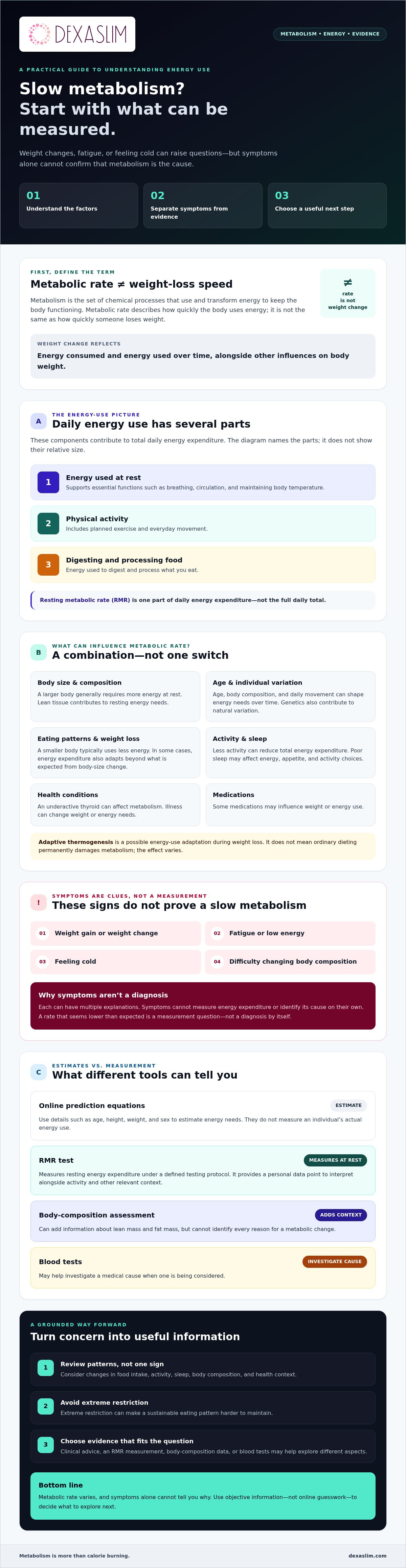
Daily energy use includes energy spent at rest, energy used for physical activity, and energy required to digest and process food. Activity includes both planned exercise and everyday movement. Together, these components contribute to total daily energy expenditure. A rate that seems lower than expected is a measurement question, not a diagnosis by itself.
What does resting metabolic rate measure?
Resting metabolic rate, or RMR, measures the energy the body uses at rest to support essential functions such as breathing, circulation, and maintaining body temperature. It represents one part of daily energy expenditure, not the full daily total. Movement, exercise, and digestion add to that total.
Online calculators use details such as age, height, weight, and sex to estimate energy needs. They don’t measure an individual’s actual energy use. An RMR test measures resting energy expenditure under a defined testing protocol, providing a personal data point to interpret alongside daily activity and other relevant context.
Can someone have a slow metabolism without knowing?
Metabolic rate varies between people and is influenced by characteristics such as body size and composition. It can also change over time. That variation isn’t necessarily a problem, and there may be no distinct feeling that identifies someone’s rate as “slow.” The phrase describes a comparison, not a diagnosis.
Weight gain, fatigue, feeling cold, or difficulty changing body composition can prompt questions, but none proves a slow metabolism. Each can have multiple explanations, and weight trends can also reflect changes in food intake, activity, or other factors. If you’re asking what causes a slow metabolism, separate symptoms from evidence: a symptom may deserve attention, but it can’t measure energy expenditure or identify its cause on its own.
The Main Factors That Can Lower or Influence Metabolic Rate
There isn’t one switch that determines how much energy your body uses. The answer to what causes a slow metabolism depends on the interaction of body size, composition, age, genetics, behavior, and health. These factors influence energy needs in different ways, so one symptom or scale reading can’t identify the cause.
Body composition, age, and individual variation
A larger body generally requires more energy at rest, while lean tissue contributes to resting energy needs. Muscle matters, but it isn’t a guaranteed metabolic accelerator: resting expenditure reflects the body as a whole, and people with similar measurements can still differ. Genetics also contribute to natural variation. Mayo Clinic’s overview of factors that influence metabolism explains how body size, composition, sex, and age can shape energy use.
Age is a trend, not a fixed metabolic switch. Changes in body composition and daily movement can influence energy needs over time, but age alone doesn’t determine an individual’s rate. A body-composition assessment can add context about lean mass and fat mass, but it can’t identify every reason for a metabolic change.
Dieting, activity, hormones, and health conditions
Weight loss can lower total energy needs because a smaller body typically uses less energy. In some cases, the body also adapts by expending less energy than expected for the change in body size. This is called adaptive thermogenesis. It doesn’t mean ordinary dieting permanently damages metabolism. The effect varies, and extreme restriction can make a sustainable eating pattern harder to maintain.
Daily movement and sleep also shape the bigger picture. Less activity can reduce total energy expenditure, while poor sleep may affect energy, appetite, and activity choices. Illness can change weight or energy needs, but these factors alone don’t diagnose a metabolic problem.
Medical causes deserve a different level of attention. An underactive thyroid can affect metabolism, and some medications may influence weight or energy use. Don’t stop or change a medication because you suspect it affects your metabolism. A qualified clinician can review symptoms and health history and decide whether appropriate testing is needed.
In brief: Body size, composition, age, genetics, activity, and eating patterns commonly influence energy expenditure. Medical conditions and medication effects require individual clinical assessment.
If you want a measured resting-energy baseline rather than an estimate, explore Resting Metabolic Rate testing. A result adds useful data, but it doesn’t diagnose every possible cause.
Slow Metabolism Signs: What Symptoms Can and Cannot Tell You
Weight changes, low energy, feeling unusually cold, or difficulty changing body composition can make you wonder whether your metabolism is involved. These experiences need context, not a quick label. Food intake, activity, sleep, stress, medications, and health conditions can all affect how you feel or how your weight changes. The Mayo Clinic’s overview of metabolism and weight loss also explains why metabolism is only one part of the picture.
Symptoms alone cannot measure resting metabolic rate. They also can’t establish that a metabolic rate is unusually low or reveal why a symptom is happening. Restrictive dieting isn’t a diagnostic test, and neither is trying an unverified “metabolism-boosting” supplement. These approaches can add risk or confusion without providing a reliable measurement.
Which signs may prompt a closer look?
Pay attention to patterns rather than treating any single symptom as proof. Note when a change began, whether it persists, and what else shifted around the same time, such as sleep, activity, eating habits, or medication. Weight trends can provide context, but short-term fluctuations don’t identify a cause.
Bring persistent concerns and relevant observations to a qualified clinician. Fatigue or feeling cold, for example, can have many explanations. Don’t assume they point to a thyroid problem or another specific condition without clinical assessment.
When is medical evaluation more appropriate?
Arrange professional evaluation for health changes that are persistent, significant, or unexplained, especially if they affect daily functioning or occur alongside other concerning symptoms. A clinician can review your health history, medication use, and symptom pattern, then decide whether laboratory testing or another assessment is appropriate. The right evaluation depends on the person, not on an online symptom checklist.
If the concern is specifically how much energy your body uses at rest, an RMR test can measure resting energy expenditure under a defined protocol. That measurement answers a different question from a clinical investigation into a symptom’s cause. A result can add useful data, but it doesn’t diagnose every condition or replace care from a qualified clinician. Seek urgent medical attention for sudden or severe symptoms.
Use symptoms as a signal to gather context, not as a verdict. If you’re searching for what causes a slow metabolism, distinguish what can be measured from what needs clinical evaluation.
How to Test Metabolic Rate: Estimates, RMR Testing, and Context
A calculator can offer a starting estimate. A measurement can show your resting energy expenditure under specific test conditions. These are different kinds of information, and neither alone explains every factor behind a result or answers everything about what causes a slow metabolism.
What does an RMR test show?
Resting Metabolic Rate (RMR) testing measures how much energy your body uses at rest. One common measurement method, indirect calorimetry, assesses gas exchange to estimate energy expenditure. The result is a measured reading from the test, not a complete diagnosis or a direct measure of everything you burn throughout the day.
Prediction equations, including those used by online calculators, estimate resting needs using details such as age, height, weight, and sex. They can help establish a general reference point, but they don’t directly measure your individual energy use. An RMR result may help inform individualized energy planning when considered alongside activity, eating patterns, health history, and goals.
Testing conditions matter. Preparation instructions and protocols can vary, so confirm current guidance with Dexaslim before your appointment. Interpret the reading as a measurement made under that protocol, not as a permanent metabolic label or a diagnosis of an underlying condition.
How should test results be interpreted?
Don’t treat one number as a verdict. Consider what the result is being compared with, how the measurement was taken, and whether it fits the broader picture. Body composition can add context: lean mass and fat mass help describe the body behind the reading, while activity and health history inform how the number may be used. None of these data points identifies every possible cause on its own.
A DEXA body composition scan guide offers more context on how body-composition information can complement metabolic measurement. It is an additional perspective, not a substitute for interpreting RMR results or evaluating health concerns with a qualified clinician.
Use estimates for orientation and measured results for a more individualized resting baseline. Then interpret both in context. Dexaslim offers a Resting Metabolic Rate test for people seeking a direct measurement of resting energy expenditure. Confirm the current testing protocol and preparation details before booking.
What to Do If You Suspect a Slow Metabolism
If you’re concerned about your energy use, replace guesses with a clear sequence. The question of what causes a slow metabolism can’t be answered by one weigh-in, symptom, or online calculator. Start by looking for patterns, then choose a next step that fits your concern.
A practical sequence for replacing guesswork with data
Track patterns consistently.
Note changes in weight, energy, sleep, activity, eating habits, and relevant medication use over time. Look for sustained trends rather than reacting to an isolated scale reading.
Avoid extreme restriction.
Highly restrictive eating isn’t a reliable way to test or “reset” metabolism. Prioritize adequate nutrition and sustainable activity, including movement you can maintain. Support these habits with consistent sleep, without expecting any one change to guarantee a specific metabolic result.
Discuss ongoing concerns.
If symptoms persist or health changes feel unexpected, share your observations and health history with an appropriate healthcare professional. They can determine whether further evaluation or laboratory testing is warranted.
Measure when it can inform a decision.
Consider an RMR test if a measured resting-energy baseline would help guide planning. It can add useful information, but it doesn’t explain every cause of weight or energy changes.
What diagnostic testing can and cannot do
Testing answers a defined question. An RMR test measures resting energy expenditure under its testing conditions. It doesn’t provide a complete picture of daily energy use or diagnose an underlying medical condition. A result is most useful when interpreted alongside activity, body composition, health history, and personal goals. Confirm the current test protocol and preparation instructions before testing.
Keep wellness habits and medical evaluation distinct. Sustainable nutrition, movement, and sleep can support general health, but they aren’t substitutes for investigating persistent symptoms. Dexaslim offers RMR testing and other specialized wellness assessments, but not general primary care. For a suspected medical cause, consult a qualified healthcare professional who can assess your situation and determine appropriate care.
Build your next step around the question you need answered. If a measured resting-energy baseline would help, explore Dexaslim’s testing services and learn about its Resting Metabolic Rate test. Testing provides data, not a guaranteed explanation or treatment outcome.
Turn Metabolism Questions Into a Clear Next Step
Understanding what causes a slow metabolism starts with separating everyday variation from a medical concern. Age, body composition, activity, and other factors can influence energy use, but fatigue or weight changes alone can’t confirm a slow metabolic rate. Treat persistent or unexplained symptoms as a reason to seek appropriate clinical advice, not as grounds for self-diagnosis.
For a more objective baseline, an RMR test measures resting energy expenditure under defined testing conditions. Dexaslim offers Resting Metabolic Rate testing, while DEXA scans provide body-composition measurements that can add context. Neither measurement explains every cause or replaces clinical evaluation when symptoms need investigation.
Skip quick fixes and focus on useful information. Explore Dexaslim’s metabolic testing options to learn about measurement services that may help inform your next steps. With relevant data and qualified guidance, you can move forward with greater clarity and a plan grounded in your individual needs.
Frequently Asked Questions
What causes a slow metabolism?
Factors behind what causes a slow metabolism can include body size and composition, age, genetics, physical activity, and eating patterns. Some medical conditions, including an underactive thyroid, can also affect energy use. “Slow metabolism” isn’t a formal diagnosis, and an individual’s rate can’t be inferred from weight alone. Consider the full picture, including health history and daily habits, rather than assuming one factor explains every change.
Can you tell if you have a slow metabolism from symptoms?
No. Symptoms alone can’t confirm a slow metabolism or measure resting metabolic rate. Weight changes, fatigue, feeling cold, or difficulty changing body composition may have many explanations, from shifts in routine to health conditions. Track persistent changes and note when they began, along with relevant changes in sleep, activity, eating habits, or medications. Share that context with a qualified healthcare professional instead of relying on a symptom checklist.
How do you test your metabolic rate?
An RMR test measures resting energy expenditure under a defined testing protocol. Indirect calorimetry is a method used to measure energy expenditure through gas exchange. In contrast, online calculators apply prediction equations to personal details and provide estimates, not direct measurements. An RMR result reflects energy use at rest, not your total daily expenditure or a complete health diagnosis. Ask the testing provider about preparation and protocol details beforehand.
Can dieting make your metabolism slower?
Weight loss can reduce energy needs because a smaller body generally uses less energy. The body may also adapt by expending less energy than expected after weight loss, a response called adaptive thermogenesis. This doesn’t mean ordinary dieting permanently damages metabolism. Avoid extreme restriction, which can be difficult to sustain and isn’t a reliable way to test metabolic rate. For persistent concerns, discuss your approach and health context with a qualified professional.
Does age slow down your metabolism?
Age can influence energy needs, but there isn’t a fixed age when metabolism suddenly slows. Changes over time are shaped by factors such as body composition and activity, and people vary. Age alone can’t explain an individual’s metabolic rate or weight change. Consider the pattern alongside changes in movement and body composition, rather than treating age as destiny or assuming that a particular birthday caused a metabolic problem.
Can thyroid problems cause a slow metabolism?
Yes. An underactive thyroid can affect metabolism, but symptoms such as fatigue or weight change don’t confirm a thyroid condition. A clinician can review symptoms and health history and decide whether thyroid blood tests, such as TSH and T4, are appropriate. Don’t self-diagnose or start treatment based on symptoms or online advice. If changes are persistent or unexplained, seek an individual clinical assessment.
What happens if an RMR test shows a lower-than-expected result?
A lower-than-expected RMR result is a measurement to interpret, not a diagnosis or verdict. Review how the test was prepared and conducted, then consider body composition, activity, health history, and goals alongside the result. Discuss possible medical concerns with a qualified healthcare professional, who can determine whether further evaluation is appropriate. Avoid responding with extreme restriction or unverified supplements. A single test result doesn’t identify every cause or prescribe treatment.