

Daily habits can influence the conditions that support mitochondrial function. Ageing and cognitive decline have many contributing factors, but learning how to increase mitochondrial function starts with consistent exercise, restorative sleep, stress management, and a nutrient-dense diet. Time-restricted eating may also support mitochondrial renewal when it fits your health needs and routine.
If low energy or concerns about long-term vitality have you looking for answers, focus on the systems that help your cells produce energy. Mitochondrial health is one part of the picture, not a standalone explanation for ageing or changes in cognition. Build a practical foundation rather than chasing a single fix.
This guide explains how movement, fasting, sleep, stress regulation, food choices, and reducing toxin exposure may support mitochondrial function. You’ll also learn to approach these strategies as a consistent, measurable way to support metabolic health, not as a quick promise of change.
Key Takeaways
• Build a consistent movement routine with aerobic activity and resistance training, adjusting intensity to how your body responds.
• Use fasting approaches thoughtfully; time-restricted eating may support mitochondrial renewal, but the right routine should fit your needs.
• Protect sleep and manage ongoing stress to support the conditions associated with healthy mitochondrial function.
• Favor a nutrient-dense eating pattern and reduce avoidable exposure to environmental toxins as part of a broader lifestyle strategy.
• Use objective assessments such as VO2 Max Performance Testing, Resting Metabolic Rate testing, or a DEXA scan to add measurable context to your health goals.
1. Exercise and intermittent fasting
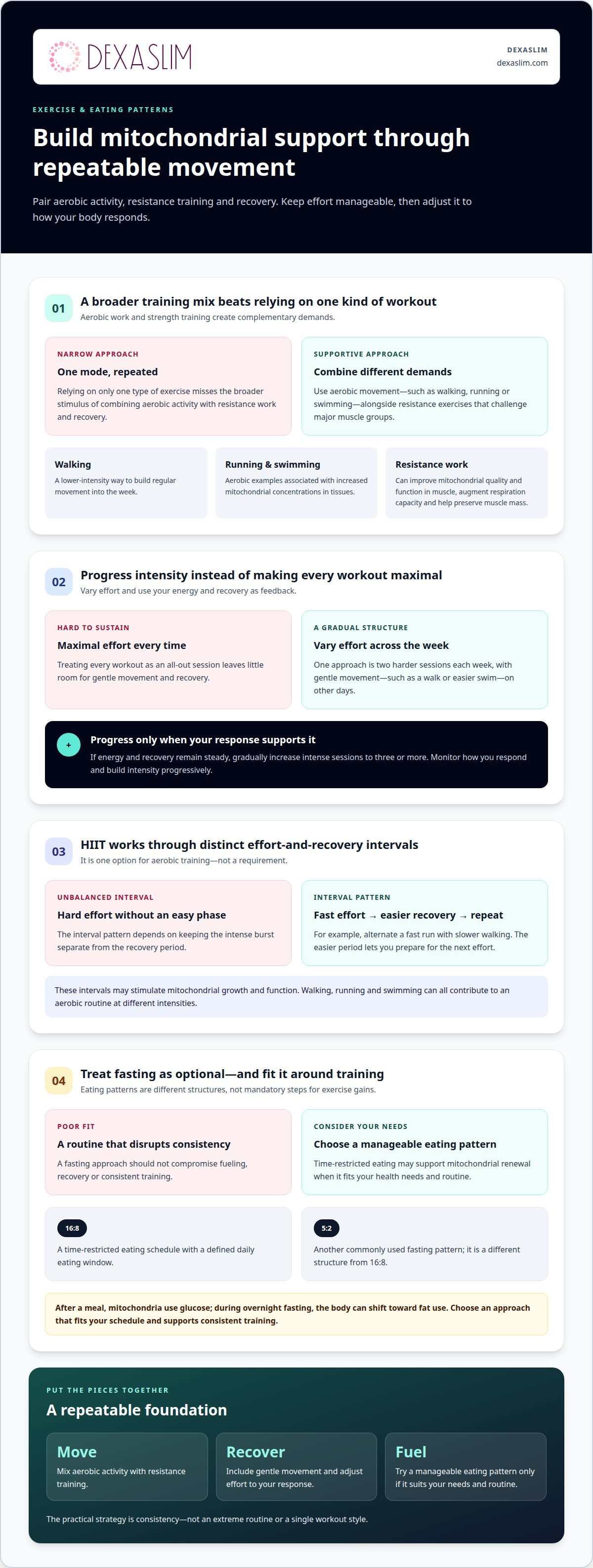
Exercise gives muscles a repeated energy challenge, making movement a practical part of mitochondrial support. A balanced routine can combine aerobic activity, resistance training, and recovery instead of relying on one demanding workout. Running and swimming are aerobic examples associated with increased mitochondrial concentrations in tissues. Walking offers a lower-intensity way to build regular movement into the week. Choose activities you can repeat consistently, then adjust effort based on how your body responds.
Structure the week around varied effort. One approach pairs intense exercise twice a week with gentle movement on other days, such as a walk or an easier swim. If recovery and energy remain steady, gradually increase intense sessions to three or more while monitoring your response. If you’re considering how to increase mitochondrial function, build intensity progressively instead of treating every workout as maximal effort.
High-intensity interval training, or HIIT, alternates short bursts of intense effort with brief recovery periods. For example, alternate a fast run with slower walking, repeating the effort-and-recovery pattern. These intervals may stimulate mitochondrial growth and function. Keep the hard bursts distinct from recovery: the easier period lets you prepare for the next effort. HIIT is one option, not a requirement. Walking, running, and swimming can each contribute to an aerobic routine at different intensities.
Add resistance training to meet a different physical demand. Strength exercises can improve mitochondrial quality and function in muscle while augmenting mitochondrial respiration capacity. Use movements that challenge major muscle groups, such as squats, rows, or presses, and progress gradually. Resistance work also helps preserve muscle mass, an important reason to include it alongside cardiovascular activity. Aerobic exercise and strength training play complementary roles; combining them creates a broader training stimulus than choosing only one.
Eating patterns also affect how the body uses fuel. After a meal, mitochondria use glucose; during overnight fasting, the body can shift toward fat use. Time-restricted eating, including a 16:8 schedule, sets a defined daily eating window. The 5:2 approach is another commonly used fasting pattern. These are different structures, not mandatory steps for exercise gains. Fasting should fit your routine and health needs, rather than compromise fueling, recovery, or consistent training.
Start with movement you can sustain: schedule two harder sessions, add gentle activity on other days, and include resistance work. Track your energy and recovery as intensity changes. A practical way to approach how to increase mitochondrial function is to try time-restricted eating only if it fits your schedule and supports consistent training. The useful strategy is a repeatable combination of aerobic work, strength training, and a manageable eating pattern, not an extreme routine that disrupts consistency.
2. Sleep and stress management
Your circadian rhythm coordinates the timing of sleep and waking, while deep sleep supports mitochondrial repair. Protecting a consistent sleep window gives this overnight recovery process a dependable place in your routine.
Start with a clear sleep target: aim for 7-8 hours nightly. Another commonly used recommendation is seven to nine hours a night. These ranges point to the value of adequate, regular sleep, not a need to chase one exact number every night. Set a consistent bedtime and wake time, including on weekends. If your schedule shifts, move it gradually instead of changing it sharply.
Build a repeatable wind-down sequence. For example, finish demanding tasks, prepare for the next morning, then choose a quiet activity before bed. Keep the sequence simple enough to repeat. A steady routine can help protect sleep time from late work, scrolling, or unfinished chores. Track your bedtime and waking time for several days to see whether your schedule is consistent or routinely crowded out.
Give stress the same deliberate attention. Chronic stress is associated with structural and functional deficits in mitochondria, so stress management supports the broader goal of preserving mitochondrial function. Choose a specific reset you can repeat, such as slow breathing after work, a walk outdoors, or a brief pause between tasks. Treat it as a scheduled practice, not an emergency response. Repeating a short routine helps make recovery part of your day.
Social connection can also help reduce stress and support mitochondrial function. Schedule a conversation with a friend or family member, or share a meal without multitasking. These examples turn social interaction into a practical habit rather than an abstract recommendation. Pairing connection with an existing routine, such as an evening walk, can make it easier to maintain.
Deep sleep supports more than cellular repair. It also contributes to the regulation of hormonal, biological, and immune systems. Protecting sleep therefore supports several connected processes. Avoid filling the final part of the evening with tasks that can wait. Prepare clothes or meals earlier, then use that time to follow your wind-down routine.
Make the plan measurable. For a week, note your sleep and wake times, major stressors, and which reset practices you use. Look for patterns, such as late work preceding a shorter night or a walk easing the transition into evening. Keep habits that fit your schedule. Consistent sleep and repeatable stress-management practices create a stronger foundation than occasional, last-minute efforts.
3. Environmental toxins and oxidative stress
Environmental exposure is one part of the cellular health picture. Oxidative stress describes an imbalance between reactive molecules and the defenses that help manage them. Mitochondria take part in cellular energy processes, so reducing avoidable exposure can complement exercise, sleep, and nutrition. The goal isn’t to eliminate every contact with a chemical. Focus on repeated, controllable exposures in your home and daily routine.
Start with an exposure inventory. Note where you encounter smoke, strong fumes, sprays, or dust during a typical day. Include the kitchen, garage, workplace, and cleaning routine. This list turns a broad concern into specific situations you can address. For example, if a strong odor appears during cleaning, identify the product and follow its label directions. Avoid using an unfamiliar product in a closed room.
Airflow is a practical first step. Open a window or use an exhaust fan when cooking or using household products that produce noticeable fumes. Store products in their original containers with labels intact, so their directions remain available. Keep lids closed after use. These habits help limit unnecessary contact and make the source easier to identify if an odor persists.
Smoke is another exposure worth considering. Keep indoor spaces smoke-free and avoid lingering in areas where smoke is present. If smoke enters your home from outside, note when it happens and which rooms are affected. That record can help you take practical steps, such as closing a window during the smoky period and ventilating the room when the air clears.
Dust can collect particles from indoor and outdoor sources. Use a damp cloth on surfaces instead of dry dusting, which can send settled dust back into the air. Wash your hands after cleaning or handling dusty items. If a renovation or hobby creates visible dust, contain the work area and clean it afterward. Match changes to the source instead of buying products based on broad “detox” claims.
Keep the plan proportionate. Don’t discard prescribed medication or stop a treatment because of general concerns about mitochondrial effects. Discuss specific medication questions with a doctor or practitioner. Likewise, avoid using supplements as a substitute for reducing an identifiable exposure. Some supplements can interact with medications, so personalized advice matters before use.
Review your notes after making one change at a time. For instance, improve ventilation during cleaning, then observe whether the routine is practical to maintain. This method helps distinguish a useful adjustment from an unnecessary overhaul. Reducing environmental exposure cannot replace movement, recovery, or balanced nutrition. Treat it as one manageable part of a broader strategy for supporting cellular health and mitochondrial function.
4. Intermittent fasting and mitochondrial biogenesis
Periodic fasting may support mitochondrial renewal and remodeling, the processes involved in mitochondrial biogenesis. Biogenesis refers to making and maintaining mitochondria within cells. Fasting changes when you take in energy, but it isn’t a standalone guarantee of better cellular performance. Treat it as one possible part of a broader routine, not a shortcut that replaces movement, sleep, or balanced meals.
Use the fasting pattern that fits your daily schedule and health needs. The 16:8 and 5:2 approaches follow different routines, so neither is automatically right for everyone. A practical first step is to review when you usually eat, train, and sleep. Then consider whether a consistent eating window would work without disrupting meals, exercise, or recovery. A routine you can maintain matters more than choosing the strictest option.
Supplements raise a separate question. CoQ10 is one nutrient associated with mitochondrial function, but there is no single best mitochondrial supplement for everyone. Creatine and NAD+ precursors have different roles; choosing among them depends on individual needs rather than a universal formula. Before adding any supplement, consider your current medications and health goals, and seek personalized advice.
What are the risks of mitochondrial supplements? Some supplements can interact with medications, so even a seemingly routine combination may need careful review. Share the supplement name and dose with a healthcare professional before starting it, especially if you take prescription medication. Don’t stop a prescribed medication because of concerns about mitochondrial effects. Discuss those concerns with your doctor or practitioner instead.
Can clinical tests diagnose mitochondrial dysfunction? Clinical evaluation starts with symptoms and medical history, then selects tests to investigate the suspected cause. A test result needs to be interpreted alongside a person’s overall health; one measurement alone shouldn’t be treated as a complete explanation for low energy. Bring a list of symptoms, medications, and supplements to an appointment to give the evaluation useful context.
Which conditions and medications can impair mitochondrial function? The answer depends on the underlying condition, treatment, and individual response. A clinician considers the full medical history and medication list rather than assuming every symptom has one cause. Never discontinue medication independently. A discussion with the prescribing clinician can address a specific concern while protecting the condition being treated.
Seek medical evaluation for persistent or worsening symptoms, unexplained changes in energy, or concerns about a family history of mitochondrial disease. Record when symptoms began and what affects them, such as exertion, meals, or sleep. A concrete timeline helps guide the conversation and next steps in evaluation.
5. Which foods and dietary patterns support mitochondrial function?
A Mediterranean-style eating pattern offers a practical framework for balanced meals. Include leafy greens, cruciferous vegetables, healthy fats, antioxidant-rich foods, and fermented foods. Add fruits, nuts, and whole grains across meals. For example, pair leafy greens and whole grains with oily fish, then add berries or fermented foods. This approach emphasizes variety rather than relying on one ingredient.
Choose foods that contribute nutrients linked with mitochondrial function. Oily fish, eggs, colorful vegetables, nuts, seeds, and berries offer useful options. Whole grains add another adaptable staple. Rotate these foods through meals instead of repeating a narrow menu. Breakfast with eggs and greens, followed by nuts or berries, is one straightforward way to widen your nutrient mix.
Micronutrient deficiencies can affect mitochondrial function, so food variety matters. Magnesium participates in more than 300 biochemical reactions, including energy production. Leafy greens, nuts, seeds, and whole grains can help diversify sources of this mineral. CoQ10 is found in foods such as heart and liver. These are options, not requirements; choose foods that fit your preferences and eating pattern.
Prebiotics and probiotics can support beneficial gut bacteria, which produce compounds that may enhance mitochondrial efficiency. Include fermented foods in a varied diet, along with fruits, vegetables, whole grains, nuts, and seeds for broader dietary diversity. Fermented foods can complement these staples, not replace them. Build the pattern around familiar choices you can prepare consistently.
Limit processed and fried foods as a practical dietary refinement. These foods may contain oxidized vegetable oils, added sugar, and preservatives. Replace a fried side with whole grains or vegetables, or choose fruit instead of a highly processed snack. Focus on repeatable substitutions rather than overhauling every meal at once. Small changes make the overall pattern easier to maintain.
Supplements require a more individualized decision. CoQ10, B vitamins, magnesium, L-carnitine, alpha-lipoic acid, omega-3 fatty acids, and antioxidants are among nutrients discussed for mitochondrial support. There is no single best mitochondrial supplement; choices depend on individual needs. Some supplements can interact with medications, so seek personalized advice before adding them. Don’t use a supplement list as a substitute for addressing a deficiency.
Make the pattern practical with a simple meal-planning step. Choose a leafy or cruciferous vegetable, a whole-grain option, and a source of healthy fats for a meal. Add berries, nuts, seeds, oily fish, eggs, or fermented foods across your choices. This creates a flexible structure, not a rigid menu. If you have persistent concerns about energy or nutrition, discuss your dietary pattern and medications with a healthcare professional.
Dexaslim
Dexaslim helps you add objective health and performance data to your lifestyle plan. If you’re refining exercise, nutrition, or energy goals, testing can provide useful context beyond day-to-day impressions. VO2 Max Performance Testing evaluates aerobic endurance, peak oxygen consumption, and cardiovascular efficiency. A Resting Metabolic Rate (RMR) Test helps assess daily caloric needs, while a DEXA scan measures body composition and bone density. A Longevity Panel offers another way to explore health markers as part of a broader wellness picture.
These assessments don’t diagnose mitochondrial dysfunction, but they can help establish measurable baselines relevant to metabolic health and performance. Use the results to inform conversations about your goals and next steps. Contact Dexaslim to discuss which assessment best fits your priorities.
Turn your next step into a measurable plan
Lasting progress starts when intention becomes a routine you can observe and refine. Choose one change that fits your schedule, then record how consistently you follow it and how you feel. This gives you a clearer basis for deciding what to adjust next, instead of changing several habits at once and guessing which one mattered.
A thoughtful approach to how to increase mitochondrial function is personal, practical, and built over time. Use objective information to add context to your goals, then make decisions that align with your health priorities. Dexaslim offers testing options to help frame conversations about body composition, aerobic performance, and metabolic needs.
Start a conversation with Dexaslim about your health goals and identify a useful next step. Keep refining your routine with consistency and clear intent. Progress begins with a decision you can sustain.
Frequently Asked Questions
How Do Mitochondria Impact Ageing and Cognitive Decline?
Mitochondria help cells produce energy, supporting demanding tissues such as the brain. Their function is one factor in cellular health, but ageing and cognitive changes have multiple influences. Changes in memory or thinking cannot be attributed to mitochondrial function alone. Track persistent changes and discuss them with a healthcare professional, especially if they affect daily tasks, work, or familiar activities.
How Do Toxins & Environmental Stressors Affect Mitochondrial Function?
Some environmental exposures can contribute to oxidative stress, which occurs when reactive molecules outpace the body’s antioxidant defenses. The effect depends on the substance, exposure level, and duration, so a general label such as “toxin” doesn’t explain an individual’s risk. Focus on a specific, repeated exposure rather than broad detox claims. Record the product or setting involved and discuss substantial concerns with a qualified professional.
What Is Mitochondrial Health, and Why Does It Matter?
Mitochondrial health describes how well these cell structures support energy production and related cellular processes. Mitochondria are found in the cells of plants, animals, and fungi. In the human body, they produce about 90% of its energy, making their role relevant to tissues with high energy demands. Mitochondrial health is one part of overall health, not a complete measure of it.
What does mitochondrial function mean, and how is it measured?
Mitochondrial function refers to how mitochondria carry out their work, including supporting cellular energy production. There isn’t one routine measurement that summarizes mitochondrial function for every person. Clinical evaluation depends on the symptoms and question being investigated. VO2 Max Performance Testing assesses aerobic endurance and peak oxygen consumption, while a Resting Metabolic Rate test evaluates resting energy needs. Those results provide metabolic context, not a direct diagnosis of mitochondrial dysfunction.
What lifestyle changes have evidence for improving mitochondrial function?
Regular movement, restorative sleep, stress management, and a nutrient-dense eating pattern are practical strategies that may support mitochondrial function. Treat them as connected habits, not isolated treatments. For example, keep a simple weekly record of movement, sleep consistency, and meals to identify which routines are sustainable. Adjust one habit at a time. This makes it easier to connect changes in routine with how you feel and function.
How does aerobic exercise affect mitochondria, and how much is recommended?
Aerobic activity such as running or swimming can increase mitochondrial concentrations in tissues. One approach is intense exercise twice a week, with gentle movement on other days. If your response and recovery remain steady, gradually building toward three or more intense sessions is another option. Keep the effort manageable and monitor your energy. The goal is a repeatable routine, not maximum intensity at every workout.
Can strength training improve mitochondrial health?
Yes. Resistance training can improve mitochondrial quality and function in muscle and increase mitochondrial respiration capacity. It also helps preserve muscle mass, so it complements rather than replaces aerobic activity. Use familiar movements such as squats, presses, or rows, and focus on controlled technique and gradual progression. If an exercise causes pain or feels unsuitable, adapt the movement and seek qualified guidance for your circumstances.