

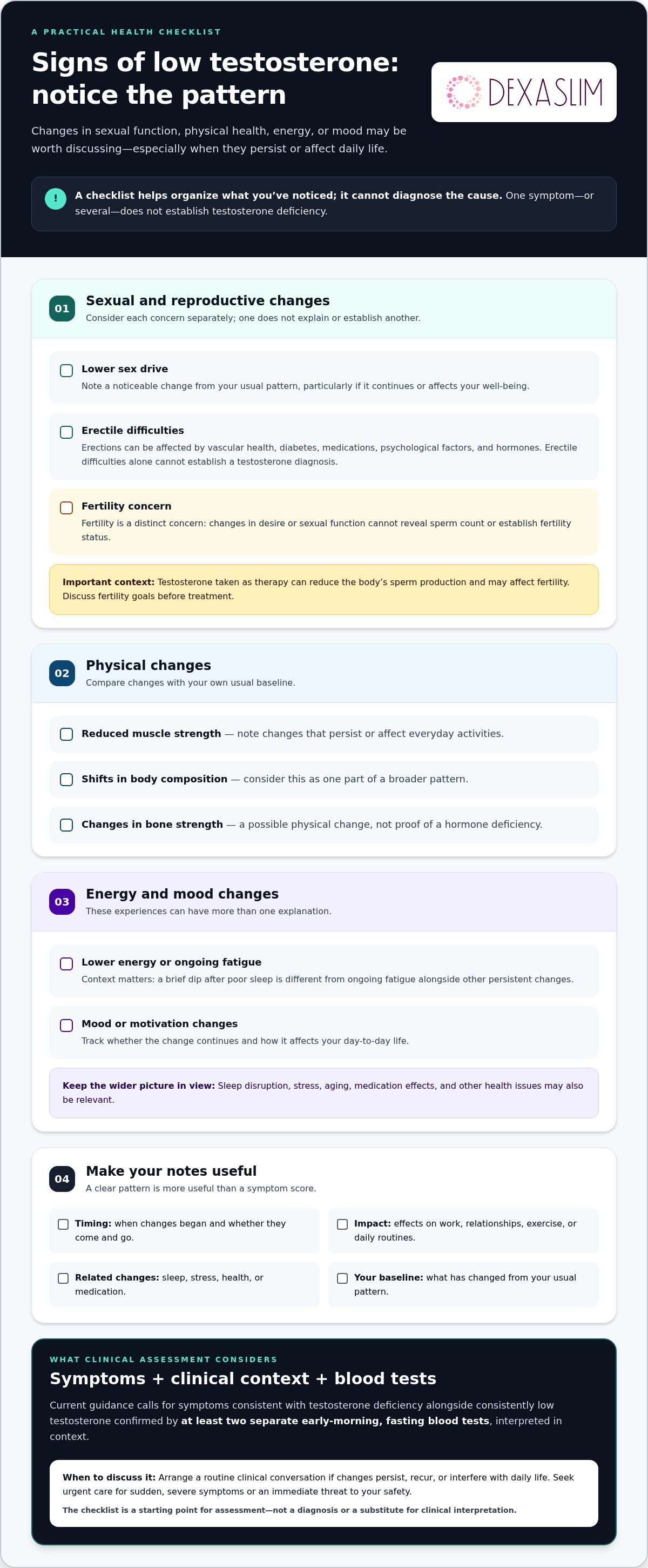
Could the changes you’ve noticed point to low testosterone, or something else? The signs of low testosterone in men can include reduced sex drive, erectile difficulties, low energy, mood changes, and shifts in muscle or bone strength. These symptoms can also occur with other health conditions and life changes. A checklist can help you spot a pattern worth discussing, but it can’t diagnose the cause.
Focus on changes that persist or affect daily life rather than trying to match yourself to an online symptom list. This guide explains which symptoms may warrant evaluation, why they can have more than one cause, and what testing may involve.
A responsible assessment considers symptoms alongside clinical findings. Current guidance calls for consistently low testosterone on at least two separate early-morning, fasting blood tests, interpreted in context. If treatment is appropriate, follow-up may include ongoing monitoring. Dexaslim offers longevity blood panels and clinically supervised testosterone replacement therapy for eligible individuals, with hormone-level monitoring as part of its therapy programs.
Key Takeaways
• Use the signs of low testosterone in men checklist to spot persistent changes worth discussing, not to diagnose yourself.
• Libido, erections, and fertility are distinct concerns. A change in one does not establish what is happening with another.
• Track physical, energy, and mood changes over time, along with relevant changes in sleep, stress, health, or medication.
• Prepare for an assessment by recording symptoms and discussing your health context with a clinician.
• Use test results and clinical interpretation to guide next steps. Treatment and follow-up depend on individual evaluation and eligibility.
Signs of Low Testosterone in Men: What This Checklist Can, and Cannot, Tell You
The signs of low testosterone in men can involve sexual function, physical changes, energy, or mood. Noticing one or several does not establish a hormone deficiency. A clinician assesses symptoms and interprets blood-test results alongside your broader health picture.
Use this checklist to organize what you’ve noticed and prepare for a focused conversation. Don’t use it to calculate a score or diagnose yourself. Changes that persist or affect daily life provide more useful context than one isolated symptom. A possible sign raises a question, but does not confirm a diagnosis.
For a broader overview of late-onset hypogonadism, including how it relates to aging, symptoms, and diagnosis, see this background resource.
This video also discusses how symptoms fit into a careful assessment:
How low testosterone may affect more than one area of health
Possible changes fall into overlapping groups. Sexual signs may include a lower sex drive or changes in erections. Physical changes can include reduced muscle strength or shifts in body composition. Some men also report lower energy or changes in mood and motivation. Not everyone experiences every group, and no single symptom reliably identifies testosterone deficiency.
Changes may build gradually and be easy to attribute to aging, stress, disrupted sleep, medication effects, or another health issue. That context matters. Current Endocrine Society guidance calls for symptoms consistent with testosterone deficiency alongside consistently low levels confirmed by at least two early-morning, fasting blood tests. A symptom list is a starting point for assessment, not a substitute for it.
When a symptom pattern deserves a conversation
Compare symptoms with your usual baseline. Note when they began, whether they come and go, and how they affect work, relationships, exercise, or daily routines. For example, a brief dip in energy after poor sleep gives different context from ongoing fatigue alongside other persistent changes.
• Record symptoms and when they occur.
• Note relevant changes in sleep, stress, health, or medication.
• Arrange a routine clinical discussion if changes persist, recur, or interfere with daily life.
A clinician considers your history, relevant health factors, and appropriate testing, not a checklist score. Symptoms alone don’t establish low testosterone. Seek urgent care for sudden, severe symptoms or an immediate threat to your safety. Otherwise, a planned evaluation can help clarify what’s happening and what follow-up makes sense.
Sexual and Reproductive Signs of Low Testosterone in Men
Changes in sexual desire or function can be meaningful, especially if they’re new and persistent, but they don’t prove low testosterone. Libido, erections, and fertility are related aspects of sexual health, yet they are distinct concerns. A change in one doesn’t automatically explain a change in another. Consider each in its own context.
Sexual desire varies from person to person and can shift over time. A noticeable change from your usual pattern, particularly one that continues or affects your well-being, is more useful to note than a comparison with someone else. MedlinePlus on Low Testosterone reviews symptoms and other factors that can influence testosterone and health.
Changes in sexual desire and erectile function
A persistent reduction in sexual desire may occur with low testosterone, but it can also reflect sleep disruption, stress, relationship strain, depression, chronic illness, or medication effects. Erectile difficulties also have several possible causes, including blood-vessel health, diabetes, certain medications, psychological factors, and hormonal changes. More than one factor may be involved.
Erectile difficulties alone can’t establish a testosterone diagnosis because erections are shaped by vascular, medication-related, psychological, and hormonal factors. Don’t treat a single episode or online symptom list as a verdict. Note when the change began, whether it happens consistently or in specific situations, and whether your desire has changed too.
Bring new or persistent changes to a qualified clinician in direct, plain language. Mention prescription and nonprescription medications, health conditions, sleep patterns, and stress. This context can help distinguish a possible hormone-related pattern from other explanations and guide appropriate testing. There’s no need to frame the conversation as a judgment about masculinity or performance. It’s a health concern that can be assessed clinically.
Fertility concerns and reproductive symptoms
Fertility is not measured by libido, energy, or erectile function. Difficulty conceiving calls for a specific reproductive evaluation rather than an assumption about testosterone. A clinician may consider reproductive history, relevant health factors, and tests suited to the concern. Changes in desire or sexual function cannot reveal sperm count or establish fertility status.
Discuss fertility goals before starting testosterone treatment. Testosterone taken as therapy can reduce the body’s sperm production and may affect fertility. This matters if you’re planning to have children now or may want to in the future. Don’t assume the effect is inevitable for every person or make treatment decisions based on symptoms alone. Share your goals before treatment so they can be included in the evaluation and discussion of options.
For eligible individuals with clinically assessed low testosterone, Dexaslim provides clinically supervised testosterone replacement therapy with ongoing hormone-level monitoring. Treatment decisions depend on evaluation, individual goals, and eligibility, not sexual symptoms alone.
Physical, Energy, and Mood Changes: Check for Patterns, Not Proof
Changes in strength, body composition, energy, or mood can be among the signs of low testosterone in men. They’re also influenced by training, nutrition, sleep, stress, illness, medications, and age. Look for meaningful changes from your usual baseline, then record when they began and how they affect daily life. Don’t treat any one change as a hormone reading.
Overlapping symptoms need clinical context because the same change can have several causes, including but not limited to low testosterone. Use the comparison below to organize observations, not to assign a diagnosis.
| Observed change | Possible relevance | Why it is not specific to testosterone |
|---|---|---|
| Reduced muscle strength or muscle mass | May be part of a broader physical change worth discussing. | Training changes, nutrition, illness, injury, and aging can also affect strength and muscle. |
| Change in body fat or weight | Can provide useful context alongside other symptoms and health measures. | Weight and body-fat shifts have multiple influences, including activity, eating patterns, sleep, and health conditions. |
| Persistent fatigue or lower energy | May matter if it represents a sustained change in how you function. | Poor sleep, stress, medication effects, and other conditions can contribute. |
| Low mood, irritability, or concentration difficulty | Worth noting if symptoms recur or disrupt work, relationships, or routines. | Mood and focus can be affected by emotional strain, depression, sleep disruption, and other health factors. |
| Reduced physical stamina | May add context when considered with other changes. | Fitness level, recent activity, recovery, and illness can alter stamina. |
Body composition, strength, and physical changes
A gradual loss of strength or muscle can be frustrating, particularly if your usual routine feels harder. It may be relevant to an assessment, but it doesn’t identify the cause. Consider whether your training, food intake, activity, recovery, or health has changed. Take the same measured approach to body-fat changes: weight alone cannot show whether testosterone is responsible.
Track practical details such as changes in exercise capacity, strength during familiar activities, or how clothing fits. Avoid conclusions based on a single workout, weigh-in, or short-term fluctuation. The pattern and surrounding context are more informative.
Energy, mood, sleep, and concentration
Fatigue, low mood, irritability, and trouble concentrating can affect performance and relationships. They can also overlap with sleep disruption, stress, depression, medication effects, and other health conditions. Record when a change occurs, how long it lasts, and whether it eases when circumstances such as sleep or workload improve. Share that timeline with a clinician.
Keep notes simple: describe the change, its duration, and its impact on daily life. These specifics are more useful than a label such as “low energy” and can help guide a complete assessment rather than a conclusion based on one symptom.
How to Tell Whether Symptoms Need Testing: Clinical Context Matters
Symptoms can point to a question, but they can’t answer it on their own. Low testosterone is assessed through relevant symptoms and laboratory evidence interpreted by a clinician. Sleep, stress, medication effects, and other health conditions can produce overlapping changes, so testing needs context, not guesswork.
Use this practical pathway to prepare for an evaluation:
Document the changes.
Note what you’ve noticed, when it began, how often it occurs, and how it affects daily life.
Review relevant context.
Gather details about medications, supplements, sleep, health history, and fertility or sexual-health concerns.
Arrange clinical assessment.
Share the full pattern, including changes that may seem unrelated.
Interpret appropriate testing with a clinician.
Consider results alongside symptoms, medical context, and current clinical guidance.
For diagnosis, current Endocrine Society guidance calls for symptoms consistent with testosterone deficiency and consistently low levels confirmed by at least two separate early-morning, fasting blood tests. A total testosterone level below 300 ng/dL is a commonly used threshold, but a number shouldn’t be interpreted in isolation. Testing conditions, repeat testing, and the laboratory’s reference range all matter. Follow current clinical guidance rather than relying on a single result or a number found online.
What to record before an appointment
Keep a brief timeline rather than trying to reach a conclusion. Record when each change started, whether it is constant or comes and goes, and what it affects, such as exercise, focus, relationships, or work. Bring a current list of prescription medications and supplements. Include relevant sleep patterns and health history, and note fertility goals or sexual-health concerns if they apply. Clear details help make the discussion more useful.
Why low testosterone is not the only possible explanation
Fatigue, reduced desire, mood changes, and difficulty concentrating may overlap with sleep problems, stress, medication effects, depression, and other health conditions. These possibilities aren’t diagnoses. They’re reasons to assess the whole picture before attributing symptoms to one hormone. Don’t stop medication or start treatment based on a symptom checklist or a single lab value.
Broader biomarker information may help frame health discussions, but it doesn’t replace a focused clinical assessment of testosterone. Dexaslim’s comprehensive longevity panel offers broader blood-marker context. Explore Dexaslim’s longevity blood panels for broader blood diagnostics.
Next Steps After Noticing Signs of Low Testosterone in Men
Noticing a pattern is a reason to gather useful information, not to rush toward diagnosis or treatment. Organize what has changed, arrange a clinical assessment, and review what the findings mean before deciding what to do. The goal is clarity grounded in your symptoms, history, and appropriately interpreted test results.
Use this action plan to prepare:
Write down the changes.
Include when they began, whether they persist or recur, and how they affect daily life.
Bring relevant context.
List medications and supplements, health conditions, sleep changes, and fertility goals or sexual-health concerns.
Discuss the findings.
Ask how symptoms and test results fit together, and whether additional assessment is appropriate.
Agree on follow-up.
If treatment is considered, understand the monitoring plan and when results will be reviewed.
What a clinician-led evaluation should clarify
A useful evaluation connects the changes you report with your medical history and test results. Ask what the findings do and don’t establish, how testing conditions and reference ranges affect interpretation, and whether another measurement or assessment is needed. A single result should not be treated as a complete answer. Current guidance emphasizes symptoms alongside consistently low testosterone confirmed through repeat testing.
Before making a treatment decision, discuss potential benefits, risks, alternatives, and follow-up. Share priorities that could affect the plan, including fertility goals, other health concerns, or medications. You should leave with a clear understanding of the reasoning behind the next step, whether that means further evaluation, monitoring, or discussing treatment. Don’t start or change hormone therapy based only on an online checklist or a number viewed without clinical context.
When testosterone therapy may enter the discussion
Testosterone therapy may be considered for eligible individuals after clinical evaluation finds it appropriate. Symptoms alone aren’t enough to determine eligibility, and treatment isn’t the automatic next step for everyone with a concern. The decision should reflect clinical findings and individual goals, with a clear plan for assessing hormone levels and follow-up.
Dexaslim provides clinically supervised testosterone replacement therapy for eligible individuals. Ongoing hormone-level monitoring is part of its therapy programs, keeping follow-up connected to objective measurements and clinician-led care. Discuss how monitoring fits into your plan and what findings would guide continued treatment or a change in approach.
To learn more, explore Dexaslim’s hormone and wellness services. Start with a complete evaluation, then use the results and your goals to guide an informed decision.
Turn Concern Into a Clear Next Step
Use your observations to start a focused conversation, not to label yourself. The signs of low testosterone in men can raise useful questions, but a clinical assessment is the next step toward clarifying what may be driving the changes and what action fits your goals.
If evaluation supports treatment, eligibility and personal circumstances guide the decision. Dexaslim provides clinically supervised testosterone replacement therapy for eligible individuals, with ongoing hormone-level monitoring as part of its therapy programs. Treatment is not automatic, and follow-up helps keep decisions connected to clinical findings.
Take the next step with a clear record of what has changed and what you want to understand. Explore Dexaslim’s hormone and wellness services to learn about available support. Start with the facts, then move forward with a decision grounded in your health context and priorities.
Frequently Asked Questions
What are the most common signs of low testosterone in men?
Commonly reported signs include reduced sexual desire, erectile changes, fewer spontaneous erections, lower energy, and changes in strength or mood. The mix varies, and these changes can also have other explanations. Note whether several changes occur together or represent a clear shift from your usual baseline. That pattern can guide a clinical conversation, but no symptom or combination of symptoms confirms low testosterone by itself.
Can you tell if you have low testosterone from symptoms alone?
No. Symptoms can raise the question, but they cannot establish the cause. Fatigue, low mood, or changes in sexual function may also relate to sleep, stress, medications, or other health factors. Even a symptom associated with testosterone needs clinical context. Use your observations to decide what to discuss during an assessment, rather than treating an online checklist or single symptom as a diagnosis.
How is low testosterone diagnosed in men?
Diagnosis involves compatible symptoms and blood-test results interpreted by a clinician. Current Endocrine Society guidance calls for consistently low testosterone confirmed on at least two separate early-morning, fasting tests. A total testosterone result below 300 ng/dL is a commonly used threshold, but interpretation also depends on the laboratory reference range, testing conditions, and medical history. A clinician can explain whether repeat testing or additional assessment is appropriate.
Can low testosterone cause erectile dysfunction?
Low testosterone can be one possible contributor to erectile difficulties, but it isn’t the only one. Blood-vessel health, diabetes, some medications, stress, and other factors may also affect erections. A change in erectile function alone can’t show whether testosterone is low. If the problem is new, persistent, or concerning, discuss its timing and circumstances with a clinician rather than assuming a hormone cause.
Can low testosterone affect fertility?
Testosterone levels and fertility are related, but libido or energy can’t reveal sperm production. Fertility concerns need their own assessment. Discuss plans to have children before starting testosterone therapy: treatment can reduce the body’s sperm production and may affect fertility. The effect isn’t a reason to self-diagnose or assume the same outcome for everyone. Share your current or future fertility goals during treatment discussions.
At what age do signs of low testosterone usually start?
There isn’t one age when symptoms typically begin. Testosterone levels may decline with age, but symptoms and clinical deficiency aren’t inevitable parts of getting older. Low testosterone can also be associated with health factors that affect men at different ages. Don’t use age alone to explain persistent changes or rule out evaluation. A clinician considers symptoms and test results in context, whatever your age.