

About one in four men older than 50 in the United States will break a bone because of osteoporosis during their lifetime, according to the National Institute of Arthritis and Musculoskeletal and Skin Diseases. Preventing osteoporosis in men is a practical priority, not a concern limited to women or old age.
Bone strength responds to daily choices: what you eat, how you load your muscles and bones, and whether you smoke or drink heavily. Knowing that calcium and exercise matter is a start; the challenge is building habits that suit your age, risk factors, and health. This article explains how calcium and vitamin D support bone tissue, which weight-bearing activities can help, and how smoking and alcohol affect risk. It also covers warning signs and when a bone-density measurement may add useful context. The goal is not to rely on one supplement or workout, but to build consistent habits and make informed decisions about your bone health.
Key Takeaways
• Build bone-supportive nutrition around calcium and vitamin D, and tailor your intake to your age and everyday diet.
• Recognize how age, certain medications, health conditions, and family history can change your risk profile.
• Use weight-bearing activity to support bone strength and balance, while making smoking cessation and alcohol moderation part of your plan.
• Learn when bone-density measurement can provide a clearer baseline and help guide a conversation about your bone health.
• Turn general advice into a consistent routine by focusing on habits you can maintain over time.
Calcium and vitamin D intake
Calcium supplies a major mineral component of bone, while vitamin D helps the body absorb calcium. For preventing osteoporosis in men, age-based intake targets and practical food choices offer a useful starting point.
Calcium-Rich Foods
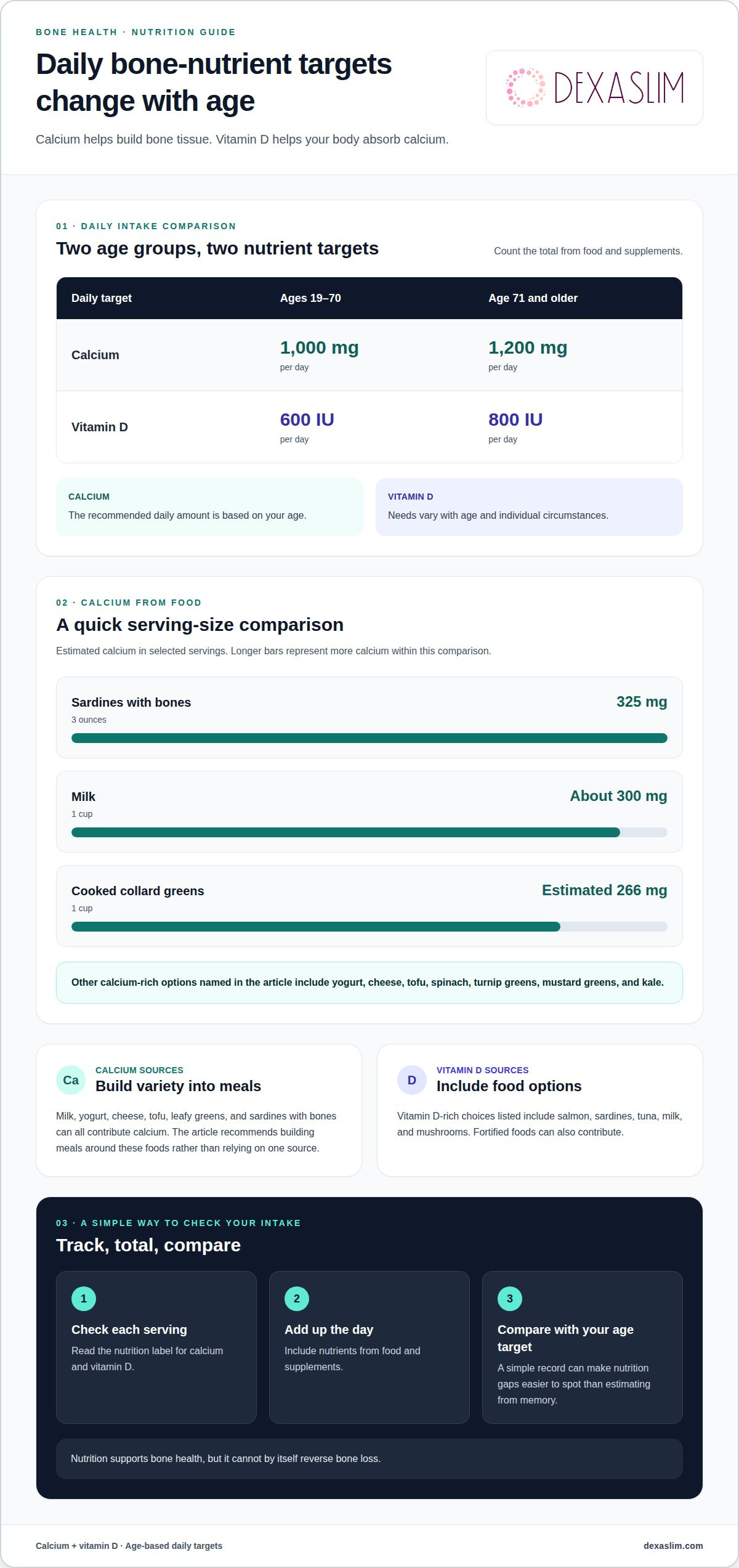
Calcium-rich foods deliver the mineral your body needs to maintain bone tissue and support bone mineral density. Milk, yogurt, and cheese are familiar options; tofu, spinach, collard greens, turnip greens, mustard greens, and kale add variety. For a concrete comparison, one cup of cooked collard greens contains an estimated 266 mg of calcium, while one cup of milk contains about 300 mg.
Sardines with bones provide another useful example: three ounces contain an estimated 325 mg of calcium. Build meals around these foods rather than relying on a single source. Vitamin D-rich choices include salmon, sardines, tuna, milk, and mushrooms. Fortified foods can also contribute; check the nutrition label to see how much calcium or vitamin D a serving provides.
Calcium Intake Recommendations
Calcium intake recommendations set a daily target for the total mineral consumed from food and supplements. They matter because a consistent intake supports bone maintenance, while the target changes with age. Men ages 19 to 70 should get 1,000 mg daily; men age 71 and older should get 1,200 mg daily.
Vitamin D targets also shift with age: adults ages 19 to 70 should get 600 IU daily, and adults age 71 and older should get 800 IU daily. Add up food and supplements when estimating intake. The combined daily calcium target is 1,000-1,200 mg, while vitamin D needs vary with age and individual circumstances.
Track the calcium and vitamin D listed for each serving, then add up what you typically get in a day. Compare the total with the age-based target. Milk, for example, can provide both nutrients, while leafy greens such as kale contribute calcium. This simple record makes gaps easier to spot than estimating from memory.
Nutrition supports bone health, but it cannot by itself reverse bone loss. Low testosterone is associated with osteoporosis in men, while the effect of testosterone replacement therapy on bone building remains under research. Androgen deprivation therapy for prostate cancer is also among the medications that may increase osteoporosis risk. Men taking it should discuss bone health with their healthcare provider.
What are the risk factors for osteoporosis in men?
Osteoporosis risk rises with age, but age is only one part of the picture. According to the National Institute of Arthritis and Musculoskeletal and Skin Diseases, about one in four men older than 50 in the United States will break a bone because of osteoporosis during their lifetime. A fracture after age 50 can be an important signal of underlying bone weakness.
Men age 70 and older face increased risk. Other factors include a close relative with osteoporosis or broken bones, a smaller, thinner build, and rarely getting enough calcium and vitamin D. White or Asian ethnicity and chronic conditions affecting the kidneys, lungs, intestines, or stomach can also contribute. Loss of an inch or more in height after age 50 may signal an existing vertebral fracture or osteoporosis, especially alongside back pain or stooped posture.
Medication history matters. Steroids, androgen deprivation therapy, anticonvulsants, thyroid hormone replacement, and some chemotherapy drugs may increase osteoporosis risk. Long-term corticosteroid use is a particular concern; the listed risk threshold is at least 5 mg of prednisone daily for more than 3 months. Don’t stop prescribed medication on your own. Instead, include its name, dose, and duration in a bone-health discussion.
Screening recommendations for men are not uniform. The U.S. Preventive Services Task Force says evidence is insufficient to recommend routine DXA testing in men, while screening guidance identifies men age 70 or older and younger men with risk factors as candidates for a DEXA scan. If you’re younger than 70, a prior fracture, steroid use, low body weight, or other risk factors can strengthen the case for assessment.
A DEXA density test measures bone mineral density. FRAX combines factors such as age, sex, medical history, and country with a T-score to estimate fracture risk over the next 10 years. These tools help clarify risk; they don’t replace a full clinical assessment. A bone density scan can provide a measurable baseline for that discussion.
Medication may be considered for men with osteoporosis or increased fracture risk after assessment. Bisphosphonates can reduce vertebral fracture risk. Teriparatide can treat severe osteoporosis and reduce vertebral fracture risk, with treatment limited to a maximum of two years. Low testosterone is associated with osteoporosis, but testosterone replacement therapy’s effect on bone building remains under research. Its bone-specific benefit is therefore uncertain. Treatment decisions should account for the cause of low testosterone, overall health, and personal goals.
Smoking cessation and alcohol limits
Smoking and heavy alcohol use increase osteoporosis risk and can weaken bones over time. Reducing tobacco exposure and keeping alcohol moderate are practical steps that support bone health alongside good nutrition and regular activity.
Smoking and Bone Health
Tobacco use is a modifiable risk factor linked to weaker bones and greater osteoporosis risk in men. Quitting, or not starting, may help prevent osteoporosis and fractures. Treat smoking cessation as part of bone health, not only as a respiratory or cardiovascular goal. If you smoke, identify common triggers and plan a replacement action, such as taking a short walk.
Make progress easier to assess: record when you smoke, what prompts it, and which replacement habits help you avoid tobacco. Review the pattern with a healthcare provider, especially if you have other risk factors, such as a previous fracture or long-term steroid use. A bone-density assessment can add context, but stopping smoking is a meaningful step even before you have a measured baseline.
Alcohol and Bone Health
Alcohol can affect bone health when intake is high or frequent. Regularly having more than two alcoholic drinks a day may raise osteoporosis risk in men, and heavy drinking can weaken bones over time. Keep intake below two drinks per day as a lifestyle measure; limiting it to one drink per day is a more conservative target for reducing risk.
Track how much you drink across the week, including pour sizes and drinks consumed at home. It is easy to underestimate a regular pattern if you count only social occasions. If you often exceed two drinks in a day, set a lower limit and choose alcohol-free alternatives on some occasions. Moderation supports bone health, but does not replace other protective habits.
Smoking and alcohol can compound an existing risk profile that includes age, low bone density, or a history of fractures. Assess them alongside medication use and calcium and vitamin D intake, rather than treating either habit in isolation. Men with several risk factors can discuss bone health and screening with a healthcare provider. A previous fracture after age 50 is an especially important signal to raise.
Build a plan around repeatable choices: stop using tobacco, avoid routinely exceeding the alcohol limit, and note your progress. If cutting back feels difficult, identify the trigger and change the routine around it. Pairing a new habit with a regular cue, such as walking after dinner instead of smoking, makes the action specific and easier to track.
Why is bone health important?
Bone mineral density provides a measurable view of bone mass, but results need context. A DXA test can identify low density, help interpret fracture risk, and track changes alongside age, medical history, and lifestyle.
A central DXA test uses a small amount of X-ray to measure calcium and other minerals in a specific area of bone. Results help show whether bone strength is within the expected range or has fallen enough to warrant attention. Bone density naturally decreases with age, especially after age 50, so a result can help turn an unseen change into a measurable baseline.
For people age 50 or older, clinicians use a T-score to compare bone mineral density with a young-adult reference mean. A T-score of -2.5 or lower is the diagnostic threshold for osteoporosis in men, corresponding to density at least 2.5 standard deviations below that reference. A T-score above this threshold still needs interpretation alongside other risk factors.
For men younger than 50, interpretation uses a Z-score instead. A Z-score of -2.0 or less is below the expected range for age. This distinction matters: the reference changes with age, so the same type of score doesn’t apply to every adult. Review the correct score with the clinician interpreting the test.
For men, screening decisions depend on risk, not age alone. A previous fracture, height loss, long-term steroid use, or a condition affecting bone health can strengthen the case for testing. The U.S. Preventive Services Task Force says evidence is insufficient to recommend routine DXA testing in men. This concerns population-wide screening, not whether an individual man with risk factors may benefit from assessment.
Use follow-up to compare like with like. Repeat bone-density testing is often considered every 1-2 years, depending on initial results and other factors. The interval should reflect the first measurement, treatment status, and changes in health or medication. A result is most useful when interpreted against the earlier scan and the same clinical context, rather than treated as a standalone number.
Bone density is one part of fracture risk. A T-score, previous fractures, medical history, age, and lifestyle each add context. FRAX estimates the chance of breaking a bone over the next 10 years using risk factors, with or without a bone density result. Use the combined picture to discuss practical next steps, including nutrition, activity, and whether further evaluation is appropriate.
Record the date and result of each scan, along with relevant changes such as a new fracture or steroid treatment. This makes comparisons more useful over time. Consider density results alongside lifestyle measures: a scan describes bone status, while daily habits can influence ongoing bone health.
Weight-bearing exercise
Regular activity loads bones and muscles, supporting strength and helping reduce falls that can lead to fractures. Combine weight-bearing movement with resistance work to challenge bones and build the strength needed for stable movement.
Weight-Bearing and Resistance Exercise
Weight-bearing exercise involves moving upright against gravity, while resistance exercise makes muscles work against an opposing force. Both matter because they challenge the body in different ways. Walking and climbing stairs are weight-bearing activities; resistance work can use body weight or equipment. Choose activities that suit your current ability and health.
Build consistency before increasing intensity. A practical target is 30 minutes of weight-bearing exercise on most days of the week. If a continuous session feels difficult, divide it into 10-minute intervals and add those minutes across the day. A brisk walk is one example; stairs can add another form of upright loading to everyday activity.
Exercise for Bone Strength
Exercise supports bone strength by repeatedly loading the skeleton, while muscle work helps maintain the force and control needed for movement. Together, these activities support mobility and can help prevent falls that lead to fractures. Exercise is not a substitute for nutrition or a bone-density assessment when risk factors are present.
Choose activity based on your starting point. Walking on level ground may be manageable, while stairs add a different challenge. As movement becomes familiar, aim for a steady routine rather than occasional hard sessions. If pain, balance limitations, or a health condition affects exercise, discuss suitable options with a healthcare professional before changing your routine.
Use a simple weekly structure: schedule weight-bearing activity on most days, then include muscle-strengthening work as your capacity allows. Track the activity and duration, including 10-minute bouts, so your actual routine is clear. Increase demands gradually; a sudden jump in intensity can disrupt consistency and make exercise harder to sustain.
Exercise can also support balance and coordination, which matter because falls can turn low bone strength into a fracture. Keep walking routes clear, wear stable footwear, and choose a well-lit space for home activity. These steps complement exercise by reducing common hazards. For people with cancer or other conditions affecting mobility, suitable activity depends on health status and treatment effects.
Don’t treat exercise as a one-time intervention. Bone and muscle respond to repeated loading, so regular activity is more useful than sporadic effort. Start with a form you can repeat, such as walking, then build a sustainable pattern that includes resistance work. If you need an objective bone-health baseline alongside your activity plan, schedule a bone density scan.
Dexaslim
Dexaslim offers a 1 Session Dexa Scan to measure bone density and give you an objective baseline for a bone-health discussion. Consider a scan when osteoporosis risk factors, a previous fracture, or questions about bone status make measurement useful. A result adds data to the picture, alongside age, medical history, and lifestyle habits.
For a broader view of health and performance, Dexaslim also offers VO2 Max Performance Testing, a Resting Metabolic Rate (RMR) Test, and a Longevity Panel. These evaluations address different measures, while a bone density scan directly assesses bone mineral density. Use the assessment that matches the question you want to explore.
Contact Dexaslim to discuss which evaluation fits your bone-health goals.
Make your next step measurable
Turn what you have learned into a sustainable bone-health plan. Set a clear personal goal, choose a way to track your progress, and review whether your approach still fits your health priorities. A reliable process makes it easier to notice changes and refine decisions instead of relying on memory or assumptions.
A plan for preventing osteoporosis in men works best when it reflects your circumstances. New health information, changes in routine, or shifting priorities may affect what deserves attention. Keep your next step specific, then build on it as your understanding develops. Consistency supports more informed choices over time.
If objective insight would help you decide what to focus on next, contact Dexaslim to discuss your bone-health goals. Take the next step with clarity, and keep moving toward a stronger, more informed future.
Frequently Asked Questions
How common is osteoporosis in men?
Osteoporosis affects millions of men, and fractures are a major consequence. About two million American men already have osteoporosis. According to the National Institute of Arthritis and Musculoskeletal and Skin Diseases, about one in four men older than 50 in the United States will break a bone because of osteoporosis during their lifetime. These figures show why bone health deserves attention before a fracture becomes the first sign.
How can men and women prevent osteoporosis?
Men and women can support bone health through habits that protect bone tissue and reduce fall risk. Eat foods rich in calcium and vitamin D, stay physically active, avoid smoking, and limit alcohol. Prevention also means recognizing personal risk factors, such as a previous fracture or medication that can affect bone. A healthcare professional can help interpret those factors and decide whether a bone-density assessment belongs in your plan.
Do fragile bones lead to fractures in men?
Yes. Fragile bones can fracture after a fall or impact that might not break stronger bone. Osteoporosis-related fractures commonly affect the hip, spine, or wrist, and a vertebral fracture may cause back pain, height loss, or a stooped posture. A fracture after age 50 is an important signal to discuss bone health and possible evaluation, even if the injury seemed minor.
How does bone mass change with age?
Bone mass generally builds through early life and reaches its peak around the 20s. Men typically begin losing bone mass in their 60s, although individual patterns vary with health, hormones, medications, and lifestyle. Bone is continually remodeled, so nutrition and physical activity remain relevant after peak mass. A fracture, noticeable height loss, or new risk factor can make reassessment especially useful.
How is osteoporosis diagnosed?
Osteoporosis is commonly diagnosed using bone mineral density measured by a central DXA scan. For adults age 50 or older, a T-score of -2.5 or lower usually indicates osteoporosis. Clinicians also consider fracture history, medications, and other risk factors rather than interpreting the scan in isolation. FRAX can estimate the likelihood of a fracture over the next 10 years using personal risk information.
What can I do to keep my bones healthy?
Make bone-supportive choices part of your routine. Include foods containing calcium and vitamin D in meals, add regular weight-bearing movement, and choose muscle-strengthening activity suited to your ability. Avoid smoking and keep alcohol moderate. Record fractures, height changes, and medications that may affect bone health. These details make discussions about risk and testing more specific than relying on symptoms alone.
What is a T-score?
A T-score compares your bone mineral density with the average density of a healthy young adult. It helps clinicians classify bone density in adults age 50 or older. A score of -2.5 or lower generally meets the diagnostic threshold for osteoporosis. Results still need context: a prior fracture, medication history, and other health factors can influence what the measurement means for your overall fracture risk.
How much calcium and vitamin D do men need to help prevent osteoporosis?
Men ages 19 to 70 should get 1,000 mg of calcium and 600 IU of vitamin D daily. Men age 71 and older should get 1,200 mg of calcium and 800 IU of vitamin D daily. Count food and supplements together when estimating intake. Milk, yogurt, tofu, leafy greens, salmon, and fortified foods can contribute; check serving labels to gauge what your regular meals provide.