
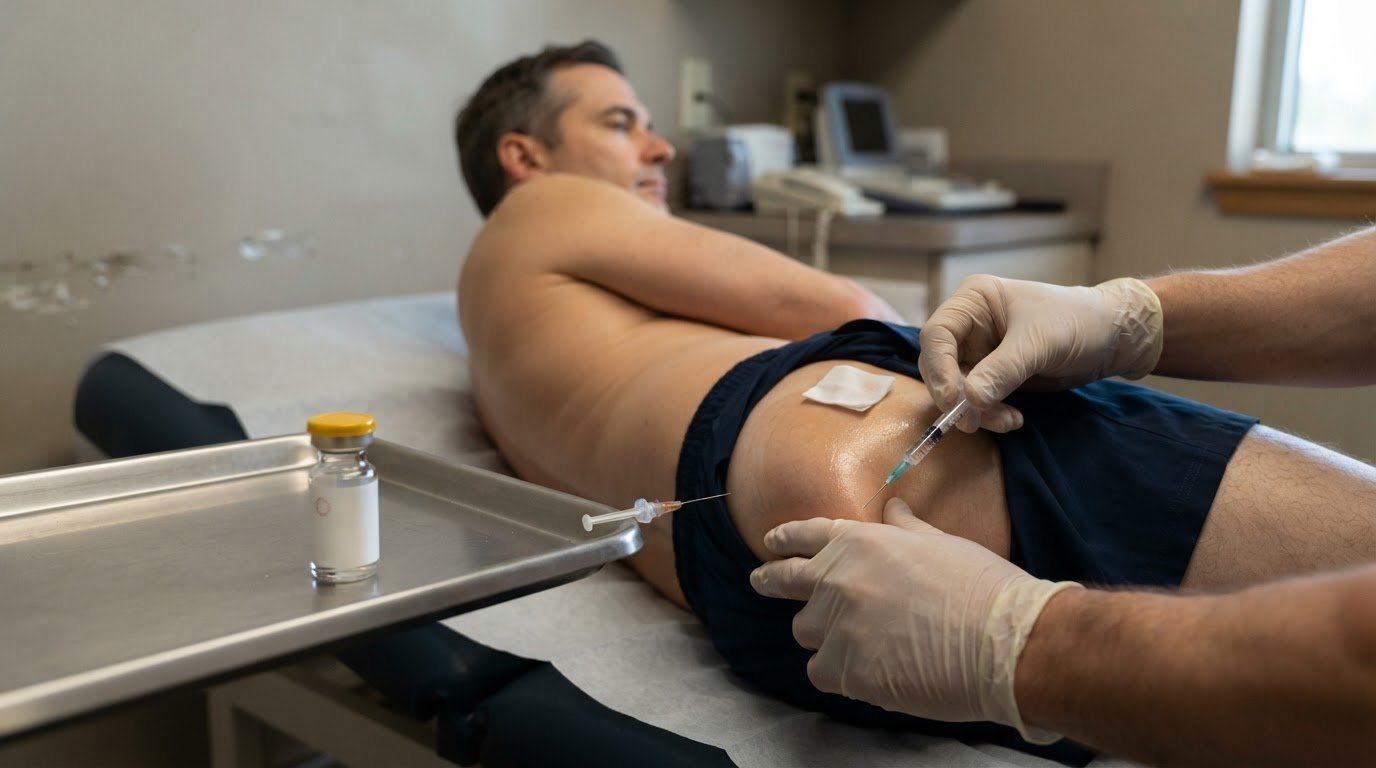
Low testosterone can contribute to fatigue and weight gain, but these symptoms alone cannot confirm the cause. To assess whether they’re connected, clinicians consider symptoms alongside blood tests that measure testosterone levels. The result provides objective information, but needs to be interpreted in context.
Feeling drained, noticing changes in body composition, or experiencing shifts in libido, erections, or mood can be frustrating, especially when the cause is unclear. These changes may be consistent with low testosterone, but they can have other explanations. Testing offers a clearer starting point than guesswork.
Learn how testosterone deficiency may affect energy, body fat, muscle, sexual function, and mood. This article explains how blood tests measure testosterone, why results need context, and how testosterone replacement therapy may fit into care. You’ll get a practical framework for understanding symptoms and the data behind them.
Key Takeaways
• Fatigue and weight changes can have several causes. Learn how testosterone testing adds objective information to symptom patterns.
• Low testosterone may affect muscle mass and strength, which can influence body composition over time.
• Changes in mood, focus, libido, or erections can add useful context when evaluating possible testosterone deficiency.
• Testosterone levels vary with age, but a test result needs to be interpreted alongside symptoms and the lab’s reference range.
• An RMR test can help estimate resting calorie needs, adding metabolic data to decisions about weight and energy.
Blood testing for testosterone deficiency
A blood test measures testosterone levels and helps assess whether deficiency could explain symptoms. Interpret the result alongside symptoms and other possible causes of fatigue.
When to Consider Testosterone Testing
Testing may be considered when symptoms such as reduced sexual desire, fewer morning erections, erectile difficulties, or persistent fatigue occur together. These patterns matter because a blood test can show whether testosterone levels are low, while symptoms alone cannot establish deficiency.
Track changes that affect daily life, including energy, libido, and mood. Discuss when they began and how long they’ve lasted during a clinical assessment. Fatigue has other possible causes: sleep apnea, for example, can disrupt sleep and leave someone exhausted even after eight hours in bed.
Testosterone Levels by Age and Time of Day
Testosterone levels can decline by up to 2% each year in men after age 30. That trend doesn't establish an individual’s level or explain symptoms by itself. A blood test provides a measurement to interpret alongside age, symptoms, and the laboratory’s reference range.
When should testosterone levels be tested? A morning blood draw is commonly used because levels vary during the day. Follow the test’s timing instructions and note when the sample was taken to help put the result in context.
Testing should clarify the picture, not reduce every symptom to one hormone. The Centers for Disease Control and Prevention estimates that more than 2 in 5 American adults have prediabetes. Metabolic health can also be relevant when fatigue or weight changes persist, so discuss these concerns as part of the assessment.
A focused evaluation connects the blood result with the reason for testing. Tell the clinician whether fatigue began before or after changes in sleep, sexual function, or body composition. Mention relevant medicines and health changes, too. This timeline can help distinguish a possible hormone-related pattern from other explanations.
Testosterone replacement may be considered when symptoms and test results support treatment. It does not replace an assessment for other causes of low energy. Before deciding, discuss potential benefits, risks, and monitoring. The goal is an informed plan based on measured levels and individual health, not symptoms alone.
Does Low Testosterone Cause Weight Gain?
Yes, low testosterone can contribute to fat gain and muscle loss, changing body composition. Lifestyle changes can support energy and weight management, while blood testing helps assess whether testosterone may be involved.
Changes in Muscle Mass and Strength
Testosterone helps support muscle mass and strength, so deficiency may make both harder to maintain. Reduced strength can affect everyday activities, from climbing stairs to carrying groceries. If familiar tasks feel harder or muscle definition changes, note those changes alongside fatigue or shifts in sexual function. Several symptoms together provide more context than one change alone.
Muscle Loss and Weight Gain
Muscle loss can change body composition even when the scale tells only part of the story. Testosterone deficiency may contribute to muscle loss and make weight management more challenging. For example, someone might notice weaker lifts and a softer waistline at the same time. Tracking strength and how clothes fit can reveal changes that body weight alone may miss.
Muscle Loss and Belly Fat
Low testosterone may be associated with less muscle and more belly fat. The hormone plays a role in metabolism, and reduced muscle can make maintaining body composition more challenging. A changing waistline, reduced strength, or enlarged breast tissue may occur together. These signs describe a pattern, but a blood test is needed to measure testosterone levels.
Look at the pattern over time. A gradual drop in strength, less motivation to move, and increasing abdominal fat can reflect interacting changes in muscle, activity, and hormone function. Low energy may reduce exercise, while reduced muscle mass can make weight management harder. Neither the mirror nor a single weigh-in identifies the cause. Compare body composition and daily function with symptoms such as lower libido or erectile difficulties.
Start with practical lifestyle measures: build regular movement, strength-focused activity, nourishing meals, and consistent sleep into your routine. These steps can support energy and weight management, but they don’t diagnose testosterone deficiency. Persistent symptoms call for objective assessment, not assumptions based on weight alone.
When test results and symptoms indicate deficiency, testosterone replacement therapy may be considered as a treatment option. Discuss how treatment fits your measured levels, health goals, and ongoing monitoring. If you’re exploring testosterone replacement therapy, use a data-led evaluation to guide the conversation.
Mood changes and depression
Testosterone deficiency may be associated with irritability, mood swings, anxiety, and symptoms of depression. These changes can occur alongside low energy or reduced interest in sex, but they don’t prove testosterone is the cause. Consider the full pattern, including when mood changes began and whether they affect work, relationships, or everyday decisions.
Brain fog can also be part of the picture. Difficulty concentrating or remembering may make familiar tasks feel harder, such as following a conversation or finishing a routine assignment. Note specific examples instead of relying on a general sense of feeling different. A clear timeline helps connect mood, focus, energy, and other symptoms during an appointment.
Testosterone is only one possible factor in emotional health. An association between low testosterone and elevated cortisol may help explain why irritability, anxiety, or depression can occur together. It does not establish that either hormone is responsible in an individual case. Sleep disruption, life stress, and other health changes also belong in the conversation.
Make an appointment more useful by recording changes you can describe. Include when they started, whether they fluctuate, and how they affect daily life. For example, note trouble concentrating during meetings, increased irritability at home, or losing motivation for usual activities. Record changes in libido, erections, or energy, too. This gives the clinician a concrete symptom pattern to assess.
A systematic review of 27 clinical trials found that testosterone supplementation offered relief of depression. That finding does not mean testosterone is a stand-alone treatment for depression, or that every person with low mood has a deficiency. Treatment decisions need to account for measured testosterone levels, symptoms, and overall health. Mood symptoms deserve direct attention, not assumptions based on a hormone result alone.
Ask how testing relates to your symptoms and what the results can clarify. A blood test measures testosterone levels, adding objective information to the history you share. If testing indicates deficiency, discuss whether testosterone replacement is appropriate and what follow-up involves. Therapy is not an automatic response to irritability, brain fog, or a difficult stretch.
Use a practical plan: track mood and concentration, describe changes at your appointment, and review the evidence together. A shift in mood alongside reduced energy or sexual function provides useful context, but isn’t a diagnosis. Measured results and a careful review help distinguish a possible hormone contribution from other explanations.

Testosterone deficiency and weight gain
Testosterone deficiency and weight gain can reinforce each other. Lower testosterone may contribute to increased body fat, while obesity can further reduce testosterone levels. Fatigue, reduced muscle, and rising abdominal fat may develop together, making it harder to tell which change came first.
Energy is one link. Low testosterone may contribute to persistent fatigue and less motivation to exercise. Reduced activity can make weight gain more likely, while accumulating body fat may further affect testosterone. Daily routines can shift gradually: walks become less frequent, workouts feel harder, and movement drops without a deliberate change in schedule.
Body composition adds another layer. Testosterone deficiency can accelerate muscle loss, while increased body fat and reduced muscle may raise the risk of diabetes or heart disease. The scale alone cannot distinguish fat gain from muscle loss. Changes in strength, waistline, and activity provide additional context for understanding what is affecting your body.
Focusing on only one measure can make the cycle difficult to address. Restricting food without considering low energy, for example, may leave exercise and daily movement low. Conversely, treating weight as the only issue can overlook a hormone deficiency. Consider the combined pattern: energy, activity, muscle strength, body composition, and measured testosterone levels.
Obesity may affect more than body composition. It can further reduce testosterone levels and increase prostate cancer risk. Persistent weight gain alongside symptoms is worth discussing as a connected health concern, rather than treating each change as unrelated. A blood test measures testosterone levels, while an overall assessment considers metabolic health and other possible contributors.
A healthy diet alongside testosterone treatment may help address weight gain and low testosterone. Treatment is not an automatic weight-loss solution; its relevance depends on whether testing and symptoms indicate deficiency. The practical goal is to address measured hormone levels while supporting habits that protect energy, muscle, and metabolic function.
Track trends instead of reacting to a single weigh-in. Note changes in waistline, strength, exercise motivation, and fatigue, then compare them with testosterone test results. If body fat rises while muscle and activity decline, that pattern provides useful context. Measured levels are still needed to establish whether testosterone deficiency is part of the picture.
The key takeaway is the feedback loop: low testosterone can contribute to fat gain and inactivity, while obesity can lower testosterone further. Addressing the cycle means considering both hormone status and daily health behaviors. Use blood testing to assess deficiency, then consider nutrition, movement, muscle, and treatment as part of the plan.
What are normal testosterone levels by age in men?
There isn’t one age-based testosterone value that defines what is normal for every man. Levels can decline by up to 2% each year after age 30, but age alone can’t establish deficiency. A blood test gives an individual result; symptoms and the laboratory’s reference range help put that result into context.
Think of age as one factor, not a diagnosis. Two men of the same age can have different test results and symptoms. Interpret a result against the reference range supplied by the laboratory that performed the test. The range helps frame the measurement, but does not replace assessment of fatigue, sexual function, or other changes.
For example, a man in his 40s with persistent fatigue and reduced libido has a different clinical picture from someone of the same age without those symptoms. Neither age nor a single symptom confirms low testosterone. The meaningful question is whether measured levels, symptoms, and health context point in the same direction. Report changes clearly, including when they began and how they affect daily life.
Age-related decline doesn’t mean every older man has a deficiency. Testosterone levels may change gradually without symptoms, while a symptomatic person may need assessment at any adult age. Focus on the result and symptom pattern, not an assumed target based only on age. Discuss the test’s reference range, the timing of the blood draw, and the symptoms prompting testing.
Use a simple framework to interpret a result: compare the measured level with the laboratory’s range, connect it to symptoms, and review relevant health factors. Fatigue, for instance, can relate to disrupted sleep, while weight changes may have metabolic contributors. This context helps prevent age-based assumptions from becoming an inaccurate explanation.
If test results and symptoms support testosterone deficiency, testosterone replacement therapy may be considered. The decision should follow a review of measured results and individual health factors, not age alone. Ask how treatment goals and follow-up relate to your findings and symptoms. A data-led discussion keeps the focus on evidence rather than a generic age chart.
Take your test result and symptom timeline into the discussion. Clarify which reference range applies, how age factors into interpretation, and whether additional assessment is relevant. If deficiency is established and replacement is being considered, explore testosterone replacement therapy as a next step.
Dexaslim: Resting Metabolic Rate (RMR) Test
Dexaslim’s Resting Metabolic Rate (RMR) Test adds metabolic data when weight or energy changes call for a clearer baseline. It helps calibrate daily caloric needs and fitness regimens, complementing rather than replacing blood testing for testosterone deficiency. An RMR result can inform nutrition and activity planning, but it doesn’t determine whether testosterone levels are low.
Consider this test when you want to understand resting energy needs as part of a broader body-composition or performance plan. For questions about possible deficiency, discuss testosterone testing and treatment separately. Dexaslim also offers a 1 Session Dexa Scan and VO2 Max Performance Testing for other body-composition and performance measures.
Contact Dexaslim to discuss how an RMR test can support your goals.
Turn symptoms into a clear next step
If low testosterone, fatigue, and weight gain are affecting your daily life, move from assumptions to measurable information. Test results are most useful when considered alongside symptoms, goals, and the broader health picture. Use that context to guide a focused conversation about what to assess next.
For a wider view of body composition and performance, Dexaslim offers a 1 Session Dexa Scan, VO2 Max Performance Testing, and Resting Metabolic Rate (RMR) Test. Each provides a different type of measurement, helping you focus on the information relevant to your goals rather than relying on guesswork.
Choose the next step that matches the question you want answered. Contact Dexaslim to discuss your options and start building a more informed plan. Clear data can help you move forward with purpose.
Frequently Asked Questions
What are the Symptoms of Low Testosterone?
Possible symptoms include reduced sexual desire, fewer spontaneous or morning erections, erectile difficulties, persistent fatigue, and mood changes. Some men also report difficulty concentrating or remembering. Low testosterone can affect facial and body hair growth, and baldness may occur more rapidly. Symptoms vary and can appear in different combinations. Note which changes affect daily life and discuss the pattern during an assessment.
Can low testosterone cause fatigue and weight gain?
Yes. Low testosterone, fatigue, and weight gain can be connected: testosterone deficiency may contribute to fatigue, reduced motivation to exercise, muscle loss, and increased body fat. Less activity can make weight gain more likely, while obesity can further lower testosterone. Someone whose energy drops and activity declines, for example, may notice body-composition changes. Symptoms alone can’t show whether testosterone is the cause, so measured levels provide useful evidence.
What are common symptoms of low testosterone in men?
Common signs include lower libido, fewer morning erections, erectile difficulties, low energy, irritability, and trouble concentrating. Testosterone deficiency may also affect sperm amount or quality, which can matter when considering fertility. One isolated change doesn’t establish the cause. A more useful account includes when symptoms began, whether several appeared together, and whether they affect sexual function, relationships, exercise, or everyday responsibilities.
What other conditions can cause fatigue and weight gain?
Sleep apnea can disrupt sleep and leave someone tired even after spending eight hours in bed. Prediabetes is another relevant metabolic-health concern: the Centers for Disease Control and Prevention estimates that more than 2 in 5 American adults have prediabetes. These examples show why low testosterone, fatigue, and weight gain shouldn’t automatically be treated as a single-cause pattern. Share sleep changes and other health concerns during an assessment.
How is low testosterone diagnosed and what blood tests are needed?
A blood test measures testosterone levels and helps determine whether they are low. Interpret the result alongside symptoms and the laboratory’s reference range, not as a stand-alone diagnosis. Tell the clinician about changes such as reduced libido or persistent fatigue, and when they began. Sample timing matters because levels vary during the day; morning testing is commonly used.
What treatments are available for low testosterone?
Testosterone replacement therapy may be considered when symptoms and test results support treatment. Replacement hormones can be delivered through patches, injections, pills, or topical creams. The suitable approach depends on the person’s health context and treatment goals. Discuss monitoring and how progress will be assessed before starting. Treatment isn’t an automatic response to fatigue, low mood, or weight changes without evidence of deficiency.
How effective is testosterone replacement therapy for fatigue and weight loss?
Testosterone replacement may address testosterone deficiency, but it shouldn’t be treated as a guaranteed solution for fatigue or weight loss. The reported evidence here doesn’t establish a specific weight-loss outcome. A systematic review of 27 clinical trials found testosterone supplementation offered relief of depression, which is a different outcome. Set clear goals with measured hormone levels and assess energy and body-composition changes separately.
What are the risks and side effects of testosterone therapy?
Testosterone therapy has potential risks and side effects, so discuss them before starting rather than assuming treatment is routine. The conversation should cover your symptoms, measured levels, health history, treatment route, and monitoring plan. Ask how possible effects will be reviewed and what changes should prompt follow-up. A careful discussion of benefits and risks helps determine whether replacement is appropriate for your circumstances.