

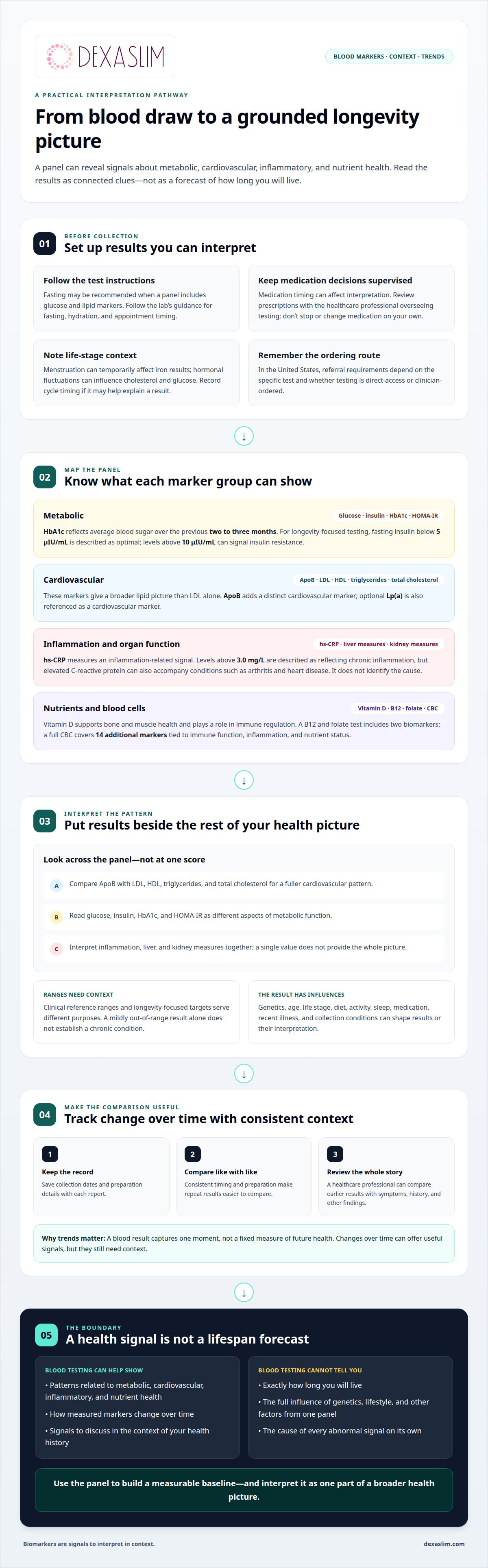
A blood test can reveal health patterns, but it can’t tell you exactly how long you’ll live. A longevity blood panel assesses markers related to metabolic, cardiovascular, inflammatory, and nutrient health, helping you build a measurable picture of your current baseline.
It’s reasonable to want a clear sense of what your results mean for the years ahead. Blood biomarkers can reveal signals associated with health risks and show how your health changes over time, but they’re only part of the picture. Genetics, lifestyle, and other factors also shape longevity.
Learn which markers a panel may include, how to interpret results using clinical reference ranges, and what those results can and can’t predict. You’ll also see how testing can support a more informed approach to healthy aging, without treating a lab result as a life-expectancy forecast.
Key Takeaways
• Blood markers offer useful health signals, but genetics, lifestyle, and life stage also shape how results should be interpreted.
• HbA1c reflects average blood sugar over the previous two to three months, while other markers reveal different aspects of metabolic health.
• Compare cardiovascular markers such as ApoB with the broader lipid profile to build a more complete picture of heart-related risk.
• Clinical reference ranges and longevity-focused targets serve different purposes; context matters when deciding what a result means.
• Blood testing can help track health trends, but it cannot definitively predict lifespan.
Genetic, epigenetic, and life-stage differences in test results
A blood result captures one moment, not a fixed measure of your future health. Age, inherited traits, daily habits, and life stage can all influence the numbers. A complete blood count, for example, measures blood cells and hemoglobin, while iron results can shift with menstrual bleeding. Compare results with your own history, not just a single reference interval.
Genetics can shape the baseline behind a result, while lifestyle affects how that baseline changes. Diet, activity, sleep, and medication use provide context for metabolic and cardiovascular markers. Epigenetic patterns relate to how gene activity responds to experiences and exposures. Blood testing alone doesn’t capture every influence, so treat a result as a signal to interpret, not a complete account of health.
Life stage can affect testing timing and interpretation. Iron levels may temporarily drop during menstruation, and hormonal fluctuations can influence cholesterol and glucose. For non-urgent testing, scheduling a few days after a period ends may help reduce cycle-related variation. If a result changes near menstruation, record the timing and discuss it alongside your blood cell count and iron panel.
In the United States, whether you can order testing without a doctor’s referral depends on the ordering route and the specific test. Direct-access testing and clinician-ordered testing follow different processes, so confirm referral requirements through the route you use to order your panel.
Fasting may be recommended when a panel includes glucose and lipid markers. Follow the test’s preparation instructions, and don’t stop or change medication on your own. Because medication timing can affect interpretation, review your current prescriptions with the healthcare professional overseeing your testing before collection.
Broad testing can produce results that need context, not immediate conclusions. A mildly out-of-range marker doesn’t, by itself, establish a chronic condition; inflammation, recent illness, and collection conditions may affect results. Reactive protein markers, for example, indicate inflammation but don’t identify its cause. A clinician can interpret patterns across results, symptoms, history, and kidney function.
Start by following the lab’s instructions for fasting, hydration, and appointment timing. After collection, results may arrive digitally, but turnaround depends on the assays and laboratory processing. Review the report with a healthcare professional who can explain abnormal patterns, compare earlier results, and determine whether follow-up testing is appropriate. Keep collection dates and preparation details with each report to make comparisons meaningful.
Metabolic, cardiovascular, inflammatory, and nutrient biomarkers
These markers show how blood sugar regulation, cardiovascular risk, inflammation, and nutrient status fit together. Read them as connected signals, not isolated scores.
Metabolic and Nutrient Markers
Glucose, insulin, HbA1c, and HOMA-IR assess different aspects of metabolic function. The National Institute of Diabetes and Digestive and Kidney Diseases says HbA1c reflects average blood sugar over the previous two to three months. A fasting insulin below 5 µIU/mL is described as optimal for longevity-focused testing, while levels above 10 µIU/mL can signal insulin resistance.
Cardiovascular Risk Markers
A cardiovascular profile can include ApoB, LDL, HDL, triglycerides, and total cholesterol. These five markers add context to LDL cholesterol, which can raise heart disease risk when elevated. Compare the full pattern rather than interpreting LDL alone. HDL and triglycerides, for example, provide separate information about the lipid profile and help frame an overall cardiovascular estimate.
Inflammation and Organ Markers
High-sensitivity C-reactive protein, or hs-CRP, measures an inflammation-related signal. Levels above 3.0 mg/L are described as reflecting chronic inflammation, while elevated C-reactive protein can also accompany conditions such as arthritis and heart disease. Liver and kidney measures can add context about organ function, but results should be interpreted together rather than drawing conclusions from one value.
Nutrient results add another layer. Vitamin D supports bone and muscle health and plays a role in immune regulation. A vitamin B12 and folate test includes two biomarkers, while a full CBC covers 14 additional markers tied to immune function, inflammation, and nutrient status. Consider these alongside symptoms, diet, and other findings, rather than treating one nutrient result as a complete assessment.
Testing conditions also shape interpretation. Fasting may be recommended because panels can include glucose and lipid markers. Follow the collection instructions and keep timing consistent when comparing repeat results. A change in preparation can affect how results line up, making trends harder to interpret. Ask a healthcare professional to review patterns across metabolic, lipid, inflammatory, and organ markers.
If metabolic data would help you refine daily energy needs, consider a Resting Metabolic Rate (RMR) Test alongside blood-based findings. RMR testing measures resting energy expenditure, while blood markers provide a different view of metabolic health. Use each measurement for its specific purpose, then interpret the results together with your broader health context.
Cardiovascular markers including ApoB and optional Lp(a)
Cardiovascular assessment works best as a pattern, not a single cholesterol result. Pair lipid markers with metabolic findings to evaluate risk signals in context.
ApoB and Optional Lp(a)
ApoB adds a distinct cardiovascular marker alongside LDL, HDL, triglycerides, and total cholesterol. An ApoB level below 80 mg/dL is associated with minimal cardiovascular risk; levels above 100 mg/dL are described as accelerating atherosclerosis. A 21-year study found ApoB strongly associated with cardiovascular risk. Optional Lp(a) can also be considered as a separate measurement in the overall profile.
Lipids and Cardiovascular Risk
Review LDL alongside HDL, triglycerides, and total cholesterol rather than reading LDL in isolation. High LDL can raise heart disease risk, and cardiovascular disease is the leading cause of death in the United States. The five-marker profile of ApoB, LDL, HDL, triglycerides, and total cholesterol provides related measurements for evaluating cardiovascular health.
Blood sugar and insulin markers add metabolic context to cardiovascular results. Glucose, insulin, HbA1c, and HOMA-IR reflect different metabolic processes, so compare their pattern rather than treating one value as a diagnosis. A study involving over 4,300 non-diabetic adults examined HOMA-IR in relation to later-onset type 2 diabetes and chronic kidney disease.
Organ markers can broaden that assessment. A comprehensive metabolic panel includes 21 biomarkers, offering a set of results to review alongside lipid and glucose findings. Use the report to identify which values need interpretation together, including measures related to liver and kidney function. Don’t assume one abnormal result explains the full pattern.
Hormone testing can add another dimension when symptoms or clinical context point to a possible imbalance. Testosterone testing may help evaluate hormonal imbalance, fertility issues, PCOS, or athlete monitoring for performance-enhancing drug use. Thyroid markers and vitamin results address different questions; consider them in their own clinical context instead of treating them as direct substitutes for heart-risk markers.
Use a clear review sequence: examine ApoB and the lipid profile, compare glucose and insulin-related markers, then assess relevant organ and hormone findings. A Resting Metabolic Rate (RMR) Test can complement blood data by measuring resting energy needs, but it doesn’t replace cardiovascular or laboratory markers. This distinction keeps each result tied to the question it can answer.
What is the difference between optimal ranges and clinical reference ranges for blood tests?
Clinical reference ranges help flag results outside a laboratory’s comparison interval. Longevity-focused targets may set a narrower goal for risk management. For example, fasting glucose of 85 mg/dL may be viewed more favorably than 99 mg/dL, even though both are described as within the normal range.
Some longevity-focused targets list HDL above 1.2 mmol/L, LDL below 3 mmol/L, non-HDL cholesterol below 4 mmol/L, and a total cholesterol-to-HDL ratio below 4. The same guide lists triglycerides below 1.7 mmol/L and hs-CRP below 1.0 mg/L as optimal. These targets are not a diagnosis; interpret them alongside your clinical history.
Lifestyle and environment can shift biomarkers between tests. Changes in diet, exercise, supplements, sleep, illness, or collection preparation may affect glucose, lipids, and inflammation markers. Compare results collected under similar conditions, then record what changed between tests. This helps distinguish a lasting trend from a short-term fluctuation.
A panel’s contents vary. Common categories include glucose and insulin markers, cholesterol and triglycerides, inflammation markers, blood cell measures, nutrient tests, and liver or kidney measures. Some panels also include hormones. Review the test names and biomarkers included before interpreting a report, because panels with similar labels may assess different areas of health.
For cardiovascular and diabetes risk, consider the relationship among glucose, insulin, HbA1c, LDL, HDL, triglycerides, and ApoB. A fasting insulin above 10 µIU/mL is described as a signal of insulin resistance in longevity-focused testing. High LDL can raise heart disease risk, while hs-CRP above 3.0 mg/L is described as reflecting chronic inflammation. Each value contributes evidence, not a standalone conclusion.
In the United States, a longevity panel’s price depends on the case and is given after a quote request; cost factors include which tests and biomarkers are included. Insurance coverage depends on plan rules and medical-necessity criteria, so wellness testing may be paid out of pocket.
For metabolically healthy adults who aren’t making major changes, annual testing can track trends. If you’re actively changing diet, exercise, or supplements, testing every three to six months can help assess those changes. Keep the panel and collection conditions consistent when comparing results.
Whether a longevity blood test can predict life expectancy
No blood test can definitively predict how long you’ll live. A longevity blood panel can measure biomarkers associated with health risks, but it can’t calculate a reliable lifespan or identify a specific age you’ll reach. Treat the result as health information, not a countdown.
Testing can still reveal useful warning signs. Many chronic diseases that affect long-term health in the United States can have measurable blood signals years before symptoms appear. A pattern of metabolic or cardiovascular markers, for example, can point to areas that deserve attention. That signal supports earlier investigation; it doesn’t confirm a future diagnosis.
Association isn’t certainty. A marker linked with a disease doesn’t establish that an individual will develop it. A blood test measures selected features at the time of collection, while a prediction about lifespan would need to account for far more than those measures. A single result can’t capture every future health change.
Some tools estimate biological age using biomarker-based algorithms. Healthspan estimates biological age by comparing how the body appears to be aging with chronological age. That comparison can offer another way to interpret a comprehensive set of results, but it’s an estimate, not a validated personal forecast of lifespan.
Use the estimate as a tracking tool. Blood biomarkers can show how health changes relate to biological age over time. For instance, compare later results with an earlier baseline and note whether the same markers move in a favorable or unfavorable direction. The value lies in the trend, not a single score.
Put each result through a practical review:
• Identify which measured markers relate to the health question you want to understand.
• Compare the result with previous testing performed under similar conditions.
• Review linked findings together instead of treating one number as a complete answer.
• Discuss results and next steps with a healthcare professional who knows your history.
This process turns lab data into useful insights. A result can help frame a conversation about risk factors or prompt further evaluation, but it can’t establish the cause of a change by itself. Symptoms, medical history, and other clinical measures remain relevant when interpreting blood tests.
Keep the distinction clear: lifespan isn’t a direct laboratory output, while biomarkers are measurable health signals. A biological-age estimate may help organize those signals, but its meaning depends on the algorithm and the data it uses. Compare like with like, and focus on changes you can discuss and act on.
For a structured way to assess health markers, explore longevity testing. Use testing to establish a baseline, evaluate relevant trends, and guide informed conversations about healthy aging, not to seek a guaranteed number of years.
Dexaslim: 1 Session Dexa Scan
Dexaslim’s 1 Session Dexa Scan gives you a measurable view of body composition and bone density using medical-grade DEXA technology. Consider it when blood markers are only part of the baseline you want to understand, and you also want scan-based body composition information.
Pairing different measurements can clarify separate aspects of health. A Longevity Panel assesses blood-based markers, while VO2 Max Performance Testing evaluates aerobic endurance, peak oxygen consumption, and cardiovascular efficiency. A Resting Metabolic Rate (RMR) Test measures resting energy needs. Each service answers a different question, so choose according to the information you want to track.
Use your results to guide focused conversations about your health and next steps. Visit dexaslim.com to explore testing options or contact Dexaslim.
Turn Your Results Into a Clear Next Step
Make your next move deliberate. Decide what you want your health data to help you understand, then bring that question to your next review. A longevity blood panel is more useful when its results connect to a practical decision, not simply another set of numbers to store.
Before testing, write down your main goal and any changes you want to track. After receiving results, note what needs follow-up and what you’ll discuss with a healthcare professional. This gives you a personal framework for reviewing new information without treating every result as a verdict.
Dexaslim offers testing options for people who want to build a more complete health baseline. Choose the next measurement based on the question you want answered, and keep your focus on informed progress. Contact Dexaslim about testing to explore a suitable next step. Take charge of your data, then use it to move forward with purpose.
Frequently Asked Questions
Is there a longevity test?
There isn’t one test that measures every aspect of longevity. Testing can combine blood markers with other measures, such as body composition or aerobic capacity, to build a broader health baseline. Each test answers a different question. For example, a blood panel evaluates selected biological markers, while VO2 Max testing assesses aerobic performance. Choose tests based on the health questions you want your results to inform.
What Is Longevity Testing?
Longevity testing is a proactive way to measure health factors relevant to aging and long-term wellbeing. It can involve blood tests and other assessments, with results interpreted alongside personal health history and lifestyle. The goal is to create useful information for tracking and discussion, not to promise a specific outcome. Before testing, identify the areas you want to understand, such as metabolic health or physical performance.
What is a longevity blood panel and how is it different from a standard physical?
A longevity blood panel evaluates selected blood markers to create a health baseline; a standard physical is a broader clinical visit. The visit can include conversation, examination, and preventive-care decisions, while laboratory results provide measurements from a blood sample. They serve different purposes and can complement each other. Bring existing lab reports to your appointment so the healthcare professional can compare findings and discuss relevant next steps.
Are blood tests accurate for identifying disease and predicting longevity?
Blood tests can identify measurable signals associated with disease, but a result alone doesn’t establish a diagnosis or predict lifespan. Accuracy depends on the specific test, sample quality, and clinical context. An abnormal marker, for example, may prompt a repeat measurement or additional evaluation rather than a firm conclusion. Use results as evidence to discuss, not as a stand-alone forecast of future health.
What Happens After You Receive Your Results?
Review the report for the test name, result, unit, and laboratory reference interval. Then group findings by topic, such as lipids or glucose, and note questions about unusual or changing values. Compare with earlier results only when the tests and collection conditions are comparable. A healthcare professional can explain how findings relate to your history and whether follow-up evaluation is appropriate.
What are some examples of biomarkers?
Examples include glucose, HbA1c, ApoB, high-sensitivity C-reactive protein, and vitamin D. Each represents a different measurable feature: glucose relates to blood sugar, ApoB to cardiovascular assessment, and C-reactive protein to inflammation. A complete blood count also reports blood cell measures. Look at what each marker assesses, then interpret the result in relation to other findings and your health context.
What is an ideal ApoA1 and ApoB result?
There isn’t one universal ideal pair that applies to every person. ApoB below 80 mg/dL is associated with minimal cardiovascular risk in longevity-focused guidance, while levels above 100 mg/dL are described as accelerating atherosclerosis. ApoA1 should be interpreted with the full lipid profile and personal risk context. Don’t use a single target as a substitute for reviewing the complete cardiovascular picture.
What tests are included in a longevity blood panel?
Panel contents vary, so review the named tests on the report or service description. Blood testing may assess metabolic, lipid, inflammatory, nutrient, and organ-function markers. Dexaslim’s Longevity Panel is described as including blood, DNA, and microbiome testing. These methods assess different types of information, so consider which health questions each component addresses before interpreting the combined results.