.svg)


The fastest way to reduce visceral fat isn’t a crash diet or a “belly-fat-burning” supplement. It’s a focused plan to reduce overall body fat while protecting your health and muscle. If you’re searching for how to reduce visceral fat quickly, start with what evidence supports: consistent changes to eating, activity, sleep, and other daily habits, not promises of targeted fat loss.
It’s understandable to want visible progress fast, especially when conflicting advice makes it hard to know what works. But the scale can’t show how your body composition is changing, and waist measurements can vary. Use a steady, repeatable tracking routine rather than reacting to daily fluctuations.
This guide covers the habits to prioritize, what realistic progress can look like, and how to track change beyond body weight. You’ll also learn when a clinician may help personalize your next steps. Objective tools, including a medical-grade DEXA body-composition scan, can complement home measurements, but they don’t replace sustainable habits or guarantee fat loss. Build a plan you can maintain, measure consistently, and refine with better data.
Key Takeaways
• Visceral fat surrounds internal abdominal organs, and abdominal exercises alone can’t selectively burn it.
• Learn how to reduce visceral fat quickly with sustainable food choices, regular aerobic activity, and resistance training, not crash diets or detox products.
• Compare common fat-loss approaches by evidence, sustainability, safety, and need for professional oversight.
• Use consistent waist measurements, weight trends, and habit tracking to spot progress without overreacting to a single reading.
• Follow a simple first-week plan, and seek medical guidance when health conditions, concerning symptoms, or treatment questions call for individualized support.
How to reduce visceral fat quickly: what can change, and what cannot
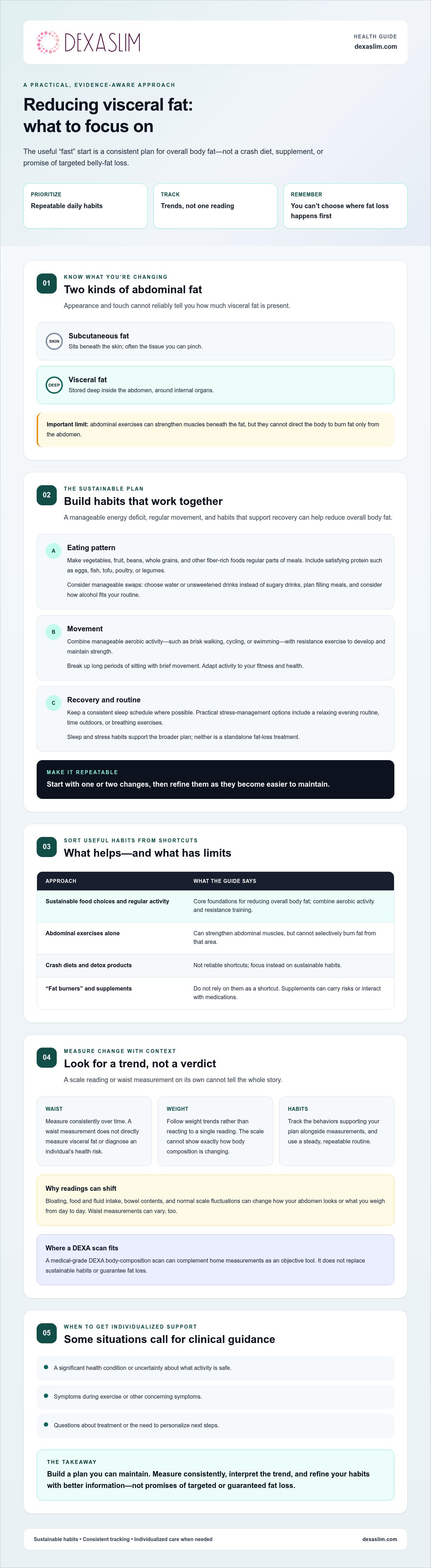
Visceral fat is stored deep inside the abdomen, around internal organs; subcutaneous fat sits beneath the skin. A visible belly or a single waist measurement can’t reveal exactly how much internal fat is present. For a concise overview of abdominal fat and how it is assessed, see Abdominal obesity.
What does “quickly” mean in practice? Start effective habits now, then track trends rather than expecting a guaranteed or dramatic change in appearance. The pace and pattern of fat loss differ between people. No exercise, food, or supplement can promise that fat will disappear from one specific area first.
Visceral fat versus the fat you can pinch
Pinchable tissue around the abdomen is usually subcutaneous fat. Visceral fat lies deeper, so touch and appearance can’t reliably distinguish it. A waist measurement can help track change over time, but it doesn’t directly measure internal fat or diagnose an individual’s health risk. Treat consistent measurements as one piece of information, not a verdict.
Can you lose belly fat in one specific area?
No. Abdominal exercises can strengthen and build the muscles beneath the fat, but they can’t direct the body to burn fat only from the abdomen. As overall body fat changes, abdominal fat may change too, but the order and pace vary. Train your core for strength and function, not as a shortcut to local fat loss.
Don’t mistake a short-term shift for fat loss. Bloating, food and fluid intake, bowel contents, and normal scale fluctuations can affect how your abdomen looks or what you weigh from day to day. Judge fat-loss progress by consistent trends across repeated measurements, alongside the habits that support change.
That’s the practical answer to how to reduce visceral fat quickly: focus on actions that support overall fat loss, and measure progress without expecting precise control over where it happens first. Choose sustainable habits you can repeat, then give them enough consistency to assess their impact.
The habits that support faster, sustainable visceral fat reduction
Build your plan around repeatable behaviors, not a dramatic reset. A modest energy deficit, regular movement, and habits that support recovery can work together to reduce overall body fat. These are practical foundations for anyone asking how to reduce visceral fat quickly without relying on a fixed timeline or an extreme approach.
Build meals that support a sustainable energy deficit
Adjust portions and food choices in ways you can maintain. Make vegetables, fruit, beans, whole grains, and other fiber-rich foods regular parts of meals. Include satisfying protein sources, such as eggs, fish, tofu, poultry, or legumes. These choices can help meals feel filling without rigid rules or a prescribed calorie target.
Look for manageable changes: replace sugary drinks with water or unsweetened options, plan filling meals to reduce frequent energy-dense snacking, and consider how alcohol fits into your routine. No single food melts visceral fat. The useful question is whether your overall eating pattern supports a manageable energy deficit over time.
Combine movement, recovery, and repeatable routines
Choose a manageable mix of aerobic activity and strength work. Brisk walking, cycling, or swimming can add aerobic activity to your week, while resistance exercises help develop and maintain strength. Break up long periods of sitting with brief movement. Harvard Health Publishing explains why a combination of exercise and a healthy diet can support efforts to reduce belly fat. Adapt activity to your current fitness and health. If you have a significant health condition, symptoms during exercise, or uncertainty about what’s safe, seek clinical guidance before increasing intensity.
Protect recovery, too. Keep a consistent sleep schedule where possible, and use practical stress-management strategies such as a relaxing evening routine, time outdoors, or breathing exercises. Sleep and stress habits support the broader plan; neither is a standalone fat-loss treatment.
The core lifestyle levers are a sustainable eating pattern, regular aerobic and resistance activity, less sedentary time, and consistent sleep. Start with one or two changes, then refine them as they become repeatable. Detox products, “fat burners,” and severe restriction aren’t reliable shortcuts, and supplements can carry risks or interact with medications. Check claims and ingredients with a qualified clinician rather than treating a product as a guaranteed solution.
If objective body-composition data would help guide your next steps, a medical-grade DEXA body-composition scan may complement lifestyle tracking. A scan provides an assessment, not a guarantee of fat loss. Ask what the specific scan measures and discuss the results with an appropriate clinician.
Fast fat-loss claims versus realistic progress: how to judge the evidence
Compare each approach by its evidence, sustainability, safety, and need for oversight. When considering how to reduce visceral fat quickly, prioritize methods that support lasting change over promises of dramatic scale shifts or targeted fat loss.
| Approach | Evidence and sustainability | Safety and oversight |
|---|---|---|
| Sustainable lifestyle changes | Eating patterns and regular activity can support gradual, ongoing fat loss. They’re more sustainable when they fit daily life. | Adapt food choices and activity to your health needs. Seek clinical guidance if you have relevant conditions or concerns. |
| Extreme diets | May change scale weight quickly, but that doesn’t confirm fat loss or a specific reduction in visceral fat. Severe rules can be difficult to maintain. | Restriction may create nutritional or other health risks. Discuss major dietary changes with a qualified clinician. |
| Detox products and “fat burners” | Marketing claims aren’t proof of reliable visceral-fat loss. Don’t treat supplements as a substitute for established habits. | Ingredients may carry risks or interact with medication. Check products with a clinician or pharmacist. |
| Supervised medical options | May be considered as part of an individualized weight-management plan, not as a guaranteed or standalone solution. | Requires assessment by a qualified clinician, including discussion of suitability, benefits, risks, and monitoring. |
Why the scale can change faster than body fat
Body weight shifts with hydration, stored glycogen, digestion, and other normal factors. A lower reading after restrictive eating may reflect fluid or digestive changes, not a specific reduction in visceral fat. Weigh under consistent conditions and compare trends over time. Don’t judge progress by one reading or assume early weight change reveals where fat has changed.
When medical weight-management support may be relevant
GLP-1 therapy is a clinician-supervised option for some eligible patients, not an appropriate choice for everyone. A qualified clinician can assess individual suitability and explain potential benefits, risks, contraindications, and monitoring. Medication doesn’t replace habits that support health, and no therapy should be presented as a guaranteed route to rapid visceral-fat loss. Make treatment decisions with individualized medical guidance.
How to measure visceral-fat progress without relying on guesswork
Use a repeatable sequence: record a waist measurement, follow weight trends under similar conditions, note the habits you’re maintaining, then consider clinical assessment if you need more detail. Tracking trends over time is more informative than interpreting one isolated reading. Waist size and weight are useful indicators, but neither can diagnose visceral-fat levels or determine your health risk alone. Discuss concerning results or personal risk factors with a healthcare professional.
Use waist and weight trends consistently
Measure your waist with a flexible tape, keeping it level around your abdomen and using the same location and technique each time. Measure under comparable conditions, such as at the same time of day, without pulling the tape tight. Record the result instead of reacting to it. For weight, use the same scale under similar conditions, then review the pattern rather than making daily changes in response to normal fluctuations.
Log relevant habits alongside the numbers, such as planned activity, strength sessions, or food choices you’re working to sustain. This can help you see whether your routine is consistent, even when measurements change slowly. A waist measurement can screen for potential risk, but it can’t show exactly how much fat surrounds internal organs. Don’t use appearance or a single reading to self-diagnose.
What body-composition and metabolic tests can add
A DEXA scan can assess body composition and fat distribution, adding information that waist and weight tracking can’t provide on their own. Reporting varies, so ask whether the specific scan protocol estimates visceral adipose tissue before interpreting it as a direct measure of visceral fat. Read this DEXA body composition scan guide to understand what the assessment can contribute.
A Resting Metabolic Rate (RMR) test measures resting energy expenditure. It does not measure visceral fat directly, but it can provide individualized information about energy needs. Learn more in the resting metabolic rate test guide. Use any test result as context for a broader discussion with a qualified clinician, not as a standalone diagnosis or guarantee of future change.
If you want objective body-composition data to complement your own tracking, explore a medical-grade DEXA body-composition scan. It’s one assessment option, not a substitute for clinical interpretation or a promise of fat loss. Pair consistent measurements with professional guidance to make your next steps more informed, whether your goal is to understand how to reduce visceral fat quickly or monitor broader health changes.
Your next steps for reducing visceral fat safely and strategically
Turn the guidance into a plan you can start now. If you’re still asking how to reduce visceral fat quickly, prioritize repeatable actions over daily scale changes. Use the first week to establish a baseline and test habits you can realistically maintain.
A practical starting plan for the next week
Choose a food change
Add a vegetable or other fiber-rich food to a regular meal, plan satisfying meals, or replace a sugary drink with an unsweetened option.
Schedule movement
Put manageable aerobic activity and strength work on your calendar. Adapt the type and intensity to your current ability.
Set a tracking routine
Record a waist measurement and weight under consistent conditions, and note the habits you’re working on. Review trends instead of chasing a rapid daily result.
Keep the plan realistic. At the end of the week, identify what you followed, what got in the way, and what needs adjusting. If a change proved difficult, simplify it before making your diet more restrictive or your exercise more intense. Consistency gives you more useful feedback than an ambitious plan you can’t repeat.
When to seek personalized clinical guidance
Talk with a qualified healthcare professional before major diet or exercise changes if you have significant health conditions, take medications that may affect your plan, or experience concerning symptoms. Ask about relevant screening, how to interpret your measurements, and whether any treatment option is appropriate for your circumstances.
Objective testing may help clarify a baseline when waist and weight trends don’t answer your questions or you need more individualized information. It isn’t necessary for everyone, and a test result is not a diagnosis or a guarantee of fat loss. A medical-grade DEXA body-composition scan can assess body composition and fat distribution; ask what the specific protocol reports. Resting Metabolic Rate testing measures resting energy expenditure, not visceral fat directly.
If additional body-composition data would help inform your next steps, explore DEXA body-composition scan options as an optional assessment. Use the results alongside your habits and appropriate clinical guidance. Measurement can sharpen your understanding, but sustainable behavior remains central to long-term progress.
Make your next step measurable
The most reliable answer to how to reduce visceral fat quickly is to begin sustainable changes now, not chase an overnight result. Build a manageable routine around food choices and movement, then assess progress through consistent trends rather than one weigh-in. Remember, exercise can’t target fat loss to a specific area, and neither appearance nor a single measurement can confirm how much visceral fat you have.
Use objective information when it can answer a question that home tracking can’t. Dexaslim offers medical-grade DEXA body-composition scans, Resting Metabolic Rate testing, and VO2 Max Performance Testing. These assessments provide different kinds of information; they don’t guarantee fat loss. Clinician-supervised therapy options may also be relevant for some people, following an individual assessment and discussion of benefits and risks.
Explore Dexaslim's body-composition and metabolic testing options to learn whether additional data could help inform your plan. Start with one change you can repeat, track it consistently, and refine your approach with qualified guidance when needed. Progress is built through informed action, one sustainable step at a time.
Frequently Asked Questions
Can you reduce visceral fat quickly?
You can start habits that support visceral-fat reduction right away, but the amount and pace of change vary. A sustainable eating pattern, regular physical activity, and consistent tracking provide a more reliable strategy than crash diets or detox products. Early scale changes may reflect fluid or digestion, not fat loss. Focus on repeatable habits and trends over time rather than expecting a guaranteed, rapid change in appearance.
What is the fastest way to lose visceral fat?
The most effective starting point is a sustainable plan that supports overall fat loss: adjust portions and food choices, combine aerobic activity with resistance training, and reduce long stretches of sitting. There’s no proven shortcut that selectively removes internal abdominal fat. Avoid extreme restriction and unverified supplements. If you’re considering medication or need an individualized plan, discuss your health, options, and potential risks with a qualified clinician.
Can exercise target visceral fat in the stomach?
No exercise can make the body burn fat only from the stomach. Abdominal exercises can strengthen core muscles, while aerobic activity and resistance training support broader fitness and body-composition goals. Changes in abdominal fat generally occur as overall body fat changes, and the pattern differs by person. Train your core for strength and function, and use a balanced activity plan rather than relying on crunches to reduce belly fat.
How do you know if you are losing visceral fat?
You can track waist measurements and weight trends under consistent conditions, but neither confirms visceral-fat loss on its own. Record measurements using the same technique, and review the pattern alongside your habits and overall health. A clinician can help interpret your risk and decide whether further assessment is appropriate. Body-composition testing may add information, but ask what the specific test measures and how its results should be interpreted.
Does a DEXA scan measure visceral fat?
A DEXA scan assesses body composition and fat distribution, but whether it reports a visceral adipose tissue estimate depends on the scan protocol. Ask the provider what the specific scan measures before treating a result as a direct estimate of visceral fat. A scan can complement waist and weight tracking, but it doesn’t guarantee fat loss or replace clinical interpretation. Use the findings as one part of a broader assessment.
Do GLP-1 medications reduce visceral fat?
GLP-1 medications may support weight management for some eligible patients, and changes in body fat can accompany weight loss. Individual results vary, so don’t assume a medication will selectively reduce visceral fat or guarantee a particular outcome. A qualified clinician should assess suitability and discuss benefits, risks, contraindications, and monitoring. Dexaslim offers medically supervised GLP-1 peptide therapy; it isn’t appropriate for everyone or a substitute for ongoing health habits.
Can you lose visceral fat without losing muscle?
You can take steps to support muscle while reducing body fat, although no approach guarantees that all weight lost will come from fat. Include resistance training suited to your ability, eat satisfying protein sources, and avoid severe restriction. Track strength and how you feel alongside body weight and waist trends. If you have a medical condition or need help tailoring nutrition and exercise, ask a qualified clinician for individualized guidance.