

Energy isn’t only about making more fuel. It’s also about switching between carbohydrates and fat as your body’s needs change. To understand how to improve metabolic flexibility, focus on consistent exercise, balanced meals, adequate sleep, and sustainable habits rather than constant carbohydrate restriction or strict ketosis.
It makes sense to look for signs that your efforts are working. You may notice steadier energy, better exercise tolerance, or changes in glucose patterns, but no single feeling or reading proves that your metabolism has changed.
This guide explains what metabolic flexibility means, how aerobic and resistance training may support it, and what to observe in daily energy, exercise performance, and glucose responses. You’ll also learn how objective tracking can add context to what you notice, helping you assess progress beyond intuition alone.
Key Takeaways
• Metabolic flexibility is the ability to shift between carbohydrates and fat for fuel; no standardized diagnostic method or specific criterion measures it.
• Combine aerobic activity and strength training to support fuel use, glucose management, and exercise capacity.
• Use glucose patterns as context: a continuous glucose monitor can show how meals, movement, sleep, and stress affect glucose in real time.
• Look for patterns such as steadier energy or less post-meal fatigue, rather than treating one sensation as proof of change.
• For a more objective picture of body composition, aerobic performance, or resting energy needs, consider Dexaslim’s DEXA scan, VO2 Max Performance Testing, or Resting Metabolic Rate test.
What Is Metabolic Flexibility?
Metabolic flexibility is your body’s ability to switch between burning carbohydrates and fat for energy as conditions change. It matters during daily activity, after meals, and across different types of exercise.
To see how nutrition and training relate to this process, watch Thomas DeLauer on Optimizing Metabolic Flexibility:
Flexibility and Metabolic Health
Metabolic flexibility describes fuel switching; metabolic health is a broader picture of how the body regulates processes such as blood glucose. A person’s ability to use both fat and carbohydrates is one part of that picture, not a complete health score. Inflexibility means adapting between fuel sources may be less efficient, which can matter when energy demands shift from rest to activity.
Possible benefits include more adaptable energy use and better alignment between available fuel and activity. But flexibility doesn’t establish overall health or diagnose a condition. There is no standardized diagnostic method or specific diagnostic criterion for measuring it. One reported estimate considers 12% of Americans metabolically healthy, illustrating why a single measure cannot represent the whole picture.
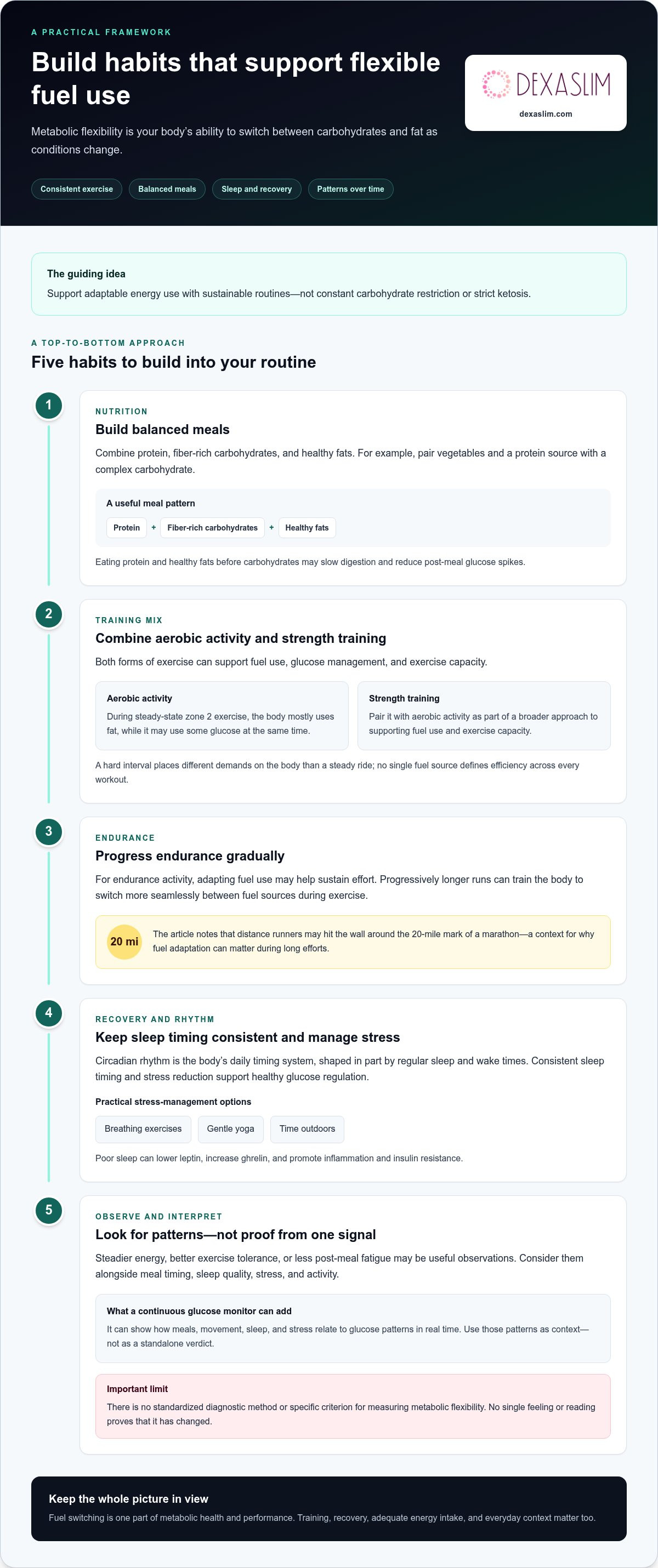
If you’re wondering how to improve metabolic flexibility, start with meal composition rather than strict restriction. Combine protein, fiber-rich carbohydrates, and healthy fats. Eating protein and healthy fats before carbohydrates may slow digestion and reduce post-meal glucose spikes. For example, pair vegetables and a protein source with a complex carbohydrate. This approach supports balanced meals without constant carbohydrate restriction or strict ketosis.
Sleep, Stress, and Circadian Rhythm
Circadian rhythm is the body’s daily timing system, shaped in part by regular sleep and wake times. Poor sleep can lower leptin, increase ghrelin, and promote inflammation and insulin resistance. Consistent sleep timing and stress reduction support healthy glucose regulation, which is relevant when assessing fuel use. Breathing exercises, gentle yoga, and time outdoors are practical stress-management options.
Fasting or major dietary changes can alter glucose patterns and may affect medication needs. People with diabetes, those who are pregnant, and people managing other health conditions should discuss fasting or substantial diet changes with their healthcare team before starting.
Consider energy changes alongside factors that shape them, including meal timing, sleep quality, stress, and activity. A continuous glucose monitor can show how these factors relate to glucose patterns, but symptoms alone cannot confirm metabolic flexibility. Treat observations as signals to explore, not as a standalone diagnosis.
Potential benefits for energy and exercise performance
Flexible fuel use can help match available energy to changing demands. Its practical value shows up in how the body uses fuel during meals, rest, and exercise.
These benefits depend on context. Fuel switching is one part of performance, alongside training, recovery, and adequate energy intake.
Switching Between Fuel Sources
Switching between carbohydrates and fats means adjusting which fuel the body uses as activity and energy needs change. Carbohydrates can be metabolized quickly, while fat provides a larger energy reserve per gram.
After a balanced meal, carbohydrates are typically the preferred fuel for immediate energy. During ketosis, when glucose is scarce, the liver converts fatty acids into ketones, which can serve as an alternative energy source. Fat contains more than double the energy per gram compared with carbohydrates, but eating more fat does not automatically change body composition. Overall energy intake still matters.
For endurance activity, adapting fuel use may help sustain effort. Distance runners may hit the wall around the 20-mile mark of a marathon. Progressively longer runs can train the body to switch more seamlessly between fuel sources during endurance exercise.
Glucose Regulation and Energy Efficiency
Glucose regulation describes how the body manages blood sugar, a key fuel for immediate work. During exercise, a higher respiratory exchange ratio indicates that the body is primarily using glucose.
That measurement offers a snapshot of fuel use, not a complete score of metabolic health or performance. During steady-state zone 2 exercise, the body mostly uses fat, while it may use some glucose at the same time. Mitochondria help cells produce usable energy, making their function relevant to exercise capacity.
Fuel use also shifts with effort. A hard interval places different demands on the body than a steady ride, so no single fuel source defines efficiency across every workout. Consider perceived effort and exercise performance alongside glucose patterns, rather than treating one reading as a verdict.
Diet Quality and Energy Needs
Diet quality means choosing foods that provide useful nutrients while matching overall energy needs. Under-fueling can undermine training, while consistently eating beyond energy requirements can affect body composition.
Build meals around whole foods, combining complex carbohydrates with lean protein and healthy fats. For example, pair brown rice with beans, vegetables, and a protein source. This provides a range of nutrients and fuels without constant carbohydrate restriction or strict ketosis.
Individual energy needs depend on factors such as activity and training demands. A Resting Metabolic Rate test can help establish a baseline for daily energy needs; Resting Metabolic Rate testing may be useful when refining nutrition and exercise plans.
Track patterns, not a single workout. Compare how you feel and perform across similar sessions, noting meal timing, effort, and recovery. This context helps distinguish a useful change in fuel use from ordinary day-to-day variation.
Resistance training and high-intensity interval training
Exercise challenges your body to meet changing fuel demands. A mix of aerobic work, resistance training, and recovery provides that challenge at different intensities.
Training Approaches
Endurance exercise and strength work develop different physical capacities. This variety matters because a steady walk and a hard interval place different demands on the body’s energy systems.
Start with manageable activities, then build a balanced routine:
Zone 2 cardio
Aim for 60 to 70% of maximum heart rate. Cycling and swimming are examples of steady aerobic exercise in this range.
Walking
Add walks, especially after meals, to incorporate regular movement into your day.
Resistance training
Strength training 2-3 times per week is one option. Muscle work also creates a demand for glucose during and after exercise.
Intervals
High-intensity interval training alternates hard efforts with easier recovery. It raises fuel demand and can complement moderate cardio.
Combine moderate- to high-intensity aerobic cardio with strength training rather than relying on one exercise mode. Zone 2 training supports mitochondrial function, while strength training may support insulin sensitivity and glucose management. Increase demands progressively, and let recovery inform how you adjust effort. A walk, a steady cycling session, and a resistance workout each contribute a different stimulus.
Fasted workouts are sometimes used to increase fat utilization, but they aren't essential. Choose an approach that supports consistent exercise and meets your energy needs. One study found that intermittent fasting improved metabolic flexibility in healthy mice, but not in mice with obesity or diabetes, and may have harmed it. These findings in mice do not establish the same effect in people.
Timeline for Improvement
The timeline for changes depends on your starting activity, training consistency, recovery, and ability to sustain the routine. A single workout cannot show how your body adapts to repeated exercise.
Track repeatable markers rather than expecting an instant shift. Note how the same walk or cycling session feels, whether your pace stays steady, and how you recover. Compare similar sessions under similar conditions. Gradual progress in endurance, resistance, and recovery offers more useful context than one unusually strong or difficult workout.
There is no single training schedule that suits everyone. Build consistency first, then adjust workout duration or intensity based on performance and recovery. If fatigue disrupts eating, sleep, or regular activity, reduce the training demand rather than adding more intervals. Metabolic flexibility develops alongside sustainable movement, not through one maximal effort.
Glucose tracking and continuous glucose monitors
A continuous glucose monitor (CGM) tracks glucose in real time, showing how food, drink, exercise, sleep, and stress relate to glucose patterns. Use readings to investigate responses, not as a complete measure of fuel flexibility.
Metabolic flexibility describes the ability to switch between using carbohydrates and fat for energy. A CGM measures glucose, not fat burning or the full ability to switch between fuel sources. For example, a glucose response after a meal describes one part of metabolism, not whether your body can efficiently use fat during exercise or between meals.
What Tracking Can Show
Look for patterns across comparable days. Note the meal, activity, sleep, and stress around a reading, then compare similar situations. A glucose change after a carbohydrate-rich meal may help you understand your response to that meal. A walk after eating offers a useful contrast with a sedentary period.
Glucose tracking can be paired with respiratory measurements during exercise, which assess fuel use during activity. A higher respiratory exchange ratio indicates that the body is primarily using glucose. These measures offer different information: glucose readings describe blood sugar patterns, while respiratory measurements help reveal fuel use during exercise.
There is no standardized diagnostic method or specific criterion for measuring metabolic flexibility. Biomarkers and tests can provide pieces of context, including glucose patterns, exercise respiratory measurements, and resting metabolic rate. A Resting Metabolic Rate (RMR) test measures resting energy needs; by itself, it does not establish how readily someone switches between fuels.
Glucose, Ketones, and Muscle
Glucose and ketones are separate signals. During ketosis, the liver converts fatty acids into ketones, which can serve as an alternative energy source when glucose is scarce. A ketone reading shows the presence of ketones, not the full ability to switch fuels in response to meals or exercise.
Muscle activity also affects glucose use. Working muscles use energy during exercise, and strength training may support insulin sensitivity and glucose management. Compare glucose patterns around a familiar activity, such as a walk or resistance session, instead of interpreting one reading on its own.
Supplements and Cost Context
Supplements should not replace glucose tracking, exercise observations, or an assessment of nutrition. A change in one glucose reading after taking a supplement cannot establish improved flexibility. Record what you take alongside meals, sleep, stress, and activity to distinguish a repeatable pattern from an isolated response.
Testing costs depend on the test type, protocol, and setting; service pricing depends on the case and is provided after a quote request. The most useful assessment depends on your question: CGM data can reveal daily glucose responses, while respiratory measurements examine fuel use during exercise.
Signs of improved metabolic flexibility
Possible signs include steadier energy, fewer episodes of feeling “hangry,” less tiredness immediately after meals, and less brain fog. These changes describe how you feel in ordinary situations, such as working through the morning or returning to activity after lunch. They are clues to track, not proof of a specific metabolic change.
Look for patterns, not a single good day. Note whether you feel more alert after a familiar lunch or whether hunger becomes less disruptive between meals. Compare similar routines and record meals, sleep, stress, and activity. These details help separate a recurring change from a response to an unusual meal or a poor night’s sleep.
Energy, Hunger, and Exercise
Steadier energy may show up as fewer sharp dips during a normal workday. You might also notice less urgency to eat between meals or less post-meal fatigue after a usual breakfast. These experiences are personal signals, not proof that your body is switching between carbohydrates and fat more effectively.
Exercise provides another useful context. Compare familiar sessions, such as a steady cycling workout or a walk at a consistent pace. Note whether the same effort feels more manageable or your energy drops sooner than usual. Performance changes can reflect training, recovery, sleep, or nutrition, so consider them alongside those factors.
Glucose and Metabolic Markers
A continuous glucose monitor can show in real time how meals, exercise, sleep, and stress relate to glucose. Review repeated patterns rather than treating one post-meal reading as a verdict. Glucose data describes blood sugar responses; it does not directly measure every fuel source or diagnose metabolic inflexibility.
Insulin sensitivity and metabolic flexibility are related concepts, but one cannot substitute for the other. Feeling energetic cannot confirm insulin sensitivity, and a glucose reading alone cannot diagnose disease. There is no standardized diagnostic method or specific criterion for measuring metabolic flexibility. Use symptoms and tracking as context, not as a standalone clinical assessment.
Keep a simple record of meal timing, what you ate, sleep quality, stress, activity, and noticeable energy changes. For instance, compare your alertness after similar lunches on days with and without a post-meal walk. Patterns repeated over several days are more informative than an isolated sensation. Keep the goal practical: identify habits that coincide with steadier energy and better exercise tolerance, then discuss concerning glucose patterns with a healthcare professional.
Dexaslim: 1 Session Dexa Scan
Dexaslim’s 1 Session Dexa Scan gives you objective body composition and bone density information to add context to changes you notice in energy and exercise. It does not directly measure metabolic flexibility, but it can help establish a body composition baseline as you refine training and nutrition.
For complementary data, a Resting Metabolic Rate (RMR) Test assesses resting energy needs, while VO2 Max Performance Testing evaluates aerobic endurance, peak oxygen consumption, and cardiovascular efficiency. These measures answer different questions, helping you interpret exercise performance and energy needs alongside daily patterns. A Longevity Panel offers another way to assess health markers as part of a broader wellness picture.
Contact Dexaslim to explore which assessment fits your goals.
Make Your Next Step Measurable
Turn your observations into a clear baseline. Decide what you want to understand next: body composition, aerobic performance, or resting energy needs. This focus makes it easier to choose measurements that can inform your next training or nutrition adjustment.
A practical plan for how to improve metabolic flexibility should connect your daily habits with outcomes you can track over time. Dexaslim offers a 1 Session Dexa Scan, VO2 Max Performance Testing, and a Resting Metabolic Rate (RMR) Test. Each provides a different lens for understanding your body and performance. Use the question you want answered to guide your choice, rather than collecting data without a purpose.
Progress comes from making thoughtful adjustments, then observing how your body responds. Build on the habits that support your energy and exercise, and use relevant measurements to sharpen your next decision. Contact Dexaslim to discuss your goals and identify a useful starting point. A clearer baseline can help you move forward with focus and confidence.
Frequently Asked Questions
What Is Metabolic Health?
Metabolic health describes how well the body manages processes such as blood glucose regulation and energy use. It cannot be captured by one sensation, test, or body measurement. For a practical view, consider several signals together: glucose patterns, daily energy, exercise capacity, and relevant clinical measurements. A clinician can interpret these in the context of your health history, medications, and goals, rather than treating one result as a complete assessment.
What About Low-Carb or Keto Diets?
Low-carbohydrate and ketogenic diets can shift the body toward using fat and ketones, but strict ketosis isn’t required for metabolic flexibility. Your eating pattern should support your activity, preferences, and health needs. For example, someone doing demanding endurance training may approach carbohydrate intake differently from someone with a less active routine. Focus on overall meal quality and a sustainable pattern, not a diet label alone.
What Is Metabolic Flexibility, and How Is It Measured?
Metabolic flexibility is the body’s capacity to adjust fuel use as conditions change. There’s no standardized diagnostic method or specific criterion for measuring it. Exercise respiratory measurements can assess fuel use during activity; they usually last two to 10 minutes, with a practical maximum duration of about 20 minutes. Glucose tracking and resting energy measurements offer other context, but each reflects a different aspect of metabolism.
What Factors Reduce Metabolic Flexibility?
Insufficient movement, poor sleep, chronic stress, and a low-quality eating pattern can work against metabolic health. Repeated short nights, for example, may affect appetite signals and glucose regulation, while prolonged inactivity means fewer opportunities to challenge energy systems. These factors interact, so a difficult week does not establish metabolic inflexibility. Review patterns over time, including sleep, activity, meals, and stress, before drawing conclusions from symptoms or a single reading.
Which Types of Exercise Improve Metabolic Flexibility, and How Often Should You Do Them?
A balanced mix can include steady aerobic activity, walking, intervals, and resistance work. A practical schedule pairs cardio sessions with strength training across the week, while allowing recovery between demanding workouts. Zone 2 exercise uses a target of 60 to 70% of maximum heart rate, and strength training 2-3 times per week is one option. Adjust session intensity to your current fitness and recovery.
How Does Strength Training Affect Metabolic Flexibility?
Strength training challenges working muscles and may support insulin sensitivity and glucose management. During resistance exercise, muscles meet repeated demands, while recovery afterward supports adaptation. Track progress through consistent exercises, noting changes in load, repetitions, and how each session feels. Strength work complements aerobic exercise; it does not directly measure fuel switching or replace glucose testing when that information is clinically relevant.
What biomarkers or tests can assess metabolic flexibility, and how much do they cost?
There is no standardized diagnostic method or specific criterion for measuring metabolic flexibility. Respiratory exchange ratio and continuous glucose monitor patterns can offer context about fuel use and glucose responses, but no cost information is available here.
What are the risks of fasting or dietary changes for people with diabetes, pregnancy, or other health conditions?
Fasting or major dietary changes can alter glucose patterns and may affect medication needs. People with diabetes, those who are pregnant, and people managing other health conditions should discuss these changes with their healthcare team before starting.