
Bone density after 50 calls for consistent action and objective measurement. The practical answer to how to improve bone density after 50 is to combine weight-bearing and strength exercise with enough calcium and vitamin D, then use bone-density testing to understand your baseline. The U.S. Department of Health and Human Services recommends at least 150 minutes of moderate-intensity exercise per week for adults.
Daily habits matter, but it also helps to know what they’re supporting. A DEXA scan measures bone density; it doesn’t build bone, but its results can show where closer attention may be useful. This article covers how exercise and nutrition support bone health, how osteoporosis is diagnosed, and what DEXA scores mean. You’ll also learn how to use testing as part of a measurable plan instead of relying on guesswork or waiting for a fracture to raise concerns.
Key Takeaways
• Build a bone-supportive routine with weight-bearing activity, strength training, and balance work.
• Learn how calcium-rich foods and vitamin D contribute to bone health, and when supplements may fit.
• Recognize risk factors such as age, menopause, low body weight, and a previous fracture.
• Understand how alcohol and caffeine can affect bone health, and which habits can help reduce risk.
• See how DEXA scores classify bone density and how a Dexaslim Bone Density Scan can provide a measurable baseline.
Calcium and vitamin D supplements
Calcium provides bone with its mineral structure, while vitamin D helps the body absorb calcium. Both support bone mineral density, but supplements work best as part of a broader nutrition and health plan. Start by estimating how much calcium you get from your usual meals. Then consider whether a supplement would fill a genuine gap, rather than adding one routinely without a clear reason.
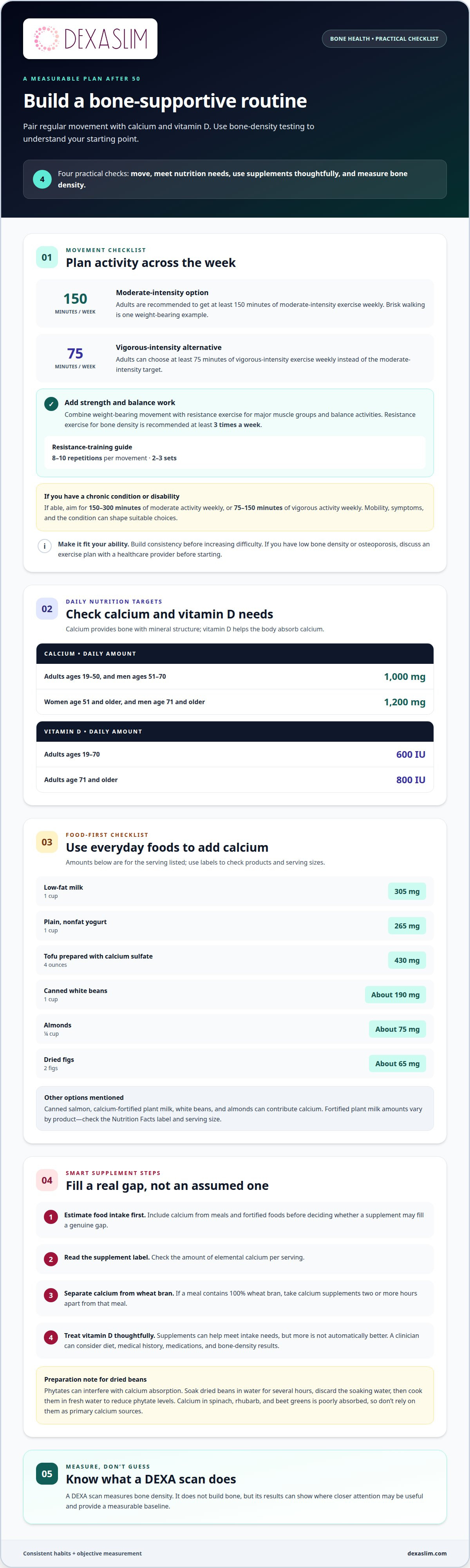
Daily recommendations depend on age and sex. Adults ages 19 to 50 and men ages 51 to 70 need 1,000 milligrams of calcium a day. Women age 51 and older and men age 71 and older need 1,200 milligrams a day. For adults ages 19 to 70, the recommended daily vitamin D intake is 600 international units (IUs) a day, according to the National Institutes of Health, Office of Dietary Supplements. Adults age 71 and older need 800 IUs a day.
Food can make those targets easier to reach. A cup of low-fat milk contains 305 milligrams of calcium, while a cup of plain, nonfat yogurt contains 265 milligrams. Calcium-fortified plant milk is another option, but amounts vary by product. Check the Nutrition Facts label and serving size. Canned salmon, tofu prepared with calcium sulfate, white beans, and almonds also contribute calcium.
• A cup of canned white beans provides about 190 milligrams of calcium.
• A 4-ounce serving of tofu provides 430 milligrams.
• A quarter-cup of almonds provides about 75 milligrams.
• Two dried figs provide about 65 milligrams.
How you prepare beans can affect calcium absorption. Phytates in beans can interfere with absorption, so soak dried beans in water for several hours, discard the soaking water, then cook them in fresh water to reduce phytate levels. Spinach, rhubarb, and beet greens contain calcium, but the body absorbs it poorly, so don’t rely on them as primary calcium sources.
Use a supplement to close the difference between food intake and your daily target. Read the label for the amount of elemental calcium per serving, and include fortified foods in your estimate. If you use calcium supplements, separate them from a meal containing 100% wheat bran by two or more hours. Vitamin D supplements can also help meet intake needs, but more is not automatically better. A clinician can weigh your diet, medical history, medications, and bone-density results when deciding whether supplementation belongs in your treatment plan.
What can I do to keep my bones healthy?
Combine weight-bearing movement with resistance and balance exercise. A practical plan for how to improve bone density after 50 also needs to match your health, mobility, and current fitness.
Weight-Bearing and Strengthening Exercise
Weight-bearing exercise makes your bones support your body, while strengthening exercise works muscles against resistance. Both challenge the body in different ways, making them useful parts of a bone-health routine. Brisk walking at 3 to 4 miles per hour is one weight-bearing example. Resistance training adds a different load through movements such as lifting weights or using resistance bands.
Adults can combine these activities rather than relying on walking alone. Include movements that challenge major muscle groups, then add balance exercises that support steady movement. Muscle-strengthening activities should be part of a regular weekly routine. For bone density, resistance exercise at least 3 times a week is recommended, with 8 to 10 repetitions for 2 to 3 sets. Adjust the exercise selection to your ability and experience.
Exercise With Low Bone Density or Osteoporosis
Exercise with low bone density or osteoporosis can include weight-bearing, strengthening, and balance activities. This combination addresses movement, muscle strength, and stability. For people deciding how to improve bone density after 50, the key is choosing activities that fit their current health rather than copying someone else’s routine. Talk with a healthcare provider before starting an exercise program, especially when a diagnosis or health condition affects movement.
The U.S. Department of Health and Human Services recommends that adults in the United States get at least 150 minutes of moderate-intensity exercise per week. Adults can also choose at least 75 minutes of vigorous-intensity exercise weekly, alongside muscle-strengthening activity. These are different ways to plan aerobic movement, not a requirement to combine both intensity targets.
Adults with chronic health conditions or disabilities who are able should aim for 150 to 300 minutes of moderate-intensity exercise weekly, or 75 to 150 minutes of vigorous-intensity exercise weekly. Those ranges allow activity to fit differing abilities. Mobility, symptoms, and the specific condition can shape suitable exercise choices, including whether walking or another weight-bearing activity is appropriate.
Build consistency before increasing the difficulty of your workouts. For example, start with walking, then add resistance and balance exercises suited to your ability. If you have osteoporosis or low bone density, discuss your plan with a healthcare provider before starting. Exercise is only one part of bone health, so combine movement with other steps that support an overall approach.
How is osteoporosis diagnosed?
Osteoporosis develops gradually and can cause no obvious symptoms until a bone breaks. A minor fall may reveal the first warning. Diagnosis combines risk assessment with bone-density testing, helping identify changes before another fracture occurs. Adults over 50 who break a bone should discuss bone health with a healthcare professional. Persistent back pain lasting a few weeks also warrants assessment.
Risk factors include age, low body weight, menopause timing, and fracture history. A body mass index of 19 or less is linked with higher osteoporosis risk. Being over 65 is another risk factor. Early menopause, especially before age 40, can also raise concern. These factors don’t diagnose the disease alone, but they help guide decisions about testing and follow-up.
Menopause can accelerate bone loss, particularly around ages 50 through 54, before the rate levels off. Women ages 50 to 64 should begin regular bone-density testing if they have certain osteoporosis risk factors. A history of fracture, early menopause, or low body weight can make an earlier assessment relevant. Knowing these details helps a healthcare professional evaluate risk rather than relying on age alone.
A healthcare professional can review medical history, symptoms, and risk factors, then arrange a DEXA scan to assess bone strength. The FRAX tool estimates the 10-year probability of a hip fracture or another major fracture. The results help put risk into context. Bone density is one part of the assessment; age, sex, fracture history, and other clinical factors also influence treatment decisions.
Osteopenia means low bone mass, while osteoporosis indicates more substantial bone loss. On a DEXA scan, a T-score from -1 to -2.5 indicates osteopenia; a score of -2.5 or lower indicates osteoporosis. These categories help describe bone status and inform next steps. A score is not a complete picture by itself, so clinicians interpret it alongside fracture history and overall health.
Bone-health support can include nutrition, suitable exercise, fall-risk reduction, and medication. Bisphosphonates can stop or slow bone damage, while anabolic agents speed new bone formation. The right treatment depends on factors such as scan results, age, and sex. Hormone replacement therapy may be an option for someone offered it to manage menopause symptoms. Discuss treatment choices and follow-up with a healthcare professional, especially after a fracture or a low DEXA result.
Why is bone health important?
Bone loss can progress without obvious symptoms, making a fracture the first sign of a problem. Osteoporosis weakens bones and raises the chance of breaks, including after a minor fall. The risk deserves attention after 50 because bone density can decline with age, especially around menopause. Smoking, heavy alcohol use, and high caffeine intake are habits worth reviewing as part of a broader bone-health plan.
Alcohol’s effect on bone health is clearest with heavy consumption. For healthy adults in the United States, moderate drinking means up to one drink a day for women and up to two drinks a day for men. These amounts are limits, not targets for bone health. Regularly drinking more may increase osteoporosis risk, and heavy alcohol use can contribute to bone loss.
Review your habits rather than relying on memory. Track how often you drink alcohol in a typical week, and note whether one occasion involves several drinks. Discuss that pattern alongside your fracture history, menopause, and bone-density results. These details can help a healthcare professional assess osteoporosis risk. If drinking is part of your routine, reducing your intake can be one step toward protecting bone health.
Caffeine deserves a similar check. Drinking more than 3 cups of coffee a day is an example of high caffeine intake that may raise bone-loss risk. Cola can add caffeine and phosphorus, which may also contribute to bone loss. The carbonation itself doesn’t harm bone. Review coffee, tea, energy drinks, and cola together, since the source and amount of caffeine can vary.
Smoking is another modifiable habit connected with bone health. Avoiding tobacco supports a plan to protect bones, alongside limiting excessive alcohol and keeping regular movement in your routine. These changes don’t replace assessment when a fracture occurs. A broken wrist, hip, or spine after a minor fall warrants a conversation about osteoporosis risk, especially after 50.
Keep the broader risk in view. Osteoporosis affects four times as many older women as older men, and half of women over 50 will fracture a hip, wrist, or spine during their lifetime, according to the National Institutes of Health. Those figures show why bone health deserves attention before a break. Alcohol and caffeine choices matter, but they are only part of the picture. Age, menopause, smoking, and personal fracture history also help shape risk.
Make the information specific: record your alcohol and caffeine habits, avoid tobacco, and share those details in a bone-health discussion. A healthcare professional can consider them alongside your bone-density results and other risk factors. Everyday habits then become useful context when assessing a condition that may otherwise go unnoticed until a fracture.
DEXA scans and bone-density scores
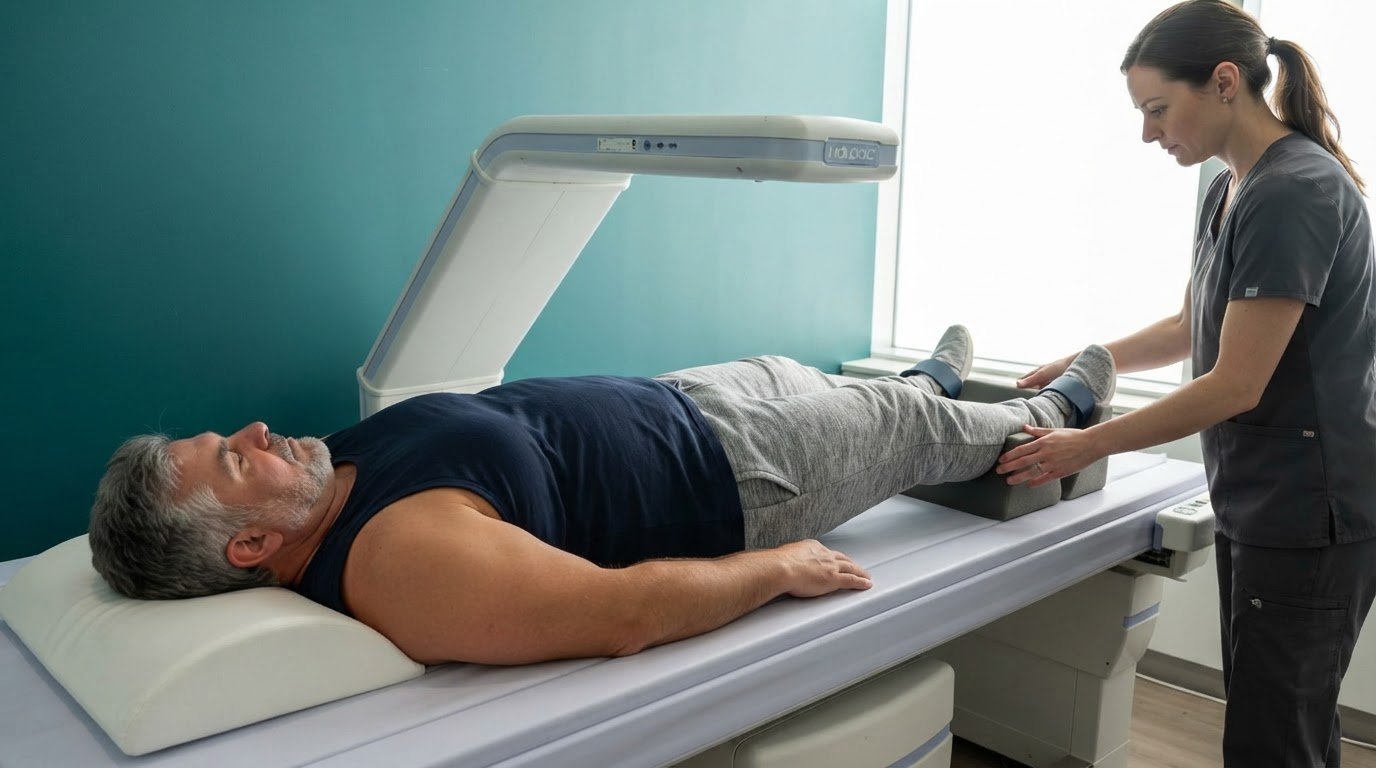
A DEXA scan measures bone density at sites such as the hip, spine, and wrist. The test takes about 15 minutes and gives a measurable view of bone strength. Routine scans are recommended starting at age 65 for women and age 70 for men. Earlier testing may be appropriate when osteoporosis risk factors are present.
Does Medicare cover DEXA scans and osteoporosis treatment in the United States? Coverage depends on eligibility and the specific test or treatment. A DEXA score describes bone density, but it does not determine coverage on its own.
DEXA results include two scores, each based on a different comparison. The T-score compares your bone density with that of a healthy young adult. The Z-score compares it with people of similar age, sex, and ethnic background. Interpret both in context: they are measurements, not a complete picture of fracture risk or overall health.
• A T-score from +1 to -1 indicates normal bone density.
• A T-score from -1 to -2.5 indicates low bone mass, called osteopenia.
• A T-score of -2.5 or lower indicates osteoporosis.
• A Z-score of -2.0 or lower indicates low bone density.
These thresholds help classify results and guide follow-up discussions. For example, a T-score of -1.8 falls within the osteopenia range, while a score of -2.5 meets the stated threshold for osteoporosis. A Z-score provides a comparison with age-related peers rather than young-adult bone density. Don’t treat one score as an isolated verdict; clinicians consider the scan alongside fracture history, age, and other risk factors.
Use the result to guide decisions, not assumptions. A DEXA scan measures bone density; it doesn’t reveal whether you get enough calcium or vitamin D, eat salmon, or have a particular hormone level. Those factors may matter in a broader assessment, but they aren’t what the scan measures. Find out which score is being discussed, what range it falls into, and how it relates to your health history.
A scan can also provide a baseline for future clinical decisions. Keep the report so later results can be compared with the original measurements. Changes in bone density, fracture history, and risk factors can inform discussions about exercise, nutrition, and treatment. Standard score categories provide a common language, but a result’s meaning depends on its clinical context.
For a direct measurement of bone density, book a DEXA bone-density scan. Use the resulting data as a starting point for informed conversations about bone health and next steps.
Dexaslim: Bone Density Scan
Dexaslim offers a DEXA Bone Density Scan to measure bone density and provide an objective baseline. Consider a scan when you want measurable information about bone health, particularly after a fracture or when risk factors call for closer assessment. Results can inform a discussion with your healthcare professional about appropriate next steps. Daily habits and treatment decisions remain part of the wider picture.
Choose the 1 Session Dexa Scan when a direct bone-density measurement is your priority. Use the result alongside your health history and other clinical information, not as a substitute for medical care or a diagnosis on its own. Clear data gives you a stronger starting point for tracking and discussing bone health. Contact Dexaslim to learn more about a Bone Density Scan.
Make Your Next Step Measurable
A lasting approach to how to improve bone density after 50 starts with turning intention into a plan you can track. Choose a practical next step, keep it consistent, and use objective information to guide future conversations about your health. A bone-density measurement can help establish a reference point, while your healthcare professional can interpret it alongside your personal history and goals.
Dexaslim offers a 1 Session Dexa Scan for a focused bone-density measurement. If you want to consider other health metrics, Dexaslim also offers VO2 Max Performance Testing and a Resting Metabolic Rate (RMR) Test. These are separate assessments, each providing information about a different aspect of health.
Start with the measurement that matches your current priority. Contact Dexaslim to discuss your options and take a clear, informed next step toward supporting your bone health.
Frequently Asked Questions
At what age does bone density start to decrease?
Bone density can begin declining around age 50, when bone loss starts to outpace bone formation. Most people reach peak bone mass around age 30, followed by a period when bone mass typically plateaus. The pattern differs by sex and life stage: women can lose bone more rapidly around menopause, while bone loss in men peaks later. Age is one factor, so personal risk and fracture history also matter.
How does osteoporosis occur?
Osteoporosis develops when bone breaks down faster than the body replaces bone tissue over time. This gradual imbalance lowers bone density and can make bones more vulnerable to fractures. Age, menopause, low body weight, and early menopause can contribute to risk. The condition may have no noticeable symptoms as it develops, so a fracture after a minor fall can be the first sign that bone strength needs assessment.
How is osteoporosis prevented and managed?
Address modifiable risks and assess bone health before a fracture prompts action. Regular weight-bearing, strength, and balance exercise; adequate calcium and vitamin D; avoiding tobacco; and limiting excess alcohol all support prevention. If you’re diagnosed with osteoporosis, management may include medication: bisphosphonates can slow or stop bone damage, while anabolic agents speed new bone formation. Fall prevention matters too. Shoes with good grip and a nonslip bath mat can help reduce fall risk.
What are the symptoms of osteoporosis?
Osteoporosis often causes no obvious symptoms until a bone breaks. A fracture after a minor fall may be the first noticeable sign. Persistent back pain lasting a few weeks is another reason to seek medical assessment, particularly if osteoporosis is a concern. A healthcare professional can consider your symptoms, risk factors, and bone-density test results. Don’t rely on pain to identify bone loss, because osteoporosis can develop silently.
What is the difference between osteoporosis and osteopenia?
Osteopenia means bone mass is low, while osteoporosis is a more advanced level of bone loss. DEXA T-scores help distinguish these categories: a score from -1 to -2.5 indicates osteopenia, and a score of -2.5 or lower indicates osteoporosis. These results describe bone density, not the full picture of fracture risk. A healthcare professional interprets the score alongside age, health history, and previous fractures.
What exercises help improve bone density after age 50?
Choose weight-bearing activities such as brisk walking, and include resistance and balance exercises. Adults are recommended to get at least 150 minutes of moderate-intensity exercise weekly. Strengthening activities should also feature regularly; resistance exercises can use weights or bands. If you have osteoporosis, low bone density, a chronic condition, or a disability, discuss an appropriate exercise plan with a healthcare professional before starting or changing your routine.
How much calcium and vitamin D do adults over 50 need for bone health?
Calcium needs vary by age and sex. Men ages 51 to 70 need 1,000 milligrams daily; women age 51 and older and men age 71 and older need 1,200 milligrams daily. Adults ages 51 to 70 need 600 international units of vitamin D daily, while adults age 71 and older need 800. Count food and fortified products before considering supplements to identify what your diet provides.
Which foods support bone density after 50?
Choose calcium-rich foods such as milk, yogurt, calcium-fortified plant milk, tofu prepared with calcium sulfate, canned salmon, white beans, and almonds. For example, a cup of low-fat milk contains 305 milligrams of calcium, and a cup of canned white beans contains about 190 milligrams. Fortified foods vary, so check the label. Include protein, fruits, and vegetables as part of a balanced eating pattern that supports bone health.