
A longer life doesn’t automatically mean more healthy years. Healthspan describes the years you live in good health and with physical function; lifespan counts all the years you live. In the United States, average life expectancy at birth was 78.4 years in 2023, according to the National Center for Health Statistics. Health span optimization focuses on protecting strength, mobility, and cardiovascular fitness as you age.
It makes sense to focus on longevity, but the quality of those years matters just as much. Exercise helps build and maintain the physical capacity that supports everyday independence, not just performance during a workout.
Learn how healthspan differs from lifespan, why muscle and cardiovascular fitness matter, and how physical activity can support healthy aging. You’ll also see how objective measures of body composition and fitness can clarify your starting point and inform your decisions.
Key Takeaways
• Healthspan measures the years you live in good health and maintain physical function; lifespan counts your total years lived.
• Build a balanced activity routine with aerobic exercise, strength training, and balance work. Federal physical activity guidelines recommend at least 150 minutes of moderately intense physical activity per week for substantial health benefits, according to the U.S. Department of Health and Human Services.
• Preserving muscle, mobility, and cardiovascular fitness supports the physical capacity needed for everyday independence as you age.
• Exercise and other health habits can support healthy aging, but they don’t reverse aging. Consistent lifestyle choices shape physical health over time.
• Objective measures of body composition and fitness can help you understand your baseline and make more informed health decisions.
What’s the difference between healthspan and lifespan?
Lifespan measures the total years a person lives. Healthspan describes the years lived with health, function, and independence. The two measures overlap, but they are not interchangeable: someone can live longer while experiencing a prolonged decline in mobility or managing chronic conditions. The average U.S. life expectancy at birth was 78.4 years in 2023, according to the National Center for Health Statistics. That figure describes lifespan, not the number of years each person can expect to live in good health.
Consider two people with similar lifespans. One may retain the strength to climb stairs, prepare meals, and take part in daily activities for longer. Another may face functional limitations earlier. Healthspan-focused planning aims to preserve abilities that shape ordinary life, such as walking comfortably, maintaining balance, and recovering from physical effort. These goals make longevity more tangible by connecting long-term health to the tasks a person wants to keep doing.
Genetics account for approximately 20 to 30 percent of lifespan variability. Genes influence biological processes, but they do not describe a complete personal health picture. A consultation can put family history alongside current health, activity, sleep, nutrition, and treatment goals. For example, a history of metabolic conditions may prompt a more focused discussion of relevant measurements and preventive care. The point is not to predict an exact lifespan. It is to identify useful priorities for an individual.
Testing can add objective information to this conversation. A clinician may assess health markers, physical function, or cardiovascular capacity, then interpret results alongside symptoms and medical history. No single measurement explains the whole picture. A personalized plan should connect each finding to a practical next step, such as adjusting activity, improving nutrition, or discussing medical treatment. Repeating relevant measures over time can help show whether a strategy is supporting its intended goal.
Personalized longevity planning should respond to a person’s risks and changing needs, rather than follow a fixed template. That may mean prioritizing strength and balance for someone concerned about mobility, or reviewing metabolic health when family history raises concerns. Proactive care also includes discussing appropriate screenings and existing conditions with a healthcare professional. The aim is to address risk factors before they cause greater disruption to function.
Health span optimization works best as a sustained process: assess, choose a priority, act, and reassess. Track meaningful outcomes, such as whether daily walking feels easier or strength training fits consistently into your routine. Then refine the plan with qualified clinical guidance. This approach treats healthspan as a set of abilities worth protecting, rather than a single score or a promise of a specific outcome.
Exercise, strength, and cardiovascular health
The lifestyle changes with the strongest evidence include regular aerobic activity and muscle-strengthening exercise. Together, they support cardiovascular capacity, strength, and physical function.
Exercise Evidence for Healthspan
Research on exercise and healthspan examines how regular movement supports physical capacity and health over time. Its practical value is clear: better endurance can make walking or climbing stairs easier, while strength work supports lifting and carrying. These gains matter for independence. Exercise can also support mental well-being, making physical activity part of a broader health strategy, not just a fitness target.
Exercise and Physical Activity
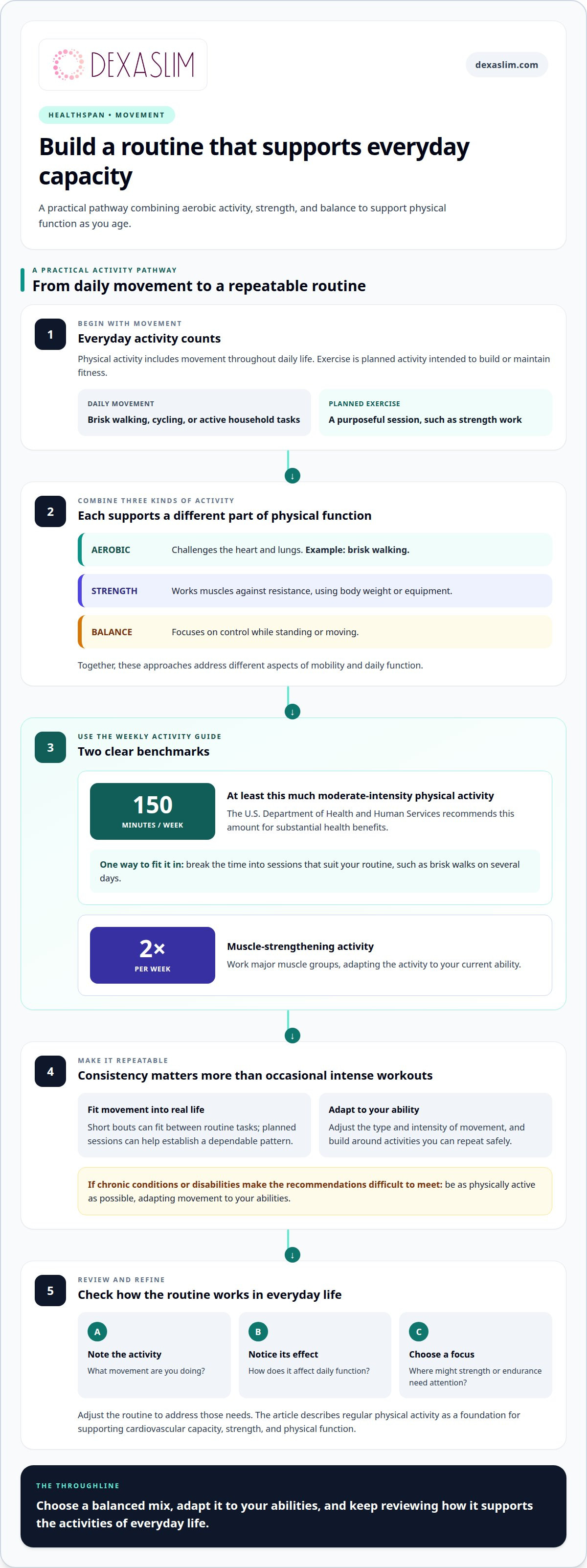
Physical activity includes movement throughout daily life, while exercise is planned activity intended to build or maintain fitness. Both contribute to an active routine. A brisk walk, cycling, or active household tasks can add movement; a planned strength session targets muscles more directly. This distinction helps you spot realistic opportunities, especially when a formal workout doesn’t fit your schedule.
The U.S. Department of Health and Human Services recommends at least 150 minutes of moderately intense physical activity per week for substantial health benefits. Break that time into sessions that fit your routine, such as brisk walks on several days. Muscle-strengthening activities twice a week also support physical capacity. Choose movements that work major muscle groups, adapting the activity to your current ability.
A balanced routine includes aerobic exercise, strength training, and balance work. Aerobic activity challenges the heart and lungs; brisk walking is one accessible example. Strength training works muscles against resistance, using body weight or equipment. Balance exercises focus on control while standing or moving. Together, these approaches address different aspects of mobility and daily function.
Consistency matters more than occasional intense workouts. Short bouts of movement can fit between routine tasks, while planned sessions help establish a dependable pattern. Adults who cannot meet activity recommendations because of chronic conditions or disabilities should be as physically active as possible. Adapt the type and intensity of movement to your abilities, and build around activities you can repeat safely.
Use a practical review to keep exercise aligned with health goals: note what activity you do, how it affects daily function, and where strength or endurance needs attention. Then adjust the routine to address those needs. The science supports regular physical activity as a foundation for healthy aging, but a useful plan must also account for comfort, access, and individual capacity.
Healthspan and lifespan definitions
Lifespan is the total time a person lives, from birth to death. Healthspan describes the period when health supports meaningful activity and everyday function. Picture someone who can prepare meals, walk to a nearby destination, and manage daily tasks without substantial assistance. Those abilities illustrate what healthspan captures beyond years lived. The distinction shifts the focus from duration alone to a person’s health and capabilities during those years.
The terms answer different questions. Lifespan asks how long life lasts; healthspan asks how well a person can function during it. Lifespan alone cannot reveal whether someone can carry groceries, maintain balance, or recover from ordinary exertion. These examples make healthspan more personal than a single age or date. They also show why a longevity strategy should identify the abilities someone wants to preserve, rather than treat longer life as the only goal.
Genetics contribute to differences in lifespan, but inherited traits are not a complete personal forecast. Family history can help frame a conversation about individual risks. For example, a relative’s history of a chronic condition may be a reason to discuss relevant screening with a healthcare professional. Lifestyle and environmental influences also shape health over time. Personalized planning considers these factors together instead of assuming one family trait determines a person’s future.
Healthspan and lifespan can diverge. A person may live many years while experiencing a gradual decline in mobility or independence. Another may retain greater physical function in daily life at a similar age. These examples aren’t predictions; they clarify why the measures are separate. Track outcomes that reflect real life, such as ease with stairs, regular participation in preferred activities, or the ability to complete household tasks.
This distinction also helps make health goals more precise. If your balance feels less steady, focus the conversation on mobility and safe activity. If maintaining muscle is a priority, discuss suitable strength work and nutrition. The goal isn’t to claim that a routine can extend life by a specific amount. It is to support resilience, function, and the body’s capacity for repair through choices suited to personal needs.
Use a simple framework: define the ability you want to maintain, identify what currently limits it, and select a relevant measure or action. For example, someone who wants to keep walking comfortably might track walking consistency and discuss changes in endurance. Revisit the plan as health and circumstances change. This makes longevity practical: protect the abilities that make daily life more independent and fulfilling.
Can these treatments reverse aging?
No treatment should be presented as reversing aging. Healthy-aging strategies focus on reducing disease risks, supporting function, and addressing specific health needs.
Cellular Aging and Chronic Inflammation
Cellular aging describes changes in how cells maintain and repair themselves over time, while chronic inflammation is persistent immune activity. These processes can affect broader health, making everyday habits relevant to long-term resilience. For example, smoking, poor sleep, and unmanaged stress can undermine health. Focus on changeable behaviors and discuss ongoing symptoms or risk factors with a healthcare professional.
Treatments Targeting Biological Aging
Treatments targeting biological aging aim to address particular health processes or conditions, not reset a person’s age. This distinction matters when evaluating claims: a treatment’s purpose, evidence, risks, and fit with a person’s health profile should be clear. Medical care can address specific needs, while sleep, nutrition, and physical activity support foundational health. No single intervention replaces that broader approach.
Diet Patterns and Healthspan
Diet patterns built around whole, minimally processed foods are associated with better health habits. A Mediterranean-style pattern includes colorful fruits and vegetables, healthy fats, and omega-3-rich fish, and is linked to better metabolic outcomes. Limit processed foods, sugary drinks, and refined carbohydrates. Make the pattern practical by building meals around foods you can sustain, rather than pursuing a short-term restriction.
Daily routines also shape exposure to health-supporting conditions. Adults are advised to get 7-9 hours of quality sleep nightly; a consistent bedtime and wake time can support circadian rhythm. Morning natural sunlight can help anchor the body’s internal clock. Avoid smoking, find workable ways to manage stress, and limit alcohol, as the American Heart Association advises because excessive drinking raises health risks.
Proactive care adds another layer. Manage cholesterol, blood pressure, and blood sugar with appropriate clinical guidance, and keep recommended screenings and age-appropriate vaccinations current. These steps can identify risks or conditions that lifestyle changes alone may not address. Exercise, including strength training, supports physical capacity; nutrition and sleep can help make the routine sustainable.
Healthy aging also depends on the conditions people live with. Access to nutritious food, safe places for physical activity, preventive care, and social connection can influence which habits are realistic. Public health efforts can reduce barriers, while personal plans should account for work schedules, mobility, culture, and resources. Social ties matter too: connection supports well-being, while loneliness is a risk factor for dementia.
Musculoskeletal health and physical performance
Musculoskeletal health combines muscles, bones, and joints with the ability to move effectively. It shapes practical tasks: rising from a chair, carrying groceries, reaching overhead, or walking across a parking lot. These abilities influence independence throughout life. A useful healthspan strategy therefore tracks physical capacity, not only disease markers. Notice which everyday movements feel harder, then make those changes part of a focused conversation about your health.
Muscle mass changes with age. Without intervention, muscle mass declines by approximately 3 to 8 percent per decade after age 30. That trend can matter when routine tasks require lifting, balance, or repeated movement. Strength training targets muscles through resistance, while regular movement gives those muscles opportunities to work. A personalized approach starts with current ability and priorities, such as improving chair stands or carrying household items more comfortably.
Nutrition also supports muscle maintenance. Older adults are advised to consume 1 to 1.5 grams of protein per kilogram daily to maintain muscle mass and functional independence. Protein needs belong in the context of a person’s health and eating pattern. For example, someone aiming to preserve strength can discuss protein intake alongside meals and activity with a qualified health professional. A single food or workout does not replace a consistent plan.
Physical performance has several dimensions. Muscle strength helps generate force; balance helps control body position; mobility supports movement through daily spaces. Climbing stairs, for example, combines leg strength, coordination, and cardiovascular effort. Improving one component may not resolve every limitation, so assess the activity that matters and identify what makes it difficult. This practical lens keeps training connected to function, not just appearance.
Physical function can also affect social and cognitive routines. Someone who finds walking difficult may take part less in errands, recreation, or visits with friends. This shows how movement affects more than exercise. Track meaningful activities, such as walking to a destination or carrying a laundry basket, and note changes over time. If chronic disease, pain, or mobility limits affect activity, clinical guidance can help shape an appropriate plan.
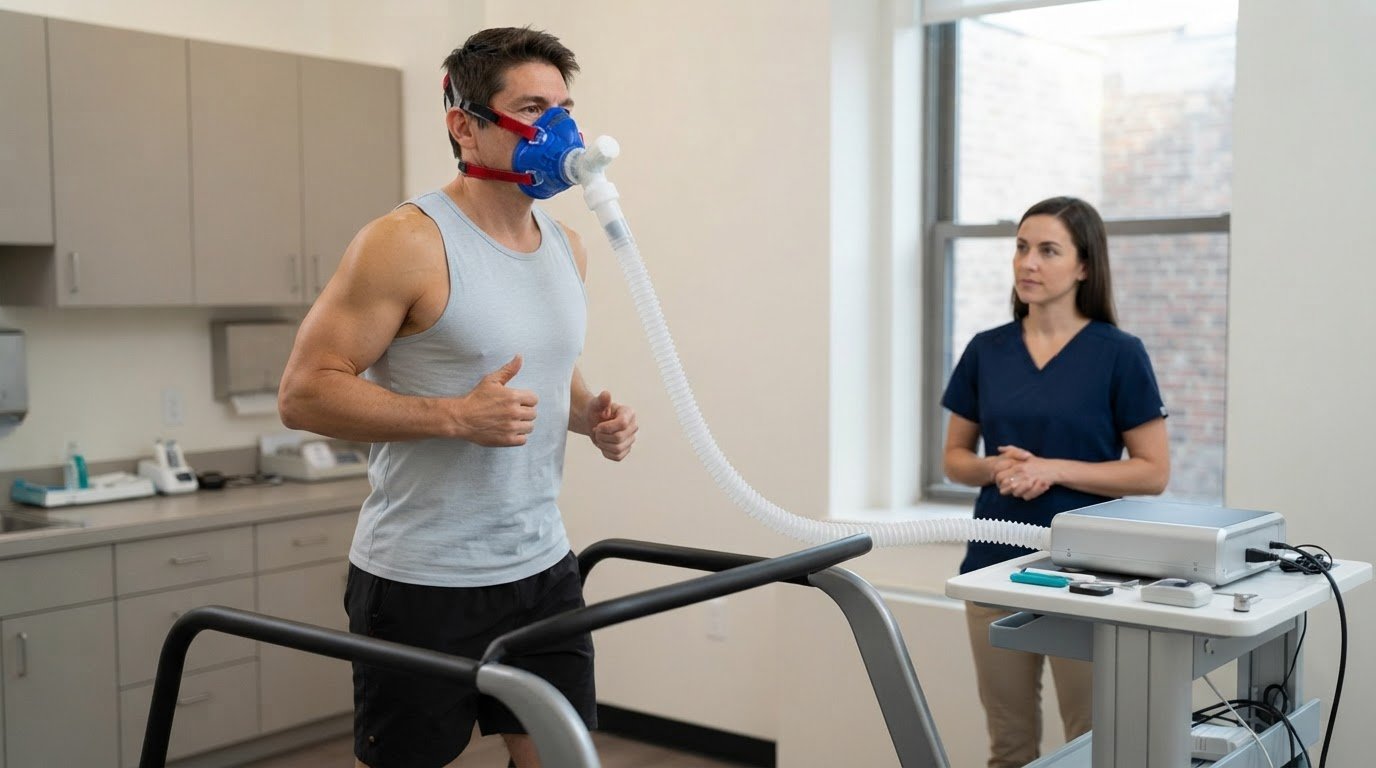
Use measures that match the question. A strength goal calls for attention to resistance and functional movement; an endurance goal calls for cardiovascular assessment. VO2 Max Performance Testing evaluates aerobic endurance, peak oxygen consumption, and cardiovascular efficiency. To understand your aerobic performance with objective testing, explore VO2 Max Performance Testing.
Dexaslim: 1 Session Dexa Scan
Dexaslim’s 1 Session Dexa Scan uses medical-grade DEXA technology to assess body composition and bone density. It can provide a useful baseline when you want objective information to complement exercise, nutrition, and health goals. Use the results as one part of a broader picture, alongside physical performance and clinical context, rather than as a standalone measure of healthspan.
If you’re assessing aerobic capacity or metabolic needs, VO2 Max Performance Testing and a Resting Metabolic Rate (RMR) Test offer other relevant measurements. A Longevity Panel can add health information for a broader discussion of proactive care. Choose an assessment based on the question you want to answer, then use the findings to inform your next steps.
Contact Dexaslim to discuss the 1 Session Dexa Scan and your health goals.
Make Your Next Health Decision Measurable
Turn a broad goal into a clear personal benchmark. Choose a daily ability you want to maintain, then connect it to a specific behavior you can track. For example, record how consistently you complete planned movement or whether a familiar activity feels more manageable. A simple record gives future decisions a reference point instead of relying on memory or guesswork.
That’s the practical value of health span optimization: use relevant information to set priorities, take action, and review what changes. Keep the process focused. Select a measure that matches your goal, discuss health concerns with an appropriate professional, and adjust your approach as your needs evolve. Progress comes from informed choices repeated over time, not from chasing a perfect score.
If you’re ready to clarify your next step, contact Dexaslim to discuss your goals. Start with the question you want answered, and use that conversation to focus your next health decision. A more deliberate plan starts with one useful question and a willingness to act.
Frequently Asked Questions
What Is Healthspan?
Healthspan is the period of life spent in good health, with the capacity to manage everyday activities. Assess it through practical markers, such as whether you can handle routine errands, maintain social activities, and move around your home independently. These observations add context to clinical measurements. They also help you choose personally meaningful goals, rather than relying only on age or a single health score.
What role does NAD+ play in aging?
NAD+ is a coenzyme involved in cellular reactions that help convert nutrients into usable energy. It also participates in processes related to cell maintenance. Its biological role does not establish that taking an NAD+ supplement slows aging or extends healthspan. If you’re considering a supplement, discuss your health conditions, medications, and goals with a qualified healthcare professional before changing your routine.
How does exercise improve healthspan at a cellular level?
During exercise, muscle cells use energy to produce movement. Repeated activity challenges the body to adapt, supporting its capacity to perform similar work. For example, a regular walking routine practices sustained movement, while resistance exercise challenges muscles to produce force. These are different training demands, so a balanced plan includes both rather than expecting one type of activity to meet every physical goal.
How does sleep affect brain health and aging?
Sleep supports attention, memory, and the brain’s ability to function during the day. Adults are advised to get 7-9 hours of quality sleep nightly. Keep a consistent bedtime and wake time, including on weekends, to support a stable sleep routine. If daytime fatigue persists or sleep regularly disrupts daily activities, record the pattern and discuss it with a healthcare professional.
How soon will I see results from longevity therapies?
There is no single timeline that applies to every longevity therapy or outcome. A change in a laboratory marker, exercise capacity, body composition, or a symptom involves a different measure and may be assessed differently. Before treatment, identify its intended target and the measure used to track it. Review progress through planned clinical monitoring rather than judging effectiveness by a short-term impression alone.
What are some effective health promotion strategies?
Make prevention concrete: keep recommended screenings and age-appropriate vaccinations current, and discuss blood pressure, cholesterol, blood sugar, and cancer screening with a healthcare professional. Build meals around minimally processed foods, plan movement into your schedule, and establish a consistent sleep routine. Also make time for social connection. These steps work best when they fit your health needs and can become part of everyday life.
What is health span and how is it different from lifespan?
Lifespan counts total years lived; healthspan focuses on the years lived with health and functional ability. For example, two people may have similar lifespans but differ in how easily they manage daily tasks or take part in activities they value. This distinction helps make goals more useful: instead of focusing only on living longer, identify a specific ability you want to preserve and track changes in it.
How much exercise is recommended for healthy aging, including strength and balance training?
The U.S. Department of Health and Human Services recommends at least 150 minutes of moderately intense physical activity per week for substantial health benefits. Muscle-strengthening activities are recommended twice a week. Include balance work as part of a varied routine, such as practicing controlled weight shifts near a stable support. Adapt activity to your current ability, especially if a chronic condition or disability affects movement.