

What matters more: the medication name or the clinical process behind it? GLP-1 peptide therapy can support medical weight management, but a responsible plan involves more than a prescription. It starts with an individual evaluation and requires ongoing attention to health, side effects, and progress.
Conflicting online claims can make it hard to separate established information from hype. You may be weighing practical questions: whether you’re a suitable candidate, what monitoring should involve, and how to understand changes in lean mass or the possibility of weight regain if treatment stops. These questions call for clear, evidence-informed answers, not guesswork.
This guide explains how GLP-1 therapy works, what a clinical evaluation and follow-up should cover, and what to discuss with a qualified clinician. It also explains how body-composition and metabolic measurements can add context when tracking progress. Dexaslim provides medically supervised GLP-1 peptide therapy, with DEXA scans and resting metabolic rate testing available as separate diagnostic services. Use the information ahead to assess whether a medically guided approach fits your health needs and long-term goals.
Key Takeaways
• Understand what GLP-1 peptide therapy is designed to do, and why a medication name alone doesn’t show whether a treatment plan is appropriate.
• Learn how to distinguish evidence for studied, regulated medicines from unsupported claims about generic peptide products.
• Compare clinician-supervised medication, lifestyle support, and nonmedical products by their evidence and oversight, not just their labels.
• Prepare to discuss your medical history, current medicines, goals, potential risks, and follow-up plan during an individual clinical evaluation.
• See how DEXA scans can measure lean muscle mass and fat distribution as a separate diagnostic service, providing information beyond the number on a scale.
What GLP-1 peptide therapy is, and what it is designed to do
Medication names, wellness marketing, and confident online claims can make weight-management choices harder to assess. Start with the biology. GLP-1 is a hormone released by the gut that helps regulate blood glucose and appetite. GLP-1 peptide therapy refers to clinician-supervised treatment using a medicine that acts on the GLP-1 pathway. The hormone and the treatment are related, but they aren’t the same thing.
A concise definition: GLP-1 is a naturally occurring gut hormone involved in appetite and glucose regulation. GLP-1 therapy is a medical treatment using medication that acts on this pathway, selected and managed through clinical evaluation.
How GLP-1 signaling relates to appetite and fullness
After eating, GLP-1 signals help coordinate the body’s response to food. Medicines that activate the GLP-1 receptor, the cell structure that receives this signal, can influence appetite and fullness. They may also slow gastric emptying, meaning food leaves the stomach more slowly. This can affect how long a person feels full and may support reduced food intake. For an overview of the drug class and its uses, see GLP-1 receptor agonists.
These effects don’t guarantee a specific amount of weight loss or the same experience for everyone. Response, tolerability, and treatment decisions vary. A clinician must consider the individual’s health history and the medicine’s current prescribing information rather than assume one description applies to every product or patient.
What the phrase peptide therapy can, and cannot, tell you
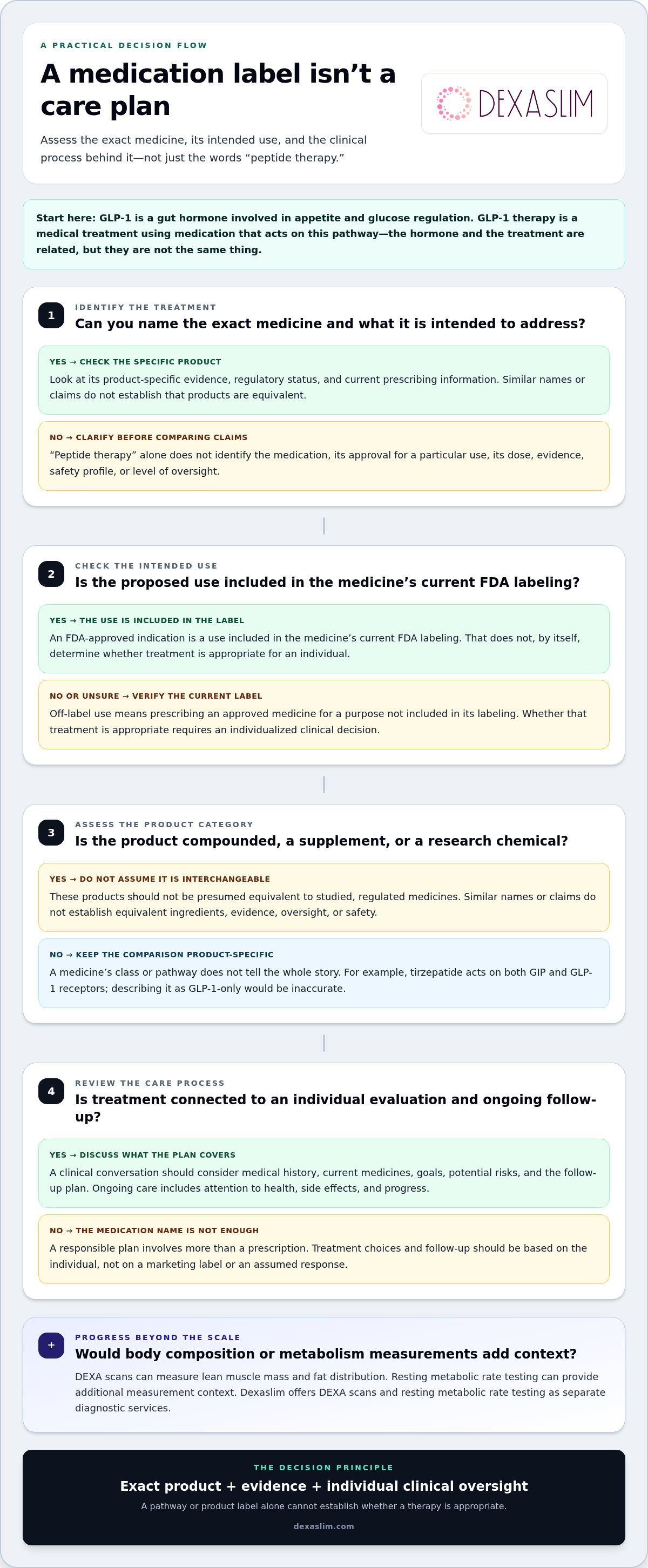
“Peptide therapy” is a broad phrase, not a complete treatment description. It doesn’t identify the medication, explain whether it is approved for a particular use, or establish its dose, evidence, safety profile, or level of oversight. The word “peptide” alone doesn’t prove that two products are equivalent. Product-specific evidence and regulatory status matter.
Ask what treatment is being considered, what it is intended to address, and how a qualified clinician will assess and monitor it. A medically supervised plan connects the medication choice to an individual evaluation; it doesn’t treat a marketing label as a clinical rationale. Dexaslim provides medically supervised GLP-1 peptide therapy for appetite regulation and medical weight management.
Peptides are also discussed in wellness contexts beyond GLP-1 medicines. These categories can involve different goals and evidence, so don’t transfer claims from one peptide product to another. Dexaslim’s clinical guide to advanced peptide protocols offers broader context on evaluating peptide-related goals, evidence, and safety. Keep the distinction clear: a biological pathway explains how treatment may work, but doesn’t establish whether a specific therapy is appropriate for you.
How GLP-1 therapy works, and what clinical evidence can support
The biological rationale is clear: medicines that act on incretin pathways can influence appetite, fullness, digestion, and glucose regulation. But a plausible mechanism doesn’t prove that every person will lose weight, tolerate treatment, or benefit in the same way. GLP-1 peptide therapy should be evaluated as a clinical intervention, with decisions and follow-up based on the individual rather than the drug category alone.
Clinical studies can show how a specific medication performed in defined groups and conditions. They can’t predict an individual’s response with certainty. Results depend on factors such as who participated, how long follow-up lasted, and which outcomes were measured. A clinician can use the evidence as context, then assess its relevance to a person’s health history, treatment goals, and response over time.
Medication classes and claims: keep the distinctions clear
Medicines in this area don’t all act on the same receptors. For example, tirzepatide acts on both GIP and GLP-1 receptors, so describing it as GLP-1-only would be inaccurate. Medicines also have product-specific labeling. Compare the exact medicine and intended use, not just broad terms used in advertising.
FDA-approved use and off-label use are distinct: an FDA-approved indication is a use included in a medicine’s current FDA labeling; off-label use is prescribing an approved medicine for a purpose not included in that labeling. Whether treatment is appropriate requires an individualized clinical decision. Check current labeling before relying on claims about a named medication.
Compounded products, supplements, and research chemicals shouldn’t be presumed interchangeable with studied, regulated medicines. Similar names or claims don’t establish equivalent ingredients, evidence, oversight, or safety. Evaluate each product and claim on its own terms. The WHO guidelines on GLP-1 therapies for obesity place medication within a broader approach to obesity care, rather than treating a medicine as a complete plan by itself.
What outcomes research can, and cannot, predict
Research can estimate average outcomes for participants who met a study’s criteria and followed its protocol. That average describes a group, not a promised result for an individual. Differences in health, treatment response, adherence, and tolerability all matter. Study duration matters too: findings from a defined trial period can’t, on their own, establish what will happen after treatment changes or stops.
Use evidence to ask focused questions: Which population was studied? What outcome was measured? How long was follow-up? Were results reported alongside lifestyle support? These details help distinguish a substantiated finding from a broad marketing claim. This review of peptide therapy evidence for body composition discusses what the evidence can and can’t show.
Ongoing clinical assessment helps make research relevant to individual decisions. Review progress and tolerability with a qualified clinician, and revisit the plan as health needs or responses change. Dexaslim provides medically supervised GLP-1 peptide therapy for appetite regulation and medical weight management. Explore Dexaslim’s medically supervised therapy as one option for a clinician-guided approach.
GLP-1 therapy versus alternatives: compare the care, not just the label
Choosing a weight-management approach takes more than recognizing a medication name or product label. Compare the evidence behind the approach, the level of clinical oversight, and how decisions account for your health and goals. These distinctions can help separate a structured care plan from a product claim.
| Approach | Evidence and oversight | What to consider |
|---|---|---|
| Clinician-supervised medication | Evidence depends on the specific medication and its studied use. A clinician evaluates whether treatment is appropriate and oversees care. | Review medical history, potential risks, goals, and how progress and tolerability will be assessed. |
| Lifestyle support | May involve changes to eating patterns, physical activity, sleep, or other health habits. The plan and support can vary. | Consider whether the approach is practical, sustainable, and aligned with your health needs. |
| Nonmedical products | Evidence and oversight vary by product. Promotional language alone doesn’t establish clinical effectiveness or safety. | Identify exactly what the product is and what reliable evidence supports its claims. |
Questions that separate clinical care from peptide marketing
Look beyond the phrase “peptide therapy” and examine the care model. Is a qualified clinician involved in evaluating your health? Is the product clearly identified, with its regulatory status and evidence explained? Is there a plan to review your response and address concerns? These questions focus on meaningful distinctions, not branding.
Be cautious about claims of effortless or guaranteed results. Promotional certainty isn’t a substitute for robust evidence or an individualized assessment. A medication name alone doesn’t establish quality, suitability, or responsible care. Decisions should reflect your clinical history, goals, potential risks, and current medical guidance.
Medication support and body-composition goals
The scale records total body weight, but it doesn’t show how that weight is divided between fat and lean tissue. That distinction can matter when you want to understand changes in body composition. GLP-1 therapy doesn’t automatically mean a person will lose muscle, and treatment doesn’t guarantee muscle preservation. Individual results and monitoring needs vary.
DEXA scans can measure lean muscle mass and fat distribution, providing information beyond scale weight. Dexaslim offers medically supervised GLP-1 peptide therapy for appetite regulation and medical weight management, as well as DEXA scans as a separate diagnostic service. A scan provides a body-composition measurement; it doesn’t guarantee a particular treatment outcome or mean that every therapy client receives one. This DEXA body-composition scan guide explains what the measurement can contribute.
Dexaslim focuses on medical wellness and diagnostics, not surgical weight-loss services or general primary care. Compare options by the care and evidence behind them, then discuss which approach fits your circumstances with a qualified clinician.
Candidacy, risks, and monitoring: what to discuss with a clinician
No universal checklist can determine whether GLP-1 peptide therapy is right for you. A qualified clinician needs to assess your health, treatment goals, relevant risk factors, and the specific medicine being considered. This article can help you prepare, but it can’t establish eligibility or replace individualized medical advice.
What an individualized evaluation should establish
Give the clinician a complete picture. Share your medical history, current medicines, supplements, previous weight-management treatments, and any symptoms that may affect care. Include concerns you might otherwise overlook, such as past side effects or changes in appetite and digestion. Accurate details help the clinician assess potential risks and decide whether the proposed treatment aligns with your goals.
Ask how the decision will be made. A sound evaluation should explain the treatment’s intended purpose, relevant safety considerations, and what alternatives or additional support may be appropriate. Don’t assume that eligibility follows from a medication’s popularity or another person’s experience.
Monitoring, side effects, and realistic expectations
Follow-up is part of treatment, not an optional extra. It gives the clinician a chance to review your response, tolerability, concerns, and continued suitability. Gastrointestinal effects, including nausea, vomiting, and diarrhea, are commonly reported with GLP-1 medicines. Specific risks and warnings depend on the medicine, so use its current prescribing information and your clinician’s guidance.
Know how to report symptoms and what to do if they become severe. Persistent or severe symptoms, inability to keep fluids down, signs of an allergic reaction, or other urgent concerns warrant prompt medical attention. Contact your clinician about medical concerns; seek emergency care for an emergency. Don’t start, stop, or change a prescribed medicine without discussing it with your clinician.
Use your appointment to get clear, practical answers. Bring a written list and ask:
• How does my medical history affect whether this treatment is appropriate?
• Could my medicines, supplements, or previous treatments change the risk assessment?
• Which benefits are realistic for my goals, and what uncertainties should I understand?
• Which side effects should I expect, and which symptoms need prompt or urgent attention?
• How will we review my response, tolerability, and continued suitability?
• Who should I contact with concerns, and what should I do if symptoms feel urgent?
Clear answers should connect the treatment choice to your circumstances, not rely on broad promises. Explore Dexaslim’s medically supervised GLP-1 therapy as you consider a clinically guided approach.
How Dexaslim approaches GLP-1 peptide therapy and measurable progress
Medical weight management calls for more than a number on the scale. Clinical supervision keeps the focus on individual assessment and informed decisions, rather than assuming one treatment fits everyone.
Measurement can add useful context. Body weight alone doesn’t show how weight is divided between fat and lean tissue. Dexaslim offers DEXA scans as a separate diagnostic service to measure lean muscle mass and fat distribution. That information can support a more detailed conversation about health goals and body composition. It doesn’t guarantee a particular change, predict an individual outcome, or mean a DEXA scan is automatically included with therapy.
Clinical therapy alongside objective health measurements
Keep treatment and diagnostics distinct. GLP-1 therapy is a medically supervised treatment option. A DEXA scan provides body-composition measurements. Dexaslim also offers metabolic assessments, including Resting Metabolic Rate testing, as a separate service. These measurements may help make health discussions more specific, but the clinician determines what information is relevant to an individual evaluation.
For example, a change in scale weight doesn’t reveal on its own whether fat distribution or lean mass has changed. A DEXA measurement can provide additional data to discuss alongside other health information. Use those results as context, not as a promise that treatment will preserve muscle or produce a specific pattern of weight change.
A practical next step for readers considering care
Before pursuing treatment, write down what you want to address and what matters most to you. Consider your health goals, questions about the evidence, concerns about potential risks, and expectations for clinical supervision. Bring relevant medical history and current medicines to the evaluation. Clear information supports a more useful discussion about whether treatment fits your circumstances.
Assess a program on four points:
Evidence
Is the proposed treatment grounded in evidence for the specific medicine and intended use?
Individual suitability
Does the clinical evaluation account for your health history, goals, and relevant risks?
Supervision
Is there a plan for clinical follow-up and review of your response?
Expectations
Are benefits and uncertainties discussed without guarantees?
Dexaslim provides medically supervised GLP-1 peptide therapy alongside separate diagnostic options for people seeking a more measurable view of health. Use the clinical conversation to clarify the role of treatment, what follow-up should address, and whether additional measurements could inform your goals. Assess progress using relevant evidence and realistic expectations, not assumptions based on a medication label or scale reading alone.
Explore GLP-1 peptide therapy at Dexaslim and consider how a medically guided program may align with your personal goals.
Make your next step an informed one
Before deciding whether GLP-1 peptide therapy belongs in your health plan, define what a meaningful result would look like for you. Consider which goals matter most, what trade-offs you want to discuss, and what information would help you make a confident decision. A focused clinical conversation can turn broad questions into priorities to evaluate over time.
Bring your questions, be direct about your concerns, and expect a discussion grounded in your circumstances rather than a one-size-fits-all promise. The right next step isn’t necessarily starting treatment. It’s getting enough clear, relevant information to make a decision that aligns with your health needs and long-term goals.
Explore medically supervised GLP-1 peptide therapy at Dexaslim and take the next step toward an informed conversation about your goals.
Frequently Asked Questions
What is GLP-1 peptide therapy?
GLP-1 peptide therapy is a general term for medical treatment using medicines that act on the GLP-1 pathway. These medicines can influence appetite and blood glucose regulation, but the phrase doesn’t identify a specific medication or establish that a product is appropriate for you. Before considering treatment, clarify the exact medicine, its intended use, and how a clinician will assess your response.
Is GLP-1 peptide therapy FDA-approved?
Some medicines that act on the GLP-1 pathway are FDA-approved for specific uses, but “GLP-1 peptide therapy” as a general phrase isn’t an FDA approval. Approval applies to a particular product and indication, not every product marketed with similar language. Compounded products aren’t FDA-approved drugs. Review the specific medicine’s current FDA labeling with a qualified clinician, especially if a product’s marketing makes broad approval claims.
Who may be eligible for GLP-1 therapy?
Eligibility depends on the specific medication’s labeling and an individual clinical evaluation. Some medicines are indicated for adults with obesity or overweight with a weight-related health condition, but that doesn’t make treatment suitable for everyone. A clinician considers factors such as your health history, current medicines, risks, and goals. Bring a complete medication and supplement list so the discussion reflects your health picture.
What are the common side effects of GLP-1 medications?
Common side effects include nausea, vomiting, diarrhea, and other gastrointestinal symptoms. The likelihood and severity can vary by medicine and person. Keep a record of when symptoms occur, how long they last, and whether they affect eating or drinking; this information can help your clinician assess tolerability. Review the current prescribing information for the specific medicine, and seek medical advice about severe or persistent symptoms.
Can GLP-1 therapy affect muscle mass as well as body fat?
Yes. Weight change can involve both fat and lean tissue, though the proportions vary by individual and treatment circumstances. A scale can’t distinguish those changes. If body composition is a concern, discuss how to evaluate it with a clinician. DEXA is one measurement option that can assess lean mass and fat distribution. Results add context to a health discussion, but don’t guarantee a particular change.
What happens if someone stops GLP-1 therapy?
After treatment ends, appetite or body weight may increase again for some people, but the timing and degree vary. Stopping also changes the treatment plan, so discuss the decision with the prescribing clinician before making changes. Ask what follow-up or other support may be appropriate, which changes to monitor, and how to respond if previous health concerns return. Don’t stop or adjust prescribed treatment without clinical guidance.