

Dairy isn’t the only route to stronger bones. For adults ages 19 to 50 and men ages 51 to 70, the recommended calcium intake is 1,000 milligrams a day. Foods that increase bone mineral density can include calcium-rich plant foods and fortified drinks, while vitamin D helps your body absorb calcium.
Plant-based eating can support bone health, but the overall pattern matters: calcium, vitamin D, protein, and other nutrients all contribute. This article explains how bone remodeling works, which foods to prioritize, and how to meet calcium and vitamin D needs with dairy or plant-based choices. You’ll also learn how bone-density measurement can provide an objective baseline, beyond food choices alone.
Key Takeaways
• Build meals around calcium-rich foods, and include vitamin D sources that help your body absorb calcium.
• Plant-based eating can support bone health when it includes nutrient-dense choices such as calcium-set tofu and fortified foods.
• Bone remodeling continues throughout life, so consistent nutrition and weight-bearing activity matter over time.
• Diet, movement, and habits such as high sodium intake can influence bone health; focus on sustainable daily choices.
• A bone density scan can provide an objective measure of your bone health alongside nutrition and lifestyle changes.
1. How much calcium and vitamin D do you need?
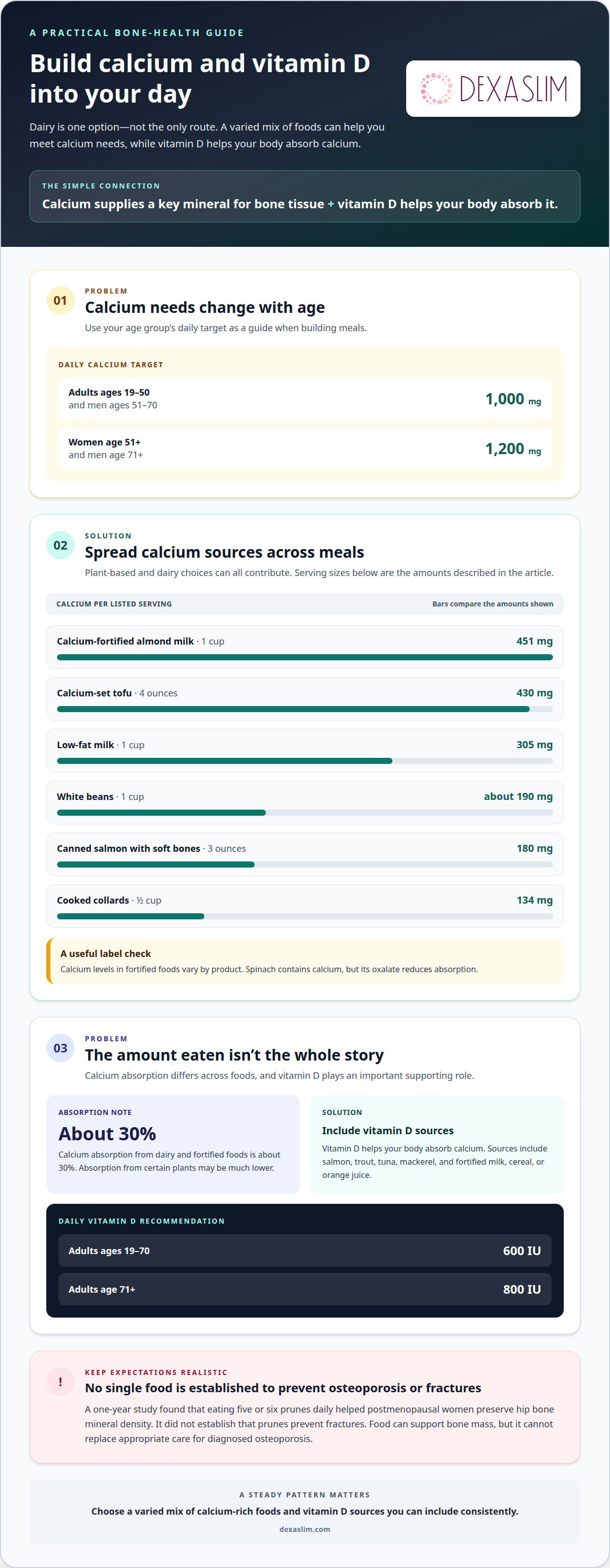
Calcium gives bone tissue a key mineral, while vitamin D helps your body absorb calcium. For adults ages 19 to 50 and men ages 51 to 70, the recommended calcium intake is 1,000 milligrams daily. Women age 51 and older and men age 71 and older need 1,200 milligrams daily. People with osteoporosis should pay close attention to both nutrients, since intake and absorption affect the nutrients available for bone maintenance.
Build calcium intake from foods you can include consistently. Milk, yogurt, and cheese provide calcium, and some also provide vitamin D. For example, one cup of low-fat milk provides 305 milligrams of calcium. Fish eaten with its soft bones, such as canned salmon, is another option: a 3-ounce serving provides 180 milligrams. Read fortified-food labels because calcium levels vary by product.
Plant-based choices can contribute meaningfully. Which plant foods are best for bone mineral density? Calcium-set tofu, fortified plant milks, beans, collard greens, and fortified orange juice offer practical sources. A 4-ounce tofu serving provides 430 milligrams of calcium, while one cup of calcium-fortified almond milk provides 451 milligrams. One cup of white beans provides about 190 milligrams, and a half-cup of cooked collards provides 134 milligrams. Spinach contains calcium, but its oxalate reduces absorption.
Absorption matters as much as the amount on the plate. According to the National Institutes of Health Office of Dietary Supplements, calcium absorption from dairy and fortified foods is about 30%, while absorption from certain plants may be much lower. Pair several calcium sources across meals instead of relying on one food. Vitamin D sources include salmon, trout, tuna, and mackerel, plus fortified milk, cereal, and orange juice. Adults ages 19 to 70 need 600 international units daily; adults age 71 and older need 800.
Can specific foods prevent osteoporosis or fractures? No single food has been established as preventing either condition. A one-year study found that eating five or six prunes daily helped postmenopausal women preserve hip bone mineral density, but it did not establish that prunes prevent fractures. Food can support bone mass, but it cannot replace appropriate care for diagnosed osteoporosis.
For osteoporosis, a healthcare professional may recommend calcium and vitamin D supplements if intake is low, alongside medication when needed. Start by estimating how much calcium you get from meals, then look for gaps, such as few fortified foods or limited fish. A varied mix of dairy or fortified alternatives, beans, greens, and vitamin D sources can make a consistent eating routine easier to maintain.
2. Why is bone health important?
Bones are active tissue, not a fixed mineral framework. They support the body and protect organs while continually renewing themselves. When breakdown outpaces replacement, bone mass can decline, making bones more fragile. Osteoporosis is a disease that weakens bones and makes them more likely to break. Supporting bone health means paying attention to nutrition and other influences over time.
Vitamin D helps the body absorb calcium, linking dietary intake to the mineral available for bone tissue. Food sources include fatty fish, egg yolks, white mushrooms, and products fortified with vitamin D. Fortified breakfast cereals and plant drinks can help people who eat few animal foods. Check labels because vitamin D content varies by product. How does vitamin D from food support bone mineral density? It helps the body absorb calcium, which supports bone structure.
Sunlight is another source: the skin makes vitamin D after exposure. Five to 15 minutes of midday sun can be enough for many people, though exposure and vitamin D production vary. People who are frail, housebound, or living in a care home may have greater difficulty getting enough. Risk is also higher for people who cover most of their skin outdoors and people with dark skin.
Vitamin D recommendations depend on age. In the United States, people ages 1 to 70 are recommended to get 15 micrograms daily; adults age 71 and older are recommended to get 20 micrograms. A supplement can be a practical way to address low dietary intake, particularly when sunlight exposure is limited. People in higher-risk groups should pay attention to intake and discuss supplementation with a healthcare professional.
Bone-supportive nutrition includes more than calcium and vitamin D. Kale, collards, and other green vegetables provide vitamin K, while beans, nuts, and seeds contribute magnesium. Potatoes, beans, and vegetables can supply potassium; citrus fruits, berries, and peppers contain vitamin C. Aim for variety across meals rather than expecting one food or nutrient to do all the work. These nutrients belong in a balanced pattern that also includes protein and phosphorus.
Menopause can change the rate of bone loss. Women lose bone more rapidly for a number of years after menopause, when the ovaries almost stop producing bone-protective oestrogen. That makes steady attention to nutrition and bone health especially relevant during this life stage. A bone density scan can add an objective measurement to that broader picture, alongside dietary choices and health history.
3. What can I do to keep my bones healthy?
Support bone health with a consistent mix of nutritious foods, movement, and awareness of risk factors. Weight-bearing activities such as walking or dancing load bones and can help build strength while slowing bone loss. Resistance training challenges muscles and the skeleton. Food supplies materials for bone maintenance; exercise provides a physical stimulus. How do diet and weight-bearing exercise work together to improve bone mineral density? Nutrients support bone tissue, while weight-bearing activity encourages bones to adapt to physical load.
Start by identifying factors that can raise risk. Being over 65 years old is a risk factor for osteopenia or osteoporosis, and a body mass index of 19 or less is associated with higher risk. Genetics and lifestyle also contribute. A previous fracture, especially after age 50, deserves attention: adults older than 50 who break a bone should discuss bone health with a healthcare professional, since they may need a bone density test.
Menopause can accelerate bone loss. For several years after menopause, women tend to lose bone more rapidly as the ovaries produce much less bone-protective oestrogen. Keep strength training and weight-bearing activity in your routine, and choose a nutrient-rich eating pattern. Adequate vitamin D supports calcium absorption, while protein provides building material for bone and muscle. These habits matter, but they do not remove the need to assess personal risk.
Track sodium, too. The page recommends aiming for no more than 2,300 milligrams per day. On an American Nutrition Facts label, a food is high in sodium when one serving provides 20% or more of the Daily Value. Compare serving sizes and % Daily Value across packaged soups, sauces, and snacks. Frequent high-sodium choices can make it harder to retain calcium, so replace some processed options with less processed meals.
Other habits can also affect bone health. Drinking more than three cups of coffee a day may interfere with calcium absorption and contribute to bone loss. For healthy adults in the United States who choose to drink alcohol, moderation means up to one drink a day for women and two for men. Regularly exceeding those amounts may raise osteoporosis risk. Use these thresholds to review your routine, not to overlook diet or activity.
Make the plan practical: include weight-bearing exercise, strength work, and varied meals; limit excess sodium; and address personal risk factors. A high-protein diet may help keep bones healthier, but balance matters. If you have had a fracture after age 50, or risk factors such as low body weight or older age, make bone health an explicit part of your healthcare discussion.
4. Peak bone mass and bone remodeling
Bones continually renew through remodeling: old bone tissue is removed and new tissue forms. This process helps maintain the skeleton, but the balance between breakdown and formation changes with age. Bone mass usually rises through childhood and young adulthood. Most people reach peak bone mass around age 30, making early-life bone building an important foundation for later years.
People can build bone mass through their 20s. After their 30s, they start to lose more bone mass than they build. That shift does not mean bone remodeling stops. It means preserving the tissue already built becomes a bigger priority. Nutrition, physical activity, and individual health factors all shape the conditions in which remodeling takes place.
Women reach peak bone mass at around age 30, which remains steady for about the next two decades. After menopause, bone loss can accelerate for a number of years as protective oestrogen production falls. These age-related changes make bone health a long-term measure, not a goal reserved for older adults. Building and maintaining bone mass involve different stages, but both benefit from sustained attention.
Choose foods that supply nutrients needed for bone maintenance. Calcium-rich options include dairy foods, calcium-set tofu, fortified drinks, beans, and greens such as broccoli. Protein is also part of a balanced eating pattern. Fortified cereals and plant drinks can provide nutrients that may be harder to obtain from other foods. No single meal resets bone remodeling; consistent eating patterns matter more than one isolated ingredient.
Weight-bearing activity gives bones a mechanical stimulus. Walking, dancing, and resistance exercise challenge the skeleton and muscles. Pairing these activities with adequate nutrition supports bone health better than relying on supplements or a single food alone. The right activity depends on your ability and health status, but a regular routine helps maintain physical loading over time.
Include smoking in an honest review of your bone-health habits. Diet alone cannot explain bone mass or its changes. Smoking status, physical activity, nutrition, age, and health history each provide context, but none substitutes for directly measuring bone density. If bone strength is a concern, use these factors to guide a focused discussion about assessment and prevention.
Think in stages: build bone mass during youth, then protect it through adulthood as remodeling continues. A practical routine combines nutrient-rich meals, weight-bearing movement, and attention to changing risk factors. These habits support the body’s ongoing bone maintenance, while measurement can show whether bone density is changing as expected.
5. Plant-based dietary patterns and bone mineral density
A plant-based diet can support bone health, but the label alone doesn’t predict bone mineral density. Food quality and nutrient coverage matter. A 2024 cross-sectional study found no significant difference in bone mineral density between people following plant-based and omnivorous diets. That result supports a practical takeaway: evaluate the eating pattern, not simply whether it includes animal foods.
More detail comes from a study of over 10,000 adults. Choosing healthful plant-based whole foods while limiting animal products and ultra-processed foods was associated with improved bone mineral density. This association doesn’t prove that one diet caused the difference. It highlights the value of whole foods, such as beans, greens, whole grains, nuts, and seeds. These are examples of foods that increase bone mineral density within a balanced eating pattern.
Do dairy foods improve bone mineral density more than plant-based alternatives? The findings described here do not establish that dairy is superior. A well-planned plant-based diet can include calcium-fortified drinks, calcium-set tofu, beans, and leafy greens. Dairy products and sardines are other possible sources of bone-supportive nutrients.
Tofu can be a useful part of plant-based eating: it provides protein and calcium, and its isoflavones may help slow bone loss. Choose calcium-set tofu for a calcium-containing option. Beans, nuts, seeds, and fortified foods add variety, while greens contribute nutrients such as vitamin K. Check plant-drink labels because fortification varies by product.
Can protein-rich foods improve bone mineral density? A high-protein diet may help keep bones healthier, but protein alone is not a complete strategy. Include varied sources, such as tofu, beans, nuts, dairy products, eggs, or fish, to suit your eating pattern. Pair nutritious meals with weight-bearing exercise, which supports bone health through physical loading.
Plant-based eating should suit the person, not follow a fixed template. Review the foods you regularly eat and look for gaps in calcium, vitamin D, protein, and other nutrients. Foods that increase bone mineral density are part of an overall approach, not a substitute for prescribed osteoporosis medication. Bone-density measurement adds an objective data point when you’re making decisions about your plan.
Ready to move beyond dietary estimates? Get a bone-density measurement to establish an objective baseline.
Dexaslim: Bone Density Scan
Dexaslim offers a Bone Density Scan using medical-grade DEXA technology to measure bone density. The scan can add an objective data point alongside nutrition, exercise, and personal risk factors. Consider a scan if you want a clearer baseline or are discussing bone health after a fracture or another risk concern. Measurement complements healthy habits; it does not replace care for diagnosed osteoporosis or guidance from your healthcare professional.
Use the results to make your bone-health picture more concrete, rather than relying on diet choices alone. Dexaslim also offers a 1 Session Dexa Scan. Contact Dexaslim to discuss a Bone Density Scan and take a measurable next step toward understanding your bone health.
Turn bone-health intentions into a measurable next step
Use your nutrition choices as a foundation, then let objective information help guide what you focus on next. Foods that increase bone mineral density are one part of a broader approach; an individual baseline can help put bone-health decisions into context. Dexaslim offers a 1 Session Dexa Scan, VO2 Max Performance Testing, and a Resting Metabolic Rate (RMR) Test to measure different aspects of health and performance.
Choose the next step that matches your priority. If you want to discuss bone density measurement, contact Dexaslim to discuss your needs. Clear information can make your next decision more focused. Keep building habits that support your long-term health.
Frequently Asked Questions
How much calcium and vitamin D do you need?
For adults, daily calcium needs depend on age and sex. Adults ages 19 to 50 and men ages 51 to 70 need 1,000 milligrams; women ages 51 to 70 need 1,200 milligrams. Adults age 71 and older need 1,200 milligrams. Vitamin D recommendations are 600 international units daily for adults ages 19 to 70 and 800 for adults age 71 and older. Food labels can help you tally intake.
What can I do to keep my bones healthy?
Combine nutrient-rich meals with regular weight-bearing activity, such as walking, dancing, or stair climbing. Add resistance exercises that challenge muscles and bones, and limit habits that can undermine health, including excess sodium. If you’ve had a fracture after age 50, make bone health a priority in your healthcare discussion. A bone density test may help assess your status, especially when age or other risk factors are present.
What is the fastest way to increase bone density?
There is no instant food or exercise shortcut to increase bone density. Bone remodeling takes time, so focus on consistent nutrition, weight-bearing exercise, and strength training. If you have osteoporosis or a fracture, treatment may include prescribed medication and calcium and vitamin D if your intake is low. A bone-density measurement can provide an objective baseline, but treatment decisions should take your health history into account.
Which fruit is best for bones?
No single fruit has been established as the best choice for everyone’s bones. Prunes have been studied for bone health, and dried figs provide calcium. Include fruit in a varied eating pattern rather than treating one serving as a stand-alone strategy. For example, pair fruit with yogurt or a fortified alternative, or add it to oatmeal with nuts. That brings different nutrients together in a practical meal.
Which nuts are best for bones?
Almonds are a useful option because they provide calcium, magnesium, and protein. A quarter-cup serving contains about 75 milligrams of calcium. Walnuts also offer a plant-based source of omega-3 fatty acids, while sesame seeds and tahini can contribute calcium. Rotate nuts and seeds through snacks, oatmeal, or salads. Choose unsalted versions when you’re managing sodium intake, and keep portions aligned with your overall eating plan.
Why is bone health important?
Healthy bones support movement, protect organs, and provide the framework for the body. Osteoporosis weakens bones and makes breaks more likely. In the United States, approximately 10.2 million adults age 50 and older have osteoporosis, and 43.4 million have low bone mass. Bone health deserves attention before a fracture occurs, because bone density reflects cumulative influences such as age, nutrition, activity, and health history.
Which foods are rich in calcium for bone mineral density?
Useful calcium sources include milk, yogurt, cheese, calcium-set tofu, fortified plant drinks, and fish eaten with soft bones. Examples include one cup of low-fat milk with 305 milligrams, one cup of calcium-fortified almond milk with 451 milligrams, and a half-cup of cooked collards with 134 milligrams. Compare Nutrition Facts labels, since calcium levels in fortified drinks and cereals vary by product.
What foods provide magnesium, vitamin K, and phosphorus for bone health?
Add variety with nuts, seeds, beans, and leafy greens. Almonds provide magnesium, while kale and collards supply vitamin K. Dairy foods provide phosphorus alongside other bone-supportive nutrients; tofu, fish, and beans can also contribute to a balanced diet. Try beans in soups, greens in salads, or seeds on oatmeal. No single nutrient replaces an overall eating pattern that supports bone maintenance.