
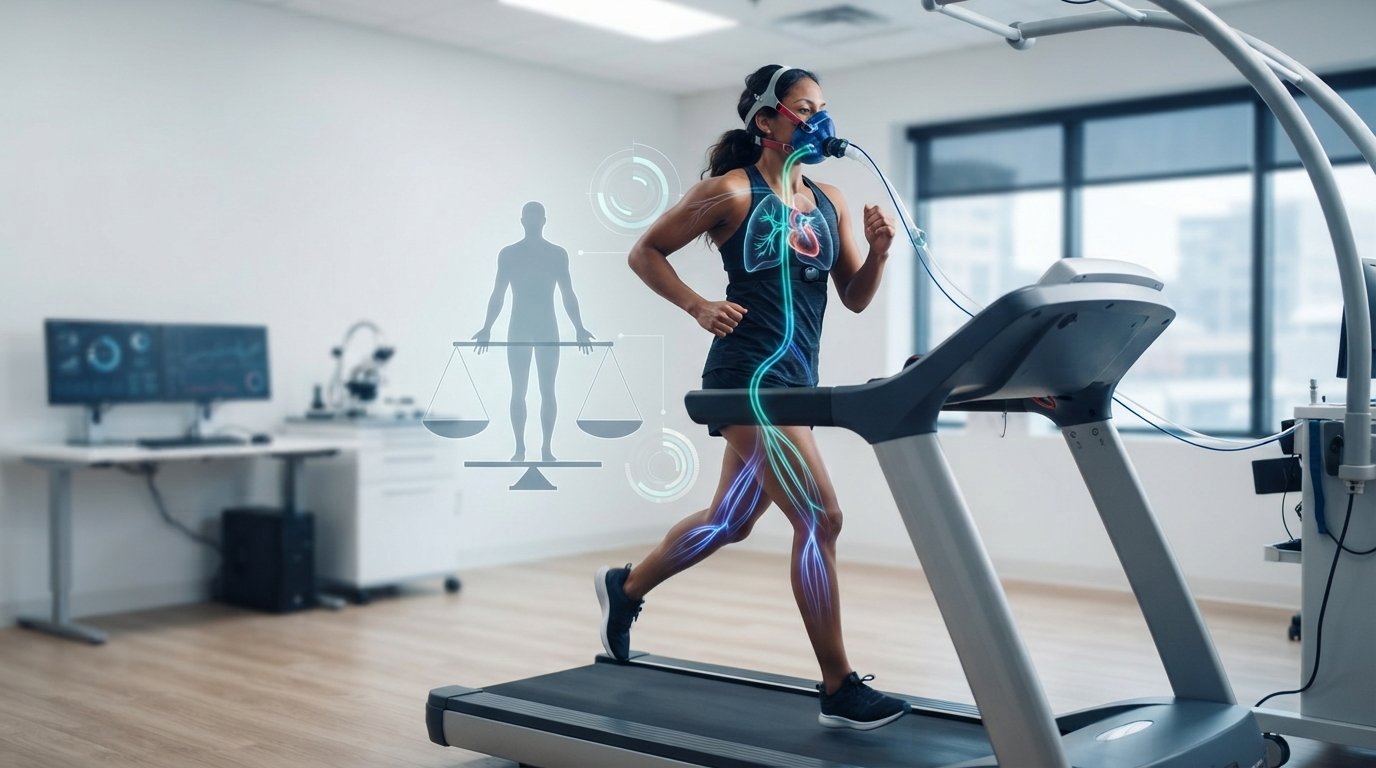
Yes, losing weight can increase your relative VO2 max, even if your body’s total oxygen capacity stays the same. VO2 max is commonly expressed as milliliters of oxygen used per minute per kilogram of body weight, so a lower body weight can raise the score by changing its denominator. That doesn’t automatically mean your cardiovascular fitness improved.
That distinction matters. The scale can move your VO2 max number, while changes in aerobic capacity depend on factors such as training, recovery, and how your body adapts.
This article explains how weight affects the measurement, why relative and absolute VO2 max can tell different stories, and what influences improvement over time. You’ll also learn why there isn’t one fixed timeline for increasing VO2 max: progress depends on your starting fitness, training stimulus, and consistency. Understand what the number actually reflects, and you can interpret changes with more precision instead of treating every rise as proof of improved fitness.
Key Takeaways
• Weight loss can raise relative VO2 max by reducing the body-weight denominator, even if oxygen capacity itself hasn’t changed.
• Separate relative VO2 max from absolute VO2 max to understand whether a higher score reflects better aerobic capacity or a change in body weight.
• Improvement timelines vary. Training consistency, workout intensity, recovery, and starting fitness all shape progress.
• Use body-composition and performance measurements together to interpret changes more accurately than the scale alone.
• Build aerobic fitness with a balanced training approach, and track how your body responds over time.
VO2 Max And Weight Loss: Losing Weight Increases VO2 Max?
Yes, weight loss can raise relative VO2 max because the score divides oxygen use by body weight. That increase can reflect a smaller denominator, not improved heart or muscle performance.
Watch Talking With Docs explain how body weight affects the VO2 max calculation:
Relative VO2 Max After Weight Loss
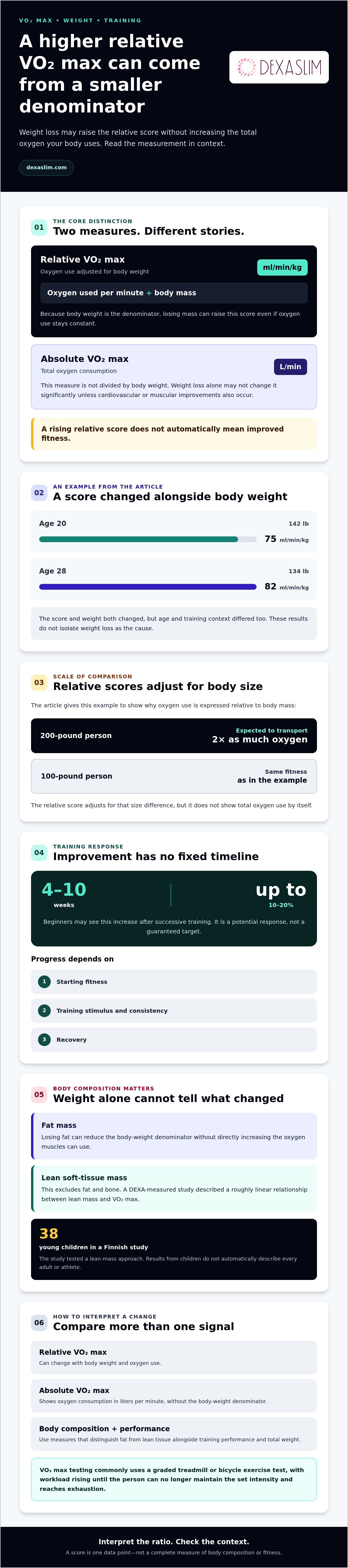
Relative VO2 max is oxygen use per minute adjusted for each kilogram of body weight. Because weight is the denominator, losing mass can raise the value even when oxygen use stays constant. For example, one author recorded 75 ml/min/kg at age 20 and 82 ml/min/kg at age 28, while weight changed from 142 to 134 pounds. Those results also reflect different ages and training contexts, so they don’t isolate weight loss alone.
Fat Loss and VO2 Max
Fat loss can improve relative VO2 max by reducing body mass without directly increasing the oxygen your muscles can use. The type of weight lost matters: lean soft-tissue mass excludes fat and bone, and lean mass has shown a roughly linear relationship with VO2 max in a DEXA-measured study. Protecting muscle through adequate protein and recovery supports repair and growth during a diet. A changing scale number alone can’t show whether fat or lean tissue changed.
Absolute VO2 Max Changes
Absolute VO2 max measures oxygen consumption in liters per minute, without dividing by body weight. Weight loss alone may not change this value significantly unless cardiovascular or muscular improvements also occur. There’s no single relative-score increase that applies to every amount of weight lost: the change depends on body mass before and after, plus whether oxygen use itself changes. Compare both measures to distinguish a denominator shift from a change in total oxygen capacity.
Fitness Gains Versus Weight-Related Gains
A weight-related increase in VO₂ max can reflect a smaller body-weight denominator, while an increase in absolute oxygen use reflects improved aerobic capacity. Rapid or excessive weight loss may undermine training if it limits fueling, muscle repair, or recovery. Use a sustainable nutrition approach, include protein to support muscle repair, and allow time to recover before another hard effort. Balance intense sessions with longer, moderate-intensity training, and stay hydrated before, during, and after exercise. These steps support weight loss while leaving room for fitness to improve.
VO2 max measurement per kilogram of body weight
VO2 max is commonly expressed as milliliters of oxygen used per minute per kilogram of body weight. Body composition affects that calculation because the denominator is total weight, while fat and lean tissue play different roles in movement and oxygen use. A person can therefore have a higher relative score after losing weight, even without increasing total oxygen consumption.
Think of the measure as a ratio: oxygen used during exercise divided by body mass. For example, a 200-pound person would be expected to transport twice as much oxygen as a 100-pound person with the same fitness. The relative score adjusts for that difference, helping compare aerobic capacity across body sizes. It doesn’t reveal, by itself, how much oxygen the body uses in total.
Body-composition measures add context to the ratio. Lean soft-tissue mass excludes fat and bone, and research has described a roughly linear relationship between DEXA-measured lean mass and VO2 max. That relationship helps explain why weight alone can be a blunt measure: a change in total body weight doesn’t identify whether fat or lean tissue changed.
Body impedance measurements can estimate lean mass while preserving its relationship with VO2 max. A Finnish study tested a lean-mass approach in 38 young children, illustrating that researchers can examine oxygen capacity against more than total body weight. The population matters when interpreting the result, though: findings from children don’t automatically describe every adult or athlete.
Testing method also shapes the number. A VO2 max assessment commonly uses a graded exercise test on a treadmill or bicycle ergometer. Workload rises until the person can no longer maintain the set intensity and reaches exhaustion. Because the reported value is normalized by body weight, changes in that measurement can affect the final score even when the exercise protocol stays similar.
Use the number as one data point, not a complete body-composition report. Compare relative VO2 max with total weight, training performance, and a measure that distinguishes fat from lean tissue. A DEXA body-composition scan can provide that additional context, while VO2 max testing assesses peak oxygen consumption during exercise. Looking at both helps separate a ratio change from a broader shift in aerobic performance.
F45 states that VO2 max measures oxygen use per kilogram of body weight per minute, so losing weight is one way to improve the relative VO2 max value. A higher relative score may therefore reflect a change in body weight rather than greater total oxygen consumption. Consider the ratio alongside body-composition measures and exercise performance when assessing what has changed.
Expected timeline for VO2 max improvement
VO2 max changes on a training timeline, not simply in step with weight loss. Beginners may increase VO2 max by up to 10-20% after 4-10 weeks of successive training. Treat that range as a potential response, not a target every person must reach. Your starting fitness, training stimulus, recovery, and consistency all shape the result.
The first useful question is what changed: aerobic capacity, body weight, or both? Since relative VO2 max is expressed per kilogram of body weight, weight loss can shift the score even when total oxygen use stays similar. Track body weight and training performance alongside the score. That comparison helps you interpret progress across a training period instead of attributing every rise to improved fitness.
Training works best with a repeatable pattern. High-intensity interval training uses short, hard efforts followed by rest or low-intensity activity. Longer, moderate-intensity sessions build aerobic endurance and allow recovery between demanding efforts. Alternating these types of exercise is more useful than making every session maximal. The workout should challenge you, but recovery gives your body time to adapt.
For a practical comparison, record a baseline test, then keep the exercise mode and test conditions consistent when measuring again. A VO2 max test commonly uses a treadmill or bicycle ergometer, with intensity rising until exhaustion. Switching from cycling to running can change the demand on working muscles, making two results harder to compare. Track the same mode, effort progression, and recovery status across measurements.
Progress can also look uneven. A new training block may improve performance before a test captures a clear change, while fatigue can obscure gains after hard sessions. Avoid treating one reading as the verdict. Compare the broader pattern: workout intensity, ability to sustain exercise, recovery between efforts, and the VO2 max result. A steady trend gives a more useful signal than a single peak score.
Long-term development differs from early adaptation. VO2 max typically peaks in the late 20s and early 30s, but practically anyone can improve it to some degree. Individual potential differs, and athletes can reach a plateau after years of repeated training and competition. That makes the goal a sustainable progression, not an endless increase. Build a consistent training period, balance intensity with recovery, and assess whether both capacity and exercise performance are moving forward.
Factors affecting VO2 max
VO2 max reflects several interacting systems, not a single workout or scale reading. Training intensity, endurance volume, recovery, oxygen transport, and genetics all influence the value measured during exercise.
Exercise provides the stimulus. High-intensity workouts generally improve VO2 max fitness more effectively than long, low-intensity efforts alone. Yet longer aerobic sessions still build endurance and can support weight loss. A balanced program uses both: demanding intervals to challenge maximum oxygen use, and moderate efforts to develop sustained capacity. Runners and cyclists may use tempo workouts near 90% of VO2 max for 40 minutes or longer, continuously or in intervals.
Intensity also affects fuel use. In male endurance cyclists, fat oxidation peaks at an average exercise intensity of 64% of VO2 max. The described fat-burning zone spans around 50-65% of VO2 max, while endurance athletes may train around 60-80% of maximum heart rate for fat burning. These measures describe different intensity scales, so don’t treat them as interchangeable targets. Longer, lower-intensity sessions can complement harder workouts, especially when recovery separates the efforts.
During weight loss, diet and exercise contribute in different ways: exercise provides the aerobic training stimulus, while adequate protein supports muscle repair and growth during a diet. Iron is also part of hemoglobin, which transports oxygen to muscles. Staying hydrated before, during, and after exercise supports performance. A restrictive approach that undermines training or recovery can work against maintaining fitness as body weight changes.
Recovery determines how well the body responds to repeated workouts. Rest between hard efforts allows rebuilding; prolonged fatigue, declining performance, and increased injury risk can signal overtraining. Alternate intense sessions with longer, moderate-intensity exercise, and recover before another hard effort. Environmental conditions may be one consideration in training, but they don’t replace progressive exercise or adequate recovery.
Genetics shape how physiology adapts to training and environmental demands, including the ability to fuel aerobic performance. Age and training history also frame expectations: VO2 max typically peaks in the late 20s and early 30s, and a plateau can occur among athletes after 5 to 6 years of marathon training and competition. These factors don’t make training irrelevant. They explain why two people following similar workouts can show different changes in measured VO2 max.
Does weight loss increase absolute VO2 max in L/min?
Absolute VO2 max measures the volume of oxygen your body uses over time, expressed in liters per minute. Unlike relative VO2 max, this value isn’t divided by body weight. Losing weight alone therefore doesn’t automatically raise absolute VO2 max. It may stay similar unless cardiovascular or muscular improvements also increase your capacity to use oxygen during exercise.
This distinction changes how you read a test result. If relative VO2 max rises while absolute VO2 max stays steady, the improvement can come from a lower body-weight denominator. If both values rise, that points to a change in total oxygen use as well. Neither number tells the whole story alone. Together, they separate a body-mass change from a shift in absolute aerobic capacity.
Consider a simple comparison across two assessments. Record absolute oxygen consumption in liters per minute, relative VO2 max in milliliters per minute per kilogram, and body weight at each test. If weight drops but absolute oxygen use remains similar, the relative score can increase without a corresponding rise in total oxygen capacity. If absolute use increases, training adaptation may be contributing alongside the weight change.
Test conditions matter for interpreting that comparison. VO2 max testing commonly uses a graded treadmill or bicycle ergometer test, with intensity increasing until exhaustion. Use the same exercise mode and comparable testing conditions when comparing results. A treadmill assessment and a cycling assessment place different demands on the body, so results across modes don’t provide a clean before-and-after comparison. Record the test mode with each result.
Training is the main lever for improving absolute aerobic capacity. High-intensity workouts challenge oxygen use, while longer aerobic sessions develop endurance. Build both into a sustainable program, and allow recovery between demanding efforts. During weight loss, protect the quality of those sessions with adequate fueling, protein to support muscle repair, and fluids before, during, and after exercise. The aim is to reduce body weight without undermining the training that supports oxygen use.
Read both measures as complementary signals: liters per minute describes total oxygen use, while the per-kilogram score accounts for body weight. Track the two across repeated assessments alongside exercise performance and body composition. To establish a clear performance baseline, schedule VO2 max performance testing and compare your results with your training progress.
Dexaslim: 1 Session Dexa Scan
Dexaslim offers a 1 Session Dexa Scan to help you assess body composition while tracking weight changes. This adds context to a relative VO2 max score, which can shift as body weight changes. Pairing composition data with VO2 Max Performance Testing can help distinguish weight-related changes from shifts in aerobic performance.
Consider a DEXA scan when the scale alone cannot explain a changing result, or when you want a clearer baseline during a fitness or weight-management plan. Add a Resting Metabolic Rate (RMR) Test for information about resting energy needs. Each measurement answers a different question, so choose based on the data you want to understand.
Visit dexaslim.com to explore testing options or contact Dexaslim.
Make Your Next Measurement Count
Turn your next training phase into a clear comparison, not a guess. Decide what you want to learn: whether your aerobic capacity is changing, how your body composition is shifting, or how your resting energy needs fit your plan. Understanding whether losing weight increases VO2 max starts with measuring the right variables together and interpreting each result in context.
Dexaslim offers a 1 Session Dexa Scan, VO2 Max Performance Testing, and a Resting Metabolic Rate (RMR) Test. These measurements can help establish a baseline for evaluating body composition, exercise performance, and energy needs. Choose the question that matters most to your next phase, then use the result to guide a focused plan.
Contact Dexaslim to discuss your goals and identify a useful starting point. Build your next step around evidence, consistency, and measurable progress.
Frequently Asked Questions
How long does it take to increase your VO2 max?
Beginners may increase VO2 max by up to 10-20% after 4-10 weeks of successive training. That’s a potential range, not a deadline or expected result for every person. To assess your response, compare measurements taken under similar conditions and note your training consistency, workout intensity, and recovery. A stable testing method helps distinguish a real trend from differences caused by the assessment itself.
What does VO2 max mean?
VO2 max means the maximum rate at which your body can use oxygen during intense exercise. It reflects how effectively oxygen supports working muscles as exercise demand rises. Think of it as a measure of aerobic capacity, not a direct measure of body fat, weight-loss success, or overall health. Its meaning depends partly on how the result is reported, especially whether it’s adjusted for body weight.
What does VO2 max measure?
VO2 max measures oxygen use during exercise, giving an indicator of aerobic capacity at high effort. A test may use a treadmill or bicycle while exercise intensity increases. The result reflects the body’s ability to take in, transport, and use oxygen as the muscles work. For a useful comparison, record the test mode and consider whether the reported result is absolute or adjusted for body weight.
What is Your VO2 Max, and How Can You Improve It?
Your VO2 max is your measured aerobic capacity during strenuous exercise. To improve it, combine workouts that challenge oxygen use with longer, moderate aerobic sessions. Keep a simple training log: note the exercise mode, perceived intensity, and whether you recovered before the next hard session. If fatigue persists or performance declines, reduce demanding work and allow recovery. Consistency and a suitable training stimulus matter more than making every workout maximal.
Does losing weight increase VO2 max when measured in mL/kg/min?
Yes, losing weight can increase relative VO2 max in mL/kg/min because body weight is part of the calculation. The score can rise even if total oxygen use remains unchanged. There’s no universal increase tied to a specific amount of weight loss; the result depends on the weight change and oxygen consumption. Consider body composition too, since total weight alone doesn’t show whether fat or lean tissue changed.
How is VO2 max calculated and reported in absolute versus relative terms?
Absolute VO2 max reports oxygen consumption in liters per minute. Relative VO2 max divides oxygen consumption by body weight and reports milliliters per minute per kilogram. The two formats answer different questions: absolute values describe total oxygen use, while relative values account for body size. When reviewing results from separate tests, compare the same format and exercise mode to avoid confusing a change in reporting with a change in performance.
Does losing weight improve VO2 max if cardiorespiratory fitness stays the same?
It can increase the relative VO2 max score even if cardiorespiratory fitness stays the same, because the calculation adjusts oxygen use for body weight. That’s a change in the ratio, not proof that the heart, lungs, or muscles improved their aerobic performance. Compare relative results with absolute oxygen use and exercise performance to understand whether the change reflects weight, fitness, or both.