

More frequent measurements don’t automatically reveal more progress. If the scale changes but can’t show whether you lost fat or lean tissue, it’s natural to want another test right away. But body composition tracking over time depends on comparable data, not a steady stream of readings. A small shift may reflect normal variation or different testing conditions, not a meaningful change.
The goal isn’t to measure constantly. It’s to choose an approach that fits your goal, repeat it consistently, and interpret the trend instead of reacting to one result. That gives you a clearer way to assess whether your plan is changing body composition, even when scale weight alone can’t tell the full story.
This guide explains how to select a repeat-measurement method, standardize testing conditions, and decide how often to track without letting noise take over. You’ll also learn how to use an objective option such as a medical-grade DEXA scan for body composition. A scan provides data for comparison, not a standalone guarantee of progress. Build a tracking plan that makes each measurement more useful.
Key Takeaways
• Learn why scale weight can stall even as fat and lean tissue shift, and what body-composition measurements can add.
• Compare scale weight, circumference, progress photos, and DEXA to choose indicators that fit your goal.
• Build a practical body composition tracking over time plan around a clear goal, a repeatable method, and consistent conditions.
• Understand why one reading can mislead and how comparable sessions help reveal a more useful trend.
• See how a medical-grade DEXA scan from Dexaslim can serve as an objective checkpoint within a broader tracking plan.
Why body composition tracking over time reveals more than the scale
Your scale weight can stay nearly unchanged while your training, nutrition, or body shape shifts. That can feel like stalled progress, especially when you’re working consistently. But body weight is a total, not a breakdown. It can’t tell you whether a change comes from fat, lean tissue, or a mix of both.
Body composition describes the relative amounts and distribution of fat and lean tissue in the body. “Lean” is a broad category, not a direct synonym for muscle. Depending on the measurement model, it can include muscle and other non-fat tissues. Body Composition: An Overview explains how different models and methods estimate these compartments. Before interpreting a result, understand what the method measures and how it defines each compartment.
What body-composition tracking can show that weight cannot
A scale reports total body weight. Body-composition methods estimate or assess fat mass and lean tissue separately, giving you a different view of what may be changing. For example, imagine someone whose weight reads the same at two check-ins, but whose consistent body-composition measurements show less fat mass and more lean tissue. Weight alone would miss that pattern. This is a hypothetical example, not a typical or guaranteed result.
Every reading is still a snapshot. It doesn’t explain the full story behind a change or provide a complete health diagnosis. Use it as one piece of information alongside relevant measures and your goal. The value comes from comparing results collected in a consistent way, not treating one number as a verdict.
Choose a tracking question before choosing a metric
Start with the outcome you want to understand. Fat loss asks whether fat mass is changing. Muscle gain focuses on lean tissue, while recomposition looks for changes in both. Maintenance asks whether your current composition remains relatively stable. These goals aren’t interchangeable, so choose a metric that matches the question you want to answer.
Body-composition tracking is the practice of comparing consistent measurements across time to identify patterns in fat and lean tissue. That definition puts the method in its proper role: a way to assess change, not a promise of a particular outcome. For body composition tracking over time, choose a measure that captures the outcome you care about, then keep the method consistent enough to make comparisons meaningful.
If you want a more detailed body-composition assessment than total weight can provide, a DEXA scan is one option to consider within your plan. Explore the DEXA body composition scan guide to understand how this measurement fits into tracking. Dexaslim provides medical-grade DEXA body-composition scans. The scan gives you data for comparison; your goal determines how to interpret it.
How repeated body-composition measurements reveal a trend
A single result shows where a measurement landed on one occasion. It can’t establish whether your body is changing in a lasting direction. Biological fluctuation and measurement variation both affect readings, so interpret a change in context rather than treating it as proof of progress or regression.
Repeat measurements are most informative when methods and conditions remain consistent. Use the same measurement method and follow the same preparation routine as closely as possible. This reduces avoidable differences between sessions and makes comparisons more useful. No single interval or change threshold applies to everyone. The right cadence depends on your goal, the method, and how much change you expect to observe.
Why results can vary between sessions
Hydration, recent food, exercise, and daily activity can influence a reading, depending on the measurement method. A result that differs from the last one doesn’t automatically mean your body or the device has changed. The conditions around the measurement may have been different. Record relevant context alongside each result so you can distinguish a consistent pattern from a one-off fluctuation.
Build a simple routine you can repeat. For example, measure at a similar time of day and keep your usual preparation conditions consistent. Follow any instructions provided for the method, and note when circumstances differ. You don’t need to control every part of daily life. The aim is to make each comparison fair enough to interpret.
How to interpret a change without overreacting
Review the direction and context across more than one comparable measurement. If a result moves unexpectedly, pause before changing your plan. Check whether the method and conditions matched, then look for confirmation in a later reading. A series that trends in one direction is more informative than an isolated shift, though it still doesn’t explain every factor behind the change.
Keep a compact record with the date, method, result, and any relevant preparation notes. Then use these checks:
• Compare like with like, using the same method rather than mixing results from different tools.
• Look at the broader direction instead of judging each new reading on its own.
• Interpret the measurement against your goal and other relevant information, not as a prediction of future health or performance.
If a change is unexpectedly large or raises a clinical concern, seek qualified clinical interpretation rather than drawing conclusions from a tracking log alone. Measurements can inform a conversation, but they don’t provide a complete diagnosis.
For a structured checkpoint in your tracking plan, Dexaslim provides medical-grade DEXA body-composition scans. Consider a DEXA body-composition scan as one source of comparative data, then interpret the result alongside consistent follow-up measurements and your specific goal. More readings aren’t automatically better. Comparable readings make a trend easier to assess.
DEXA, scales, and other methods: compare tracking options fairly
Each tracking tool answers a different question. A scale is easy to use frequently, while measurements, photos, and DEXA provide other kinds of information. Don’t treat their readings as interchangeable or combine them into one continuous score. Choose one primary method for your main goal, then use other indicators as context.
| Method | What it tracks | Useful role | What it cannot show alone |
|---|---|---|---|
| Scale weight | Total body mass | A frequent indicator of overall weight direction | How much of a change comes from fat versus lean tissue |
| Circumference | Body dimensions at measured sites | Changes in specific measurements, such as waist circumference | A direct breakdown of tissue types |
| Progress photos | Visible appearance from selected angles | Context for visual changes over time | A numerical measure of fat mass or lean tissue |
| DEXA | Body-composition estimates from clinical imaging | A more detailed checkpoint for body composition | A complete health diagnosis or a guarantee of future results |
What each measurement method can and cannot tell you
Use the scale to track total mass, not to infer which tissues account for it. Circumference measurements and photos can add useful context, but they don’t directly measure fat or lean tissue. Keep measurement sites, tape placement, photo angles, lighting, and distance consistent so comparisons are clearer. These indicators complement body-composition assessment; they don’t replace it.
DEXA is a clinical imaging assessment used to estimate body composition, including fat and lean tissue. It offers a different level of detail from weight, photos, or circumferences, but a result still needs interpretation within its purpose and context. For meaningful body composition tracking over time, compare results from the same method rather than treating a photo, tape measure, scale, and scan as equivalent evidence.
Why consistency matters more than mixing numbers
Imagine that your scale shows a change while your waist measurement stays steady. Those results aren’t necessarily in conflict: each method tracks a different feature. Keep separate records, label each clearly, and compare each measure with its own earlier readings. Switching methods midstream may create a misleading impression of change because the tools don’t assess the body in the same way.
Set one primary method based on your tracking question. Add a complementary indicator only if it helps interpret that outcome. For example, a circumference measure may provide context alongside a body-composition scan, while regular scale readings can show weight direction. Resist the urge to turn several unlike measurements into a single progress score.
Keep related assessments in their proper lane, too. A resting metabolic rate test measures energy expenditure at rest, a distinct question from body-composition assessment. It can inform understanding of energy needs, but it isn’t a substitute for tracking tissue composition.
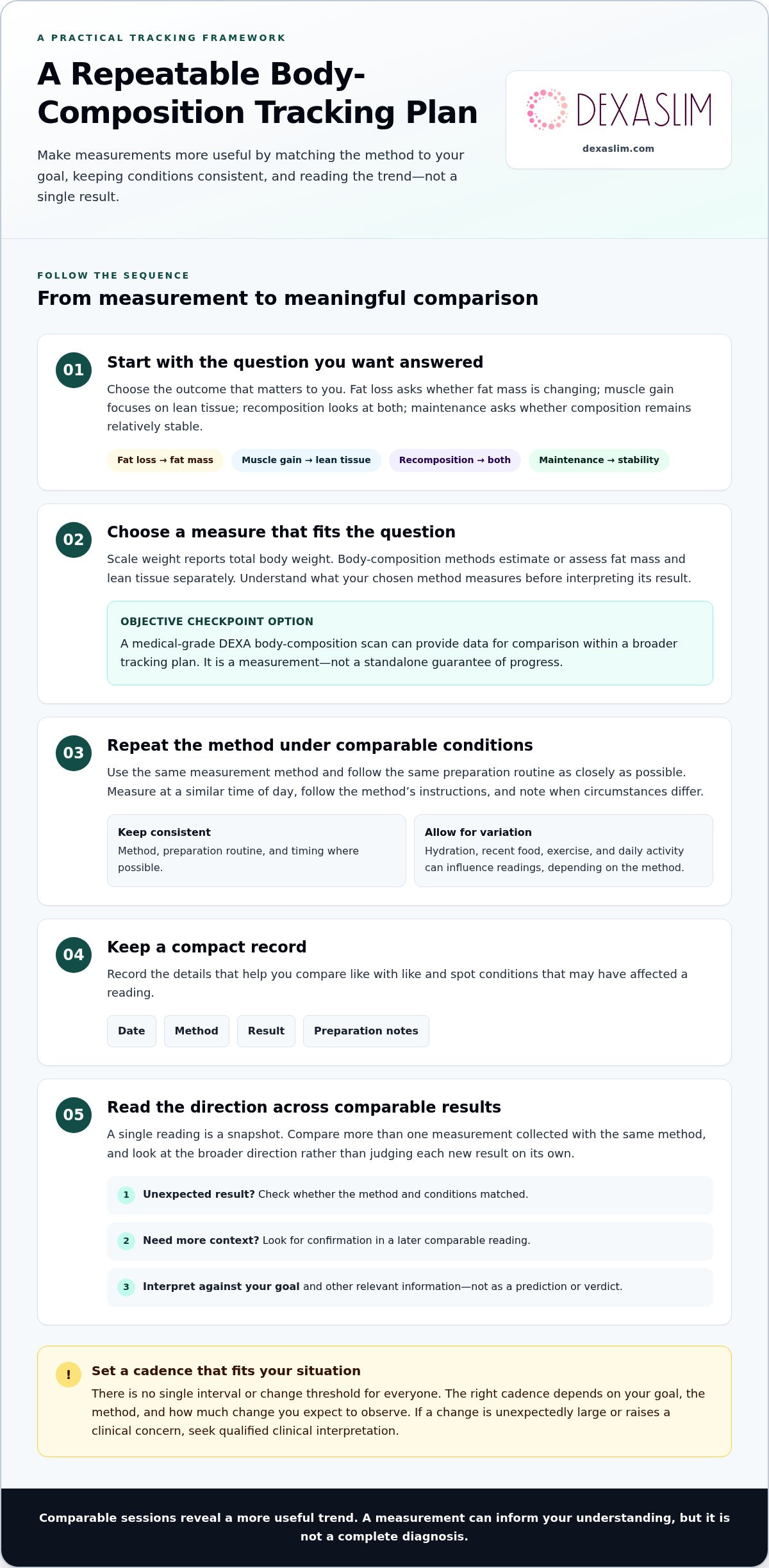
Build a repeatable body-composition tracking plan
A useful tracking plan is simple enough to repeat and specific enough to answer a real question. Set the goal first, then choose the method, control the conditions, and review the pattern. This sequence keeps body composition tracking over time focused on decisions, not just collecting numbers.
Set a goal.
Decide whether you’re monitoring fat loss, muscle gain, recomposition, or maintenance. Define what progress would mean for that goal before you test.
Choose a method.
Select one primary measure that fits the outcome. Add another indicator only when it provides helpful context, and keep each measure in its own record.
Standardize conditions.
Repeat the same method and preparation routine as consistently as practical. Note factors that may affect comparisons.
Review the trend.
Compare results in context and look for a sustained direction. Don’t change your plan because of one unexpected reading.
Standardize conditions before each measurement
Consistency starts before the test. Keep the method, timing, and preparation routine as similar as practical from one session to the next. Record relevant context, such as recent training or an unusual change in hydration. Follow the testing provider’s preparation instructions for each assessment, since procedures can differ by method. If a session departs from your usual routine, make a note rather than treating the result as directly comparable without context.
Match review timing to the goal
There’s no universal schedule for every person or measurement. Review timing depends on your goal, expected pace of change, and the method you’re using. Someone monitoring maintenance may need fewer checkpoints than someone actively assessing change. More frequent testing doesn’t accelerate progress; it can simply produce more readings to interpret.
A guide from Body Fat USA reports 8-12 weeks as a practical example for active tracking. Treat that interval as a non-universal reference, not a rule or prescription. Your measurement method and circumstances matter. Set a review date that gives the plan time to produce interpretable information, then keep it consistent unless your goal or clinical guidance calls for a change.
At each review, compare the current result with the previous comparable measurement and assess whether the overall direction aligns with your goal. If a reading surprises you, check the testing conditions and wait for a meaningful comparison before making a major adjustment. The process should support decisions, not trigger a reaction to every fluctuation.
For an objective checkpoint in a consistent plan, explore Dexaslim body-composition scans. A scan supplies data for comparison, while your goal and repeatable tracking routine give that data context.
Use Dexaslim DEXA data as an objective tracking checkpoint
A DEXA scan can add a structured body-composition checkpoint to a broader tracking plan. Dexaslim provides medical-grade DEXA body-composition scans, giving you data to compare with future measurements when you keep your approach consistent. Use the scan as one source of information, not as a standalone verdict on progress or a substitute for other relevant indicators.
Before you measure, define the question you want the data to help answer. Are you tracking changes related to fat loss, muscle gain, recomposition, or maintenance? A clear goal helps you focus on the relevant measures and gives each checkpoint a purpose. Without that context, it’s easy to fixate on a number without knowing how it connects to what you’re trying to understand.
What to bring to a useful baseline conversation
Prepare a short record for yourself: your current goal, the question you want to answer, and any previous tracking method you’ve used. If you have past results, note how and when they were collected. That context can help you understand how a DEXA measurement fits into your existing plan, rather than treating it as an isolated data point.
A measurement provides information. It doesn’t guarantee a particular result, explain every factor behind a change, or diagnose your overall health. Keep those limits clear as you interpret the scan. The purpose is to establish a useful reference and support comparison, not to turn one assessment into a complete account of your health or future performance.
Turn measurements into informed next steps
Review scan data against your stated goal and other relevant indicators. If you’re monitoring body composition, compare like with like and look at the direction across comparable checkpoints. Consider whether the data aligns with other observations you’re tracking, while remembering that each measure describes a different part of the picture.
Don’t prescribe yourself treatment or make major exercise changes based on a scan alone. Use the result as one input for reflection and, where appropriate, discussion with a qualified health professional. A result can help you ask a clearer question or decide what information would be useful next. It cannot promise what will happen if you follow a particular plan.
For body composition tracking over time, a consistent method gives each result a stronger point of comparison. Keep your goal and prior tracking notes together, follow the preparation guidance for the assessment, and review the data in context rather than reacting to a single reading. Dexaslim’s DEXA scan can serve as an objective checkpoint within that process.
If a clinical body-composition measurement fits your tracking goals, take a look at Dexaslim DEXA scans and decide whether this checkpoint belongs in your plan.
Make your next measurement purposeful
Choose one clear question to guide your next step. What information would help you make a more informed decision about your health or fitness plan? Defining that question gives your measurements a practical role and keeps data collection connected to your priorities.
Over time, body composition tracking can become a useful decision-making tool when you stay focused on the goal behind each checkpoint. Keep your attention on what the evidence can inform, and leave room to adjust your approach as your priorities evolve. Progress is not just a number. It’s also the clarity to understand what you’re measuring and why.
For an objective starting point, Dexaslim provides medical-grade DEXA body-composition scans as a standalone diagnostic session. The scan gives you information to consider within your broader tracking plan, not a guaranteed result or a complete answer on its own.
Explore Dexaslim DEXA scans to use a scan as an objective checkpoint in your tracking plan. Build your next step around clear data and keep moving forward with confidence.
Frequently Asked Questions
How often should you track body composition?
There’s no universal interval. Choose timing based on your goal, measurement method, likely pace of change, and whether enough time has passed for a useful comparison. An 8-12-week interval is sometimes suggested as a practical example, but it isn’t a medical rule or prescription. Keep conditions comparable, record the dates, and judge the direction across results rather than reacting to one reading.
Can body composition change while your weight stays the same?
Yes, it’s possible for body composition to shift while total weight remains relatively stable. Weight combines different tissues, so a scale can’t show their individual changes. For example, fat mass may decrease while lean tissue increases, without a large change in total weight. That pattern isn’t guaranteed. Use a consistent body-composition method and relevant context to assess your progress instead of letting one scale reading define it.
Is DEXA useful for tracking body composition over time?
DEXA can provide body-composition measurements to compare across sessions. Its usefulness depends on consistent preparation and conditions, enough time for a meaningful comparison, and interpreting results in context. A scan is a measurement, not a complete health assessment or a promise of future change. Follow the preparation instructions for your assessment. If a result raises a clinical question, seek qualified interpretation rather than relying on the number alone.
Can I compare body-composition results from different DEXA facilities?
You may be able to compare them, but differences in equipment, protocols, or preparation can affect how results line up. For a clearer record, use the same method and conditions when practical. Results from separate facilities aren’t automatically invalid, but don’t assume they’re directly interchangeable either. Record where and when each scan took place, along with any preparation differences, so you can interpret a change with that context in mind.
What happens if I miss a planned body-composition follow-up?
Missing a planned date doesn’t erase your earlier result or mean you need to restart. Take the next measurement when practical, record its actual date, and compare it with the previous result while noting the longer gap. Keep preparation as consistent as you can. A change across a longer period shouldn’t be treated as equivalent to the same change over a shorter interval.
Should I track body composition during weight maintenance?
You can track during maintenance if the information helps you assess whether your body composition remains aligned with your goals. Frequent testing isn’t necessary for everyone. Pick a method and review cadence that feel useful without adding stress. Consider results alongside personal goals and other relevant indicators, such as how your routine is working. One measurement shouldn’t define success or serve as a complete measure of health.