
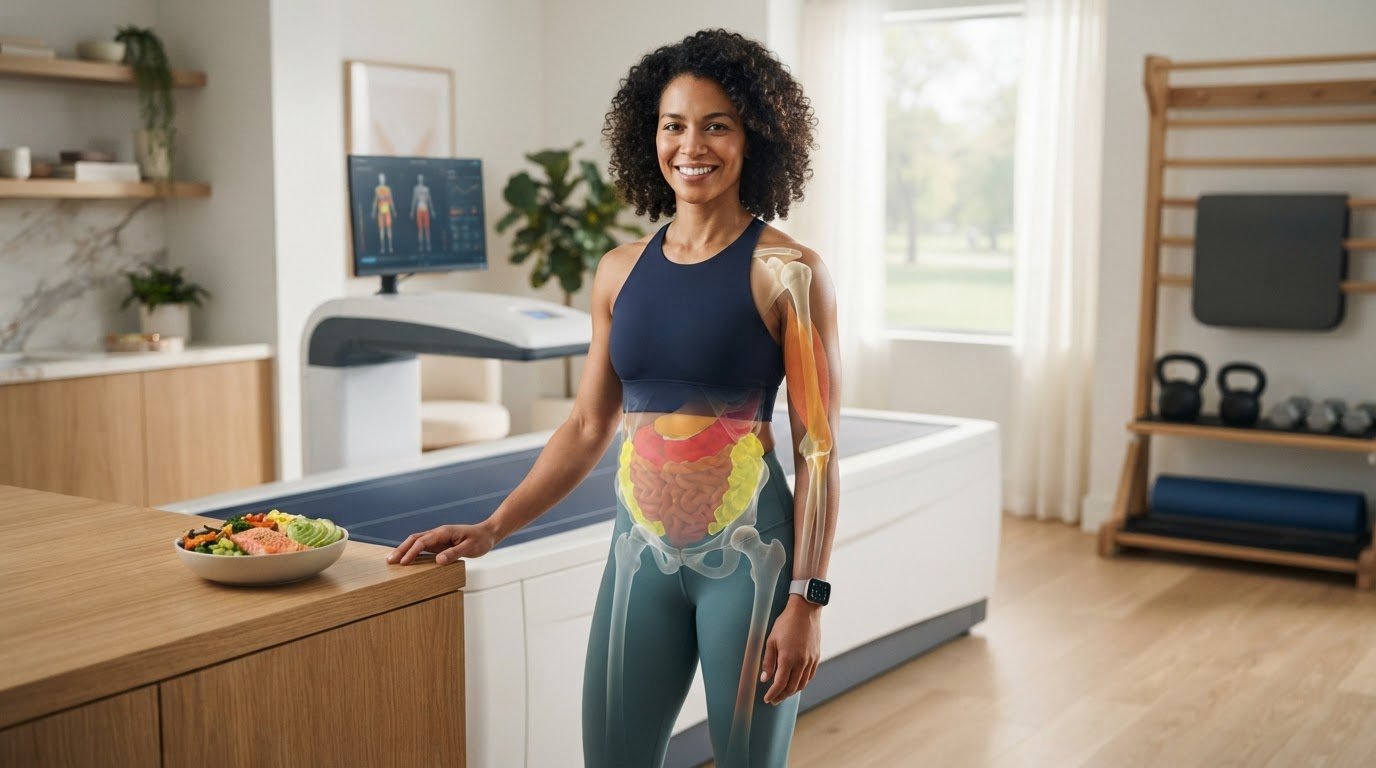
Body-composition change is easier to understand when you measure it rather than guess. Biohacking body composition means using personalized habits and objective data to influence fat mass, lean mass, and overall health. A DEXA scan assesses fat mass, lean mass, bone density, and visceral fat, giving you a clearer baseline than scale weight alone.
It makes sense to look beyond weight: sleep, nutrition, exercise, stress, and individual physiology all shape how your body responds. But more tracking or extreme interventions don’t automatically produce better results. A sound approach starts with a reliable assessment, then evaluates practical changes against your own progress.
This guide explains biohacking and how personalization can make body-composition strategies more precise. You’ll learn how cold exposure fits in, which safety considerations matter, how biomarkers and wearable data can inform decisions, and why assessment is central to tracking change. The goal is clarity: understand what to measure, which habits to prioritize, and how to interpret results without mistaking every new trend for a useful intervention.
Key Takeaways
• Personalize health strategies around your routines, goals, and measurable baseline. Test one manageable change at a time so you can see what actually helps.
• Build foundational habits before adding more intensive interventions. Cold exposure and fasting can carry risks, so consider your health conditions and medications before trying them.
• Use wearable readings as trends, not diagnoses. Track only the metrics that help guide decisions, since more data can also create stress.
• Use body-composition assessments to look beyond scale weight, including changes in fat mass, lean mass, bone density, and visceral fat.
• Match training and nutrition to your goals, then reassess over time. Objective measurements can help distinguish meaningful progress from day-to-day fluctuations.
Personalizing health and body-composition strategies
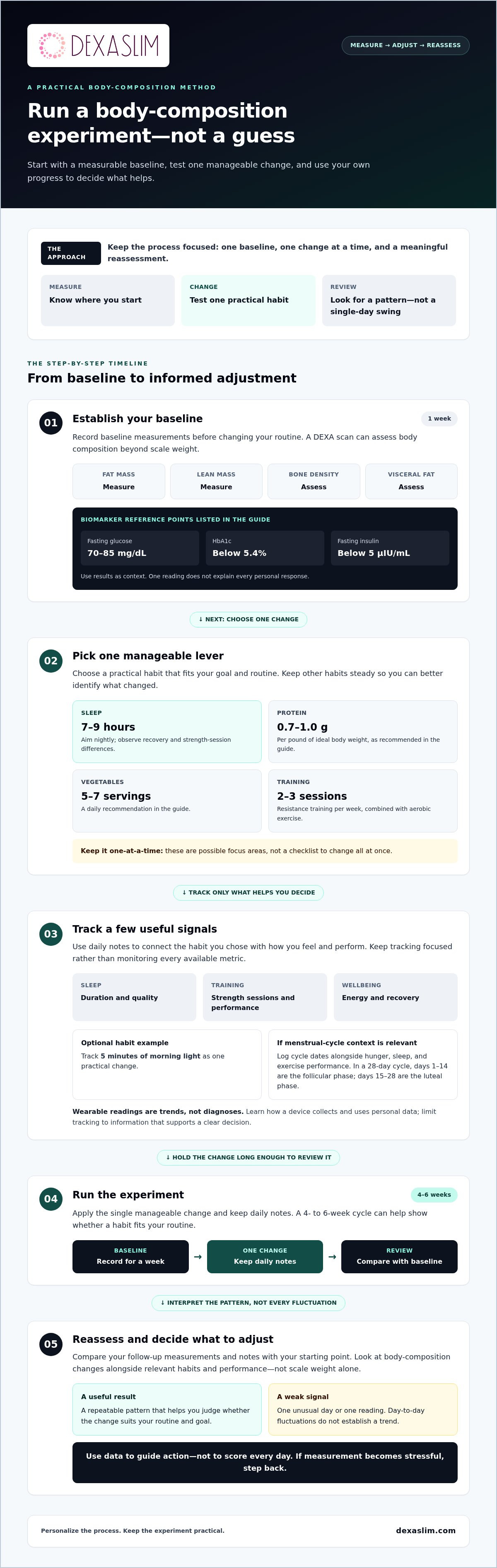
Personalization starts with a measurable baseline, then adapts exercise, eating, and recovery to your response. Track one change at a time to distinguish useful patterns from daily fluctuations.
For a focused discussion of protein and muscle, watch this video featuring Dr. Gabrielle Lyon and Dr. Andrew Huberman:
Metabolic Health and Biomarkers
Metabolic health describes how effectively the body manages energy, blood sugar, and related processes. Biomarkers, including fasting glucose, HbA1c, and fasting insulin, provide measurable clues about that function. The listed targets are fasting glucose of 70-85 mg/dL, HbA1c below 5.4%, and fasting insulin below 5 µIU/mL. These results add context to body-composition changes, but one reading doesn’t explain every personal response.
Use your own baseline to guide adjustments. Sleep, daily movement, food choices, and hormone patterns can all influence energy and training consistency. For example, track sleep against exercise performance for a week before changing a routine. Aim for 7-9 hours nightly, then observe whether recovery and strength sessions feel different. Keep the experiment practical: change one variable, record the result, and avoid treating a single day as a trend.
Nutrition and Training for Body Composition
For fat loss while preserving muscle, prioritize protein and a balanced, whole-food diet; the guide recommends 0.7-1.0 grams of protein per pound of ideal body weight. It also recommends 5-7 vegetable servings daily. For body-composition change, combine resistance training 2-3 times per week with aerobic exercise; strength work supports muscle, while cardio adds regular movement. Adjust eating and training to your baseline and response.
Menstrual-cycle tracking can add useful context to energy, metabolism, and fat-storage patterns. In a 28-day cycle, days 1-14 after a period starts are the follicular phase; days 15-28 before the next period are the luteal phase. Log cycle dates alongside hunger, sleep, and exercise performance. This record can reveal recurring patterns without assuming every person experiences the same hormone shifts or needs identical nutrition changes.
Keep health tracking focused. Record a few measures, such as sleep duration, strength sessions, and energy, instead of monitoring every available metric. Wearables and health apps can reveal patterns, but learn how each device collects and uses personal data. Choose tools with data practices you understand, and limit collection to information that supports a clear decision.
To test a biohack, collect baseline measurements for a week, apply one manageable change, then reassess. A 4- to 6-week cycle with daily notes can show whether a habit fits your routine. Five minutes of morning light is one practical example to track. Avoid letting constant measurement become another source of stress; use data to guide action, not to score every day.
Safety considerations and medical guidance
Biohacking is safest when the method suits your health, medications, and goal. Regular exercise, balanced nutrition, quality sleep, and stress management are generally low-risk habits. Scrutinize extreme protocols more closely. Distinguish practical routines from interventions that change medication use, hormone exposure, food intake, or body temperature. Dramatic promises are not evidence of safety or effectiveness.
Extreme dieting can cause nutrient deficiencies, while supplements can cause side effects or interact with medications. Hormone treatments require qualified clinician oversight, not self-directed dosing. Risks depend on the substance, dose, health history, and other medicines. A restrictive plan that reduces weight quickly may also undermine energy, protein intake, and the ability to maintain strength training.
Intermittent fasting illustrates why context matters. People with diabetes, low blood sugar, an eating disorder, another health condition, or medication that must be taken with food should talk with a doctor before fasting. Pregnant or breastfeeding people should also seek medical guidance first. If fasting disrupts eating patterns or causes distress, stop and prioritize health over a rigid eating window.
Cold exposure also calls for caution. Sudden cold, including ice baths and cold showers, can raise heart rate and blood pressure. It may trigger cold shock, breathing problems, or hypothermia. Don’t treat discomfort as proof of benefit or extend exposure to seek a stronger response. People with relevant health concerns should discuss cold exposure with a qualified clinician before trying it.
Supplement stacks create another common risk. Some patients take 50 dietary supplements, but combining products or using mega-doses rarely has proven benefits and can cause side effects or interactions. “Natural” doesn’t mean safe or effective. Before adding a product, identify the exact symptom or goal, check the evidence for that use, and review possible interactions with a clinician or pharmacist.
Make self-experimentation controlled. Establish a baseline, change one habit, and record a few relevant outcomes, such as sleep, energy, or training performance. Avoid changing supplements, fasting, and exercise simultaneously; that makes cause and effect difficult to interpret. Constant tracking can increase anxiety, and extra data doesn’t automatically create better habits. Protect mental wellbeing by stepping back when measurement becomes stressful.
Prescription drugs, hormones, and implants belong under qualified clinical oversight. This includes testosterone-related treatment and peptide therapies, which require medical judgment rather than experimentation based on online claims. For medication-based weight-management questions, GLP-1 peptide therapy is a clinically guided option to discuss in the context of your health and goals.
Tracking biomarker and wearable data
Useful tracking connects a measurement to a decision. Choose a few markers tied to your goal, such as fasting glucose for metabolic health or sleep duration for recovery. Record the date and conditions, along with relevant changes in nutrition, exercise, or supplements. That context helps distinguish lasting patterns from temporary fluctuations.
Blood biomarkers offer different clues, not a single score of health. The guide identifies fasting glucose of 70-85 mg/dL, HbA1c below 5.4%, and fasting insulin below 5 µIU/mL as metabolic targets. It also lists hs-CRP below 1.0 mg/L and homocysteine below 10 µmol/L. Interpret results together with personal health context, not as standalone diagnoses.
A continuous glucose monitor can show how glucose changes around meals, activity, and sleep. Its benefits are less clear for people without diabetes than for diabetes management. If you use one, compare readings with your habits: note a meal, take a walk, and observe the pattern. Don’t treat every short-lived rise as a reason to overhaul your nutrition.
Wearables can track sleep, waking heart-rate variability, steps, and activity. A simple starting point is to gather smartwatch sleep and waking-HRV baseline data for seven days. Then compare trends under similar conditions rather than reacting to one unusual night. Device readings vary in accuracy, can’t diagnose medical conditions, and don’t replace professional care. Use the numbers to frame questions, not make diagnoses.
Supplements add complexity. Record each product, dose, and start date alongside relevant symptoms or training changes. Change one supplement at a time so effects and side effects are easier to distinguish. FDA regulations say dietary supplement labels shouldn’t claim to treat or cure disease. Be skeptical of products promising rapid results, especially when their claims don’t match a clear personal goal.
Cold exposure, nutrition changes, and new supplements can all affect how you feel. Log the intervention and outcome rather than assuming timing proves cause. Limit tracking to useful measures: constant monitoring can increase anxiety, and more data doesn’t always improve habits. Before using an app or wearable, learn how it collects and uses personal data. Protect your privacy as deliberately as your longevity goals.
Body composition assessment
A scale reports total weight, but it can’t show whether that change came from fat, lean tissue, or bone. DEXA provides a more detailed body-composition snapshot, measuring fat mass, lean mass, bone density, and visceral fat. That distinction matters when a lifestyle change affects weight and strength differently. For example, weight can remain stable while fat and lean mass shift.
Use the assessment to establish a baseline, not to judge a single day’s effort. A baseline scan in your 30s or 40s can help track changes over time. Healthy adults practicing biohacking may use an annual full-body scan for monitoring. For lean-mass trends, the guide suggests DEXA scans every 4-12 weeks, depending on the protocol. These intervals serve different purposes, so match assessment timing to the question being evaluated.
Timing shapes what a scan can tell you. Objective changes in visceral fat or muscle mass usually take 8-12 weeks and should be measured with DEXA. A scan sooner may not capture meaningful tissue change. A useful comparison pairs the measurement with the intervention period, such as a revised strength routine or nutrition plan, rather than treating each scan as a verdict.
Interpret body composition alongside function and daily experience. Record energy, exercise performance, sleep, and lifestyle changes between assessments. Blood glucose readings add metabolic context, but they aren’t DEXA measurements. Ice baths and other recovery practices don’t replace body-composition assessment. Keep each tool tied to its purpose: scans assess tissue, while other measures track different aspects of health.
Consistency makes comparisons more useful. Record scan dates, training changes, eating patterns, and relevant health measures. When a result shows early signs of bone loss, the guide recommends increasing resistance training and vitamin D intake. That finding shifts the focus beyond fat loss alone. Bone density, lean tissue, and visceral fat each describe a different dimension of body composition.
Build a clear question around each assessment: did lean mass trend upward, did visceral fat change, or does bone density remain a priority? Then compare the result with the relevant behavior and timeframe. A DEXA result can’t explain every cause of change by itself. It can, however, replace scale-only guesswork with specific measures to refine your next health strategy.
Which evidence-based methods help reduce body fat and build muscle?
Changing body composition requires a nutrition strategy, resistance training, and enough recovery to sustain both. Fat loss and muscle gain are related goals, but the right balance depends on your starting point, routine, and ability to maintain the plan. Track weight alongside strength and body-composition measures so a lower scale reading isn’t the only sign of progress.
Build meals around whole foods, plants, protein, and healthy fats. The guide recommends 0.7-1.0 grams of protein per pound of ideal body weight during nutrition adjustments. Protein supports lean-tissue preservation while you pursue fat loss. Add 5-7 servings of vegetables daily, and make changes that fit your usual eating patterns rather than adopting a restrictive plan you can’t sustain.
Resistance training gives muscle a direct stimulus. A practical target is 2-3 sessions per week, working major muscle groups with exercises you can perform consistently. Increase challenge gradually as strength improves. Regular physical activity should also include aerobic exercise. Combine both forms of movement instead of relying on cardio alone, especially when preserving muscle is part of your goal.
Use a timeframe that matches the change you want to measure. Objective changes in visceral fat or muscle mass usually take 8-12 weeks and should be measured with DEXA. Daily weight can fluctuate without reflecting tissue change. Pair longer-term assessment with a training log, so you can compare strength and body-composition trends against the routine you followed.
Intermittent fasting is one possible eating structure, not a requirement for fat loss. The guide presents overnight fasting windows of 12-16 hours as an option. The useful question is whether a schedule supports consistent nutrition and training. If a fasting window makes it harder to meet protein needs or sustain exercise, adjust the approach instead of forcing the clock.
Recovery habits help make a plan workable. Prioritize quality sleep, hydration, and stress management alongside exercise. Record meals, training, and energy in a simple log, then look for patterns across weeks rather than reacting to one difficult workout. A stable routine provides clearer feedback than changing several habits at once.
Cold showers and ice baths are sometimes promoted for fat loss because cold exposure may activate brown fat. Treat them as optional practices, not replacements for nutrition and resistance training. The core strategy remains measurable: support muscle with protein and strength work, include aerobic activity, and assess body-composition trends over a meaningful interval.
Choose one nutrition adjustment and one training target that fit your current routine. Keep them consistent, then review strength, weight, and body-composition data after 8-12 weeks. If strength is falling while weight drops, reassess recovery and protein intake. Progress means improving the measures that match your goal, not pursuing the lowest possible number on the scale.
Dexaslim: 1 Session Dexa Scan
Dexaslim’s 1 Session Dexa Scan gives you a detailed snapshot of fat mass, lean mass, bone density, and visceral fat. Use it when scale weight alone can’t answer whether your current strategy is changing the measures that matter to you. A clear baseline can help you interpret progress and decide what to focus on next.
For a broader view, VO2 Max Performance Testing evaluates aerobic endurance, peak oxygen consumption, and cardiovascular efficiency. A Resting Metabolic Rate (RMR) Test can help calibrate daily caloric needs, while a Longevity Panel adds biomarker data to your health picture. Each assessment answers a different question, so choose the one that aligns with your goal.
Contact Dexaslim to discuss an assessment, or visit dexaslim.com.
Make Your Next Move Measurable
The next step in biohacking body composition isn’t adding another trend. Choose a clear health question, then select a measurement that can help answer it. You might ask how your current routine affects body composition, metabolic needs, or performance. A defined goal makes data more useful and keeps your next decisions focused.
Bring that goal into a conversation with Dexaslim. A 1 Session Dexa Scan, VO2 Max Performance Testing, or Resting Metabolic Rate (RMR) Test can each inform a different part of your assessment. Use the information to shape a practical direction, then keep attention on the habits and measures that matter to you. Progress becomes more actionable when each decision has a reason behind it.
Contact Dexaslim to discuss your goals and choose a clear next step. Build from evidence, refine your approach, and keep moving toward stronger health with purpose.
Frequently Asked Questions
What Is Biohacking?
Biohacking is the deliberate use of lifestyle changes, measurements, and selected interventions to influence health or performance. Examples range from adjusting sleep routines to tracking training responses. The term covers a wide spectrum, so distinguish foundational habits from medical treatments or invasive body modifications. A useful practice has a clear purpose, a way to evaluate its effects, and risks that fit your personal health context.
What does biohacking body composition mean?
Biohacking body composition means using personalized behaviors and measurements to influence the proportions of fat, lean tissue, and bone in your body. For example, someone seeking to preserve muscle while losing fat could track strength, eating patterns, and body-composition trends together. The aim isn’t to chase a single ideal number. It’s to test a sustainable strategy and assess whether it supports a specific goal.
How can you accurately measure body composition at home or in a clinic?
For a detailed clinic-based assessment, DEXA measures fat mass, lean mass, bone density, and visceral fat. At home, use a scale and tape measure consistently, recording results under similar conditions, such as at the same time of day. These measurements can reveal trends, but they don’t provide the same tissue breakdown as a DEXA scan. Compare repeated measurements rather than drawing conclusions from one reading.
How accurate are DEXA scans, smart scales, and skinfold measurements?
Each method measures or estimates different aspects of body composition, so results aren’t interchangeable. DEXA provides a clinic-based breakdown of fat, lean mass, bone density, and visceral fat. Smart scales estimate composition, and readings can shift with hydration or recent activity. Skinfold measurements depend on consistent technique and site placement. For useful comparisons, repeat the same method under similar conditions and interpret the trend rather than treating one result as definitive.
Do supplements or wearable devices meaningfully improve body composition?
Neither supplements nor wearables change body composition automatically. A wearable can help you notice patterns in activity or sleep, while a supplement may be relevant only when it suits a specific need. Check the evidence for a supplement’s intended purpose and consider possible interactions with medications. Treat device data as information for decisions, not a diagnosis. Nutrition, training, and consistency remain the behaviors to evaluate.
How quickly can body composition safely change, and how should progress be tracked?
Meaningful changes in muscle or visceral fat generally need time; the guide places objective changes at 8-12 weeks. Track progress with measures that match your goal, such as strength records, weight trends, and a consistent body-composition assessment. Keep notes on major changes in training or eating, too. If measurements fluctuate, assess the pattern across the planned interval rather than reacting to a single day’s result.