.svg)

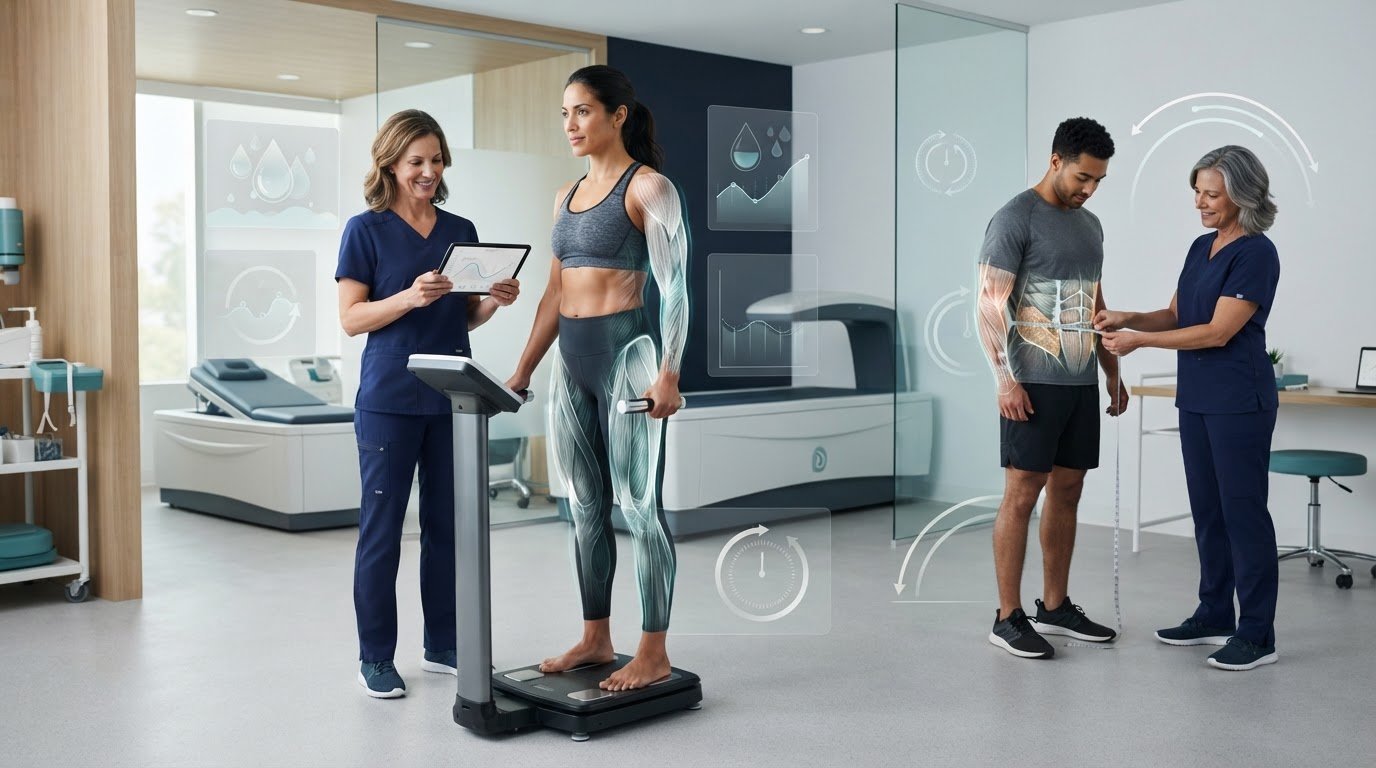
What if the most accurate body-fat reading isn’t the most useful one? If your home scale gives a different percentage from last week, it’s reasonable to question the number. Learning how to accurately measure body fat percentage starts with understanding that different methods estimate body composition in different ways. Hydration, meals, and recent exercise can also affect some readings.
A single percentage can look definitive without telling the full story. The method, measurement conditions, and reason for tracking all matter. If you change tools or your routine between readings, it becomes harder to tell whether your body composition has actually changed.
This guide compares common methods, including smart scales, tape measurements, and professional DEXA scans. You’ll learn what each result represents, why estimates can differ, and how to repeat measurements under consistent conditions. A DEXA body-composition scan can provide a professional baseline by assessing fat distribution and lean muscle mass, but no single result is universally definitive. Choose a method that fits your question, then focus on meaningful trends rather than chasing one number.
Key Takeaways
• Learn how to accurately measure body fat percentage by matching the method to the question you want answered, rather than chasing a single “perfect” number.
• Compare BIA devices, skinfolds, circumference estimates, DEXA, and other approaches by what they measure and how practical they are to repeat.
• Use the same device or provider and keep conditions consistent so you can interpret changes more confidently.
• Choose an accessible method for regular trend tracking or a structured assessment when you need a detailed body-composition baseline.
• Look beyond the percentage. Consider what the result can tell you about body composition and what it cannot establish on its own.
How to accurately measure body fat percentage: what accuracy really means
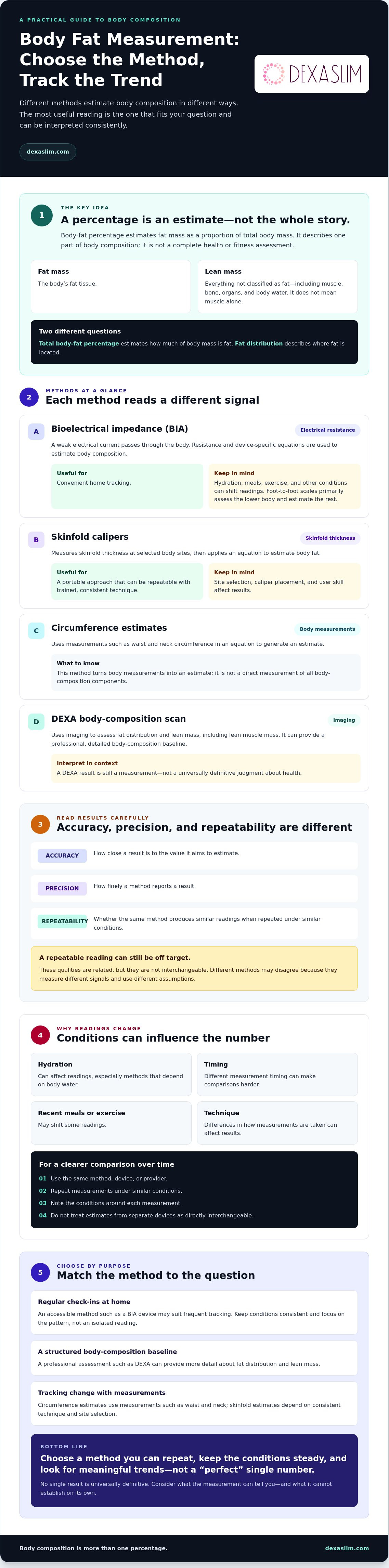
To understand how to accurately measure body fat percentage, start with what the number represents: an estimate of fat mass as a proportion of total body mass. It describes one part of body composition, not your full health status or fitness level. Body fat percentage also includes distinctions such as essential and storage fat, which help explain why the result needs context.
No method observes every component in the same way. Some estimate body composition from electrical impedance, others use skinfold thickness or body measurements, and DEXA uses imaging to assess fat distribution and lean mass. Each approach relies on its own physical principles and assumptions, so results from different methods may not match.
For a practical example of a home estimation approach, watch this tutorial:
What does a body-fat percentage actually measure?
Fat mass is the body’s fat tissue. Lean mass includes everything that isn’t classified as fat, such as muscle, bone, organs, and body water. It isn’t another way to say “muscle mass.” A body-fat percentage is a snapshot shaped by the method and measurement conditions, not a complete health assessment.
Total body-fat percentage and regional fat distribution answer different questions. The overall percentage estimates how much of your body mass is fat; distribution describes where fat is located. A DEXA body-composition scan, for example, assesses fat distribution and lean muscle mass. Its result is still a measurement to interpret in context, not a definitive judgment about health.
Why can two accurate methods give different results?
Accuracy describes how close a result is to the value it aims to estimate. Precision describes how finely a method reports a result. Repeatability means it produces similar readings when the same method is repeated under similar conditions. These qualities are related, but they aren’t interchangeable. A reading can be repeatable without being close to the true value.
Hydration, timing, recent meals or exercise, and differences in technique can affect readings, especially with methods that depend on body water or measurements taken by the user. Two methods can each be useful yet disagree because they measure different signals and apply different assumptions. Don’t treat estimates from separate devices as directly interchangeable. For a clearer comparison over time, stick with the same method and note the conditions around each measurement.
Which body-fat measurement methods can provide a useful estimate?
Each method turns a different physical signal into an estimate. A home device may suit frequent check-ins, while a structured assessment can provide more detail for a baseline. Choose based on your goal, access, and ability to repeat the process consistently, not on a universal accuracy ranking. Before deciding, consider whether you need a percentage, a way to track changes, or more information about regional composition.
| Method | How it estimates body composition | Practical strengths and limitations |
|---|---|---|
| Bioelectrical impedance (BIA) | Sends a weak electrical current through the body and uses resistance, along with device-specific equations, to estimate body composition. | Convenient for home tracking. Hydration, meals, exercise, and other measurement conditions can shift readings. Foot-to-foot scales primarily assess the lower body and estimate the rest. |
| Skinfold calipers | Measures the thickness of skinfolds at selected body sites, then applies an equation to estimate body fat. | Portable and repeatable with a trained, consistent technique. Site selection, caliper placement, and user skill affect results. |
| Circumference estimates | Uses measurements such as waist and neck circumference in an equation to generate an estimate. | Requires little equipment and can help track changing measurements. It does not directly measure body-fat percentage, and measurement placement and equation choice matter. |
| DEXA | Uses X-ray imaging to assess body composition, including fat distribution and lean mass. | Provides a structured professional assessment and regional detail. Results depend on the scan and analysis protocol, so they are not universally definitive. |
| Hydrostatic weighing | Estimates body density by comparing weight on land with underwater weight. | Requires specialized equipment and full submersion. Comfort and testing conditions can affect practicality. |
| Air displacement plethysmography | Estimates body volume from air displacement in an enclosed chamber, then uses body density to estimate composition. | A non-water-based laboratory option, but access and the testing setup may limit convenience. Its output is not identical to DEXA’s. |
At-home options: scales, tape measures, and skinfold calipers
For routine check-ins, choose a tool you can use the same way each time. BIA scales are quick, but readings can shift with hydration and timing. Tape measurements are accessible; use them to track circumference, not as direct body-fat readings. For more comparable tape results, use the same landmarks and tape placement each time, and avoid pulling the tape tighter between measurements. Calipers can support consistent tracking, but only when the same sites and technique are used reliably.
Professional assessments: DEXA and other laboratory methods
DEXA offers a structured body-composition assessment, while hydrostatic weighing and air displacement estimate composition through body density using different procedures. Compare results within the same method rather than swapping numbers between approaches. For more detail, read this DEXA body composition scan guide. Dexaslim offers DEXA body-composition scans that assess fat distribution and lean muscle mass.
How do body-fat tests compare for accuracy, convenience, and tracking?
No method wins in every category. A test that provides more detail may help establish a baseline, while a convenient home tool may be easier to repeat regularly. The practical question is how to accurately measure body fat percentage for your goal, then use the method consistently enough to interpret change. Compare options by the detail they provide, how easily you can repeat them, and what could affect the result.
| Method | Best use | Key limitation | Consistency requirement |
|---|---|---|---|
| BIA scale | Convenient home trend checks | Readings can shift with hydration, meals, and exercise | Use the same scale under similar conditions |
| Skinfold calipers | Repeat tracking with a practiced technique | Site selection and user skill influence the estimate | Keep the sites, technique, and ideally the measurer consistent |
| Circumference estimates | Low-equipment tracking of body measurements | Measurements estimate rather than directly measure body fat | Use the same tape placement and method each time |
| DEXA | A structured body-composition baseline with regional detail | Results depend on the assessment protocol and aren’t a universal reference for every method | For comparisons, use the same provider or protocol when possible |
| Hydrostatic weighing or air displacement | Laboratory-based body-density assessment | Requires specialized equipment and produces estimates through a different process than DEXA | Repeat the same assessment method under comparable conditions |
When is an at-home body-fat test useful?
Home devices can be useful when your goal is to observe a longer-term pattern, not validate each individual reading. Don’t overinterpret a small shift or a single result, especially if your hydration, meal timing, or recent activity differed. Add a complementary measure, such as waist circumference or body weight, if it helps answer your specific question. Keep each measure in its own series rather than treating unlike readings as interchangeable. If a reading looks unusual, check whether the device was used according to its instructions and whether your routine differed before drawing a conclusion.
When should someone consider a professional body-composition scan?
A structured assessment may suit someone seeking a measured baseline or information about regional composition. Dexaslim’s DEXA body-composition scan assesses fat distribution and lean muscle mass. It’s one professional option, not a promise of an exact or universally definitive percentage. For medical concerns or questions about diagnosis, speak with a qualified healthcare professional. A DEXA scan may be appropriate when you want a professional baseline and a more detailed view of body composition: learn about DEXA body-composition scans.
How to measure body fat consistently and interpret changes
A reliable tracking plan controls what you can control: the method, the setup, and the conditions around each measurement. Use this process to make results easier to compare over time.
Choose a method that fits your goal.
Decide whether you need a convenient trend check or a more structured body-composition baseline. Record the device or assessment type you select.
Follow its specific instructions.
Use the device manual or the testing provider’s preparation guidance. Don’t assume every method has the same requirements.
Record the context.
Log the date, method, device or provider, and relevant conditions, such as timing, recent exercise, or meals if applicable. Note anything that differs from your usual routine.
Repeat under comparable conditions.
Keep timing and routine as consistent as practical. Use the same device or provider when tracking change, and avoid treating results from different methods as a continuous series.
Review the pattern, not one reading.
Compare repeated measurements alongside your goal and other relevant indicators. A single result can reflect measurement variability rather than a meaningful change in body composition.
What should you do before measuring body fat?
Check the instructions for your selected method before testing. Preparation requirements can differ by device and provider, so don’t apply a universal checklist. For professional testing, verify the current preparation guidance directly with the provider. For repeat readings, keep the timing and routine as similar as your schedule allows. Record notable differences instead of assuming how they affected the result.
How can you tell whether a change is meaningful?
First, consider the method’s variability. A small change in one reading may not represent a change in body composition. Look for a consistent pattern across repeated measurements, then assess it against your objective, such as monitoring body composition or supporting a training plan. If a result is unexpected or raises a health concern, discuss it with a qualified healthcare professional.
For a measured baseline, Dexaslim’s DEXA body-composition scan assesses fat distribution and lean muscle mass. It provides a structured assessment, not a guarantee of an exact or universally definitive body-fat value. Learn about DEXA body-composition scans as one option for establishing a professional measurement baseline.
Choose the right body-fat measurement for your goal
The best method is the one that answers your question and gives you a result you can interpret. If you’re deciding how to accurately measure body fat percentage, start with the purpose: routine tracking, a more detailed baseline, or guidance about a health concern. Accessibility and measurement detail are different priorities. A convenient tool may help you follow a trend, while a structured assessment can offer more information at a particular point in time.
A quick decision guide for choosing a measurement method
For routine tracking
Choose a method you can repeat consistently, such as a home device or circumference measurements. Focus on the direction of change, not one reading.
For a more detailed baseline
Consider a professional body-composition assessment. Review what it measures, how results are produced, and what the estimate can and can’t tell you.
For clinical concerns
Ask a qualified healthcare professional to interpret your results. A body-fat percentage alone can’t diagnose a health condition or establish an individual’s ideal range.
No single percentage tells the whole story. Your measurement is one data point, and its meaning depends on the method, your circumstances, and the question you’re trying to answer. Treat it as information to support a broader health or fitness plan, not as a standalone verdict.
What to do after you have a result
Save the date, result, measurement method, device or provider, and relevant testing conditions. That record helps you compare like with like next time. Avoid drawing a conclusion from a small shift or comparing estimates from different methods as if they were interchangeable. Look at the result alongside your goals and other measures, and seek professional interpretation if it surprises you or raises a health concern.
Dexaslim offers a DEXA scan that assesses fat distribution and lean muscle mass. It can provide a structured baseline, but it isn’t a guarantee of an exact or universally definitive body-fat value. Review Dexaslim’s DEXA body-composition scan to see whether this assessment fits your needs.
Turn your body-composition data into a clear next step
Learning how to accurately measure body fat percentage means matching the method to your goal and treating every result as an estimate with context. For ongoing progress, repeat the same accessible method under similar conditions. For a more structured baseline, choose an assessment that provides the detail you need, then compare like with like over time.
Keep the bigger picture in view. Body-fat percentage is one data point, not a diagnosis or a complete measure of health. Consider what the method measures, how consistent your conditions are, and whether the result helps answer your question.
If you want a professional baseline, Dexaslim offers medical-grade DEXA body-composition scans that assess lean muscle mass and fat distribution. A scan can provide useful information, but it doesn’t guarantee an exact or universally definitive body-fat value. Explore Dexaslim’s DEXA body-composition scan to review the service details.
Choose a method you can use well, track consistently, and let reliable trends guide your next move. Better data starts with a clear question and a repeatable plan.
Frequently Asked Questions
Is a DEXA scan the most accurate way to measure body fat?
A DEXA scan is a professional body-composition assessment, but it doesn’t produce a perfectly exact number that can be compared universally with every other method. Results depend on equipment, protocol, and measurement conditions. Follow the provider’s preparation instructions and interpret the result as an estimate. A scan can offer useful information about body composition, but ask a qualified healthcare professional how the findings relate to your individual health.
Can a body-fat scale accurately measure body fat percentage?
A body-fat scale estimates body composition using bioelectrical impedance, which sends a low-level electrical current through the body. Hydration and other conditions can affect the reading, so don’t treat one result as definitive. For tracking, use the same scale and follow its instructions consistently. A home scale can help you observe trends over time, but it isn’t a substitute for a professional assessment or medical advice.
How can I measure body fat percentage at home?
Common home options include bioelectrical impedance scales, skinfold calipers, and circumference-based estimates. Each has limitations, and technique can influence the result. To learn how to accurately measure body fat percentage at home, choose one approach, follow its instructions, and record the date and relevant conditions. Repeat the process consistently. Don’t overread a small change or compare estimates from different methods as if they were equivalent.
What is the best way to measure body fat percentage?
The best method depends on what you need to learn. A convenient home tool may help you track trends, while a professional assessment can provide a more structured body-composition baseline. Compare options by repeatability, access, detail, and testing protocol. No single method suits every person or question. Once you choose, use the same method for follow-up measurements so changes are easier to interpret.
Why does my body-fat percentage change from day to day?
Daily differences can reflect hydration, measurement conditions, or variation in the device or technique, rather than a change in body composition. This is especially relevant for methods influenced by body water. Keep your routine as consistent as practical and review repeated readings instead of reacting to one result. For professional tests, follow the provider’s instructions. Ask a qualified healthcare professional about results that concern you.
Should I use the same body-fat measurement method every time?
Yes. Repeating the same method makes results more comparable because different methods rely on different techniques and assumptions. Use the same device or provider when possible, follow the same instructions, and note relevant conditions. If you change methods, treat the first reading from the new approach as a separate baseline. Don’t assume it can be compared directly with results from your previous device or assessment.
Can body-fat percentage alone tell me if I am healthy?
No. Body-fat percentage is an estimate of body composition, not a diagnosis or complete measure of health. It doesn’t capture every factor that may matter, and different methods can produce different estimates. Interpret the result alongside your goals and other relevant health information. If you have a medical concern or need help understanding a measurement, discuss it with a qualified healthcare professional.