.svg)

Yes, a DEXA scan is a high-value tool for tracking whether weight loss is fat, muscle, or bone. It remains the gold standard for measuring body fat and visceral adipose tissue, the deep abdominal fat tied to metabolic risk, and it catches muscle loss that a bathroom scale hides completely. The right move is a baseline scan through a provider like Dexaslim, paired with a plan to act on what the numbers show.
TL;DR:
- DEXA scans provide detailed insights into fat, muscle, and bone, making them essential for tracking changes during rapid weight loss or medication use.
- Lean mass loss can account for up to 45% of total weight loss on GLP-1 therapy, requiring early monitoring and adjustment of diet and training.
- The most benefit from DEXA comes to older adults, bariatric patients, athletes, or those losing weight quickly, rather than slow, modest dieters.
- DEXA results need to be paired with a plan to adjust nutrition, exercise, or medication, as a single scan without follow-up offers limited value.
Table of Contents
- What Does a DEXA Scan Measure for Weight Loss?
- How DEXA Data Guides Weight-Loss Programs and GLP-1 Monitoring
- Who Gets the Most Value From DEXA-Guided Tracking?
- What to Expect: Prep, Cost, Insurance, and Scan Frequency
- Reading Your Results: What to Watch and How to Protect Muscle and Bone
- Where DEXA Falls Short: Accuracy Limits and Real Downsides
- Why a Scan Without a Plan Is Wasted Money
- Book a DEXA Scan and Match It to Your Weight-Loss Plan
- Sources
- FAQ
What Does a DEXA Scan Measure for Weight Loss?
A single DEXA scan produces five distinct numbers, and each one tells a different part of the weight-loss story. Total body fat percentage is the headline figure, but regional fat distribution matters more for health risk. That’s where visceral adipose tissue (VAT) comes in: the fat packed around your organs, which correlates strongly with CT-derived VAT measurements at a reported correlation of about 0.93, making DEXA a reliable and far lower-radiation substitute for a CT scan.
The scan also reports:
- Lean mass, the metabolically active tissue you want to protect while dieting
- Appendicular lean mass (ALM), lean tissue in your arms and legs, a key marker for sarcopenia risk
- Bone mineral density (BMD), critical for anyone losing weight quickly or aging past 50
A scale can’t distinguish 10 pounds of fat loss from 10 pounds of muscle loss. DEXA can, and that distinction is why clinicians treat it as more clinically meaningful than BMI or bioelectrical impedance analysis (BIA) smart scales, which estimate composition indirectly and swing with hydration.
How DEXA Data Guides Weight-Loss Programs and GLP-1 Monitoring
A baseline scan before starting any aggressive weight-loss intervention, especially GLP-1 medications like semaglutide or tirzepatide, gives you a reference point that the scale can never provide. Without it, you’re guessing whether the number dropping on the scale is fat or something you actually want to keep.
The concern is well-founded. Clinical substudies and real-world reports show that lean mass can account for roughly 25% to 45% of total weight lost on GLP-1 therapy, depending on the study and the patient’s training and protein intake. That’s a wide range, and it means two people losing the same 20 pounds could have completely different outcomes underneath the surface.
Clinicians use follow-up scans to catch this early and course-correct:
- Raising protein targets when lean mass drops faster than expected
- Prescribing resistance training two to three times a week to blunt muscle loss
- Adjusting medication pacing or dose timing in consultation with a prescriber
Pro Tip: If you’re on a GLP-1, don’t wait until month six to check your composition. A scan at the three-month mark catches lean-mass loss while there’s still time to fix your protein and training before it compounds.
Who Gets the Most Value From DEXA-Guided Tracking?
DEXA isn’t equally valuable for everyone chasing a weight-loss goal. Certain groups get outsized benefit from the data, while others might be fine tracking progress with simpler tools.
High-value candidates include:
- Anyone on GLP-1 medications, where lean-mass loss is a documented risk
- Postmenopausal women and older adults, who lose bone density faster and need BMD tracking
- Bariatric surgery patients, whose rapid weight loss mirrors the same muscle-loss risk as GLP-1s
- Athletes and physique-focused clients who need precise VAT and ALM numbers, not just a weight trend
- Anyone losing weight quickly for any reason, since fast loss is the scenario most likely to sacrifice muscle
If you’re losing a modest amount of weight slowly through diet and walking, with no medication involved, DEXA is still informative but less urgent. The return on investment scales with how fast you’re losing weight and how much you stand to lose if that weight turns out to be muscle or bone instead of fat.
What to Expect: Prep, Cost, Insurance, and Scan Frequency
A DEXA scan itself takes about seven to ten minutes, though plan for 20 to 30 minutes total once you account for check-in and positioning. Hospital imaging centers describe the process as quick and noninvasive, and there’s no fasting or special diet required.
- Before the scan: wear clothing without metal (zippers, underwire, buttons), avoid intense exercise or heavy fluid intake for a few hours beforehand since hydration shifts can skew the reading, and tell staff if you’re pregnant, since DEXA isn’t performed on pregnant patients due to the radiation involved.
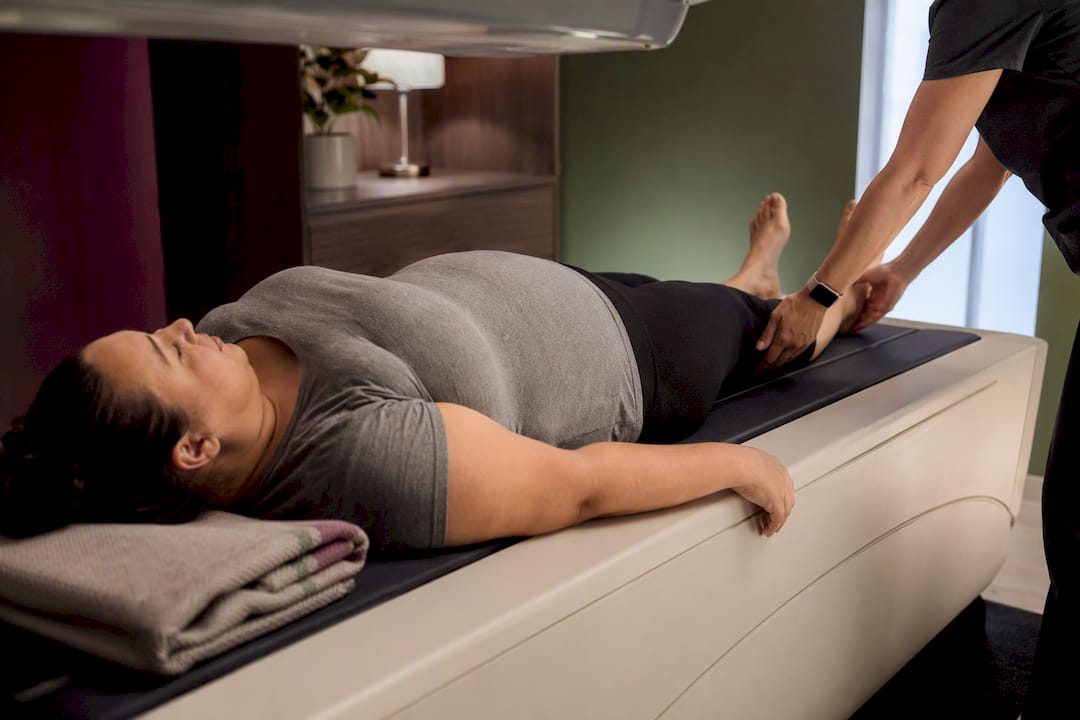
- During the visit: you’ll lie flat on a table while the scanner arm passes over you, capturing fat, lean tissue, and bone data in one pass.
- Cost and insurance: body-composition DEXA is typically an out-of-pocket cost, often bundled with other testing at clinics, while bone-density DEXA for osteoporosis screening is more commonly covered by insurance under separate diagnostic codes.
- Frequency: a baseline scan, a follow-up at three months, another at six months, then every six to twelve months once your trend stabilizes, matches clinical guidance for monitoring rapid weight loss.
Reading Your Results: What to Watch and How to Protect Muscle and Bone
The result you want to see is falling body fat percentage and shrinking VAT, with lean mass holding steady or even climbing. That combination means your weight loss is coming from the right place.
The red flag is the opposite pattern: a sharp drop on the scale paired with a meaningful chunk of that loss showing up as lean mass rather than fat. If more than 25% to 40% of your total weight lost is lean tissue, it’s a signal to change something now, not after your next scan.
Pro Tip: Bring your prior scan report to your next appointment. Comparing side-by-side numbers with a coach or clinician is far more useful than reading a single scan in isolation.
Evidence-backed ways to protect what you’ve built:
- Target 1.2 to 1.6 grams of protein per kilogram of body weight daily
- Lift weights or do resistance training at least twice weekly, ideally three
- Add weight-bearing cardio (walking, hiking, stair climbing) to support bone density
- Discuss calcium and vitamin D status with a physician if BMD is trending down
Detecting this shift early is exactly the value clinicians point to when they recommend DEXA over scale-only tracking.
Where DEXA Falls Short: Accuracy Limits and Real Downsides
DEXA is precise, but it isn’t flawless. Hydration status, differences between scanner brands and software versions, and technician positioning can all introduce small measurement swings between visits, which is why standardized testing conditions matter for accurate trend tracking over time.
Compared to CT or MRI, DEXA is somewhat less precise for certain regional measurements, but it delivers far lower radiation exposure and costs a fraction of the price, which is why it’s the practical choice for repeated body-composition monitoring rather than a one-time diagnostic scan. The exposure is low, roughly comparable to a few hours of natural background radiation, but it’s not zero, and pregnant patients should not be scanned. Access and out-of-pocket cost remain the biggest practical barriers for people who’d otherwise scan every few months.
Why a Scan Without a Plan Is Wasted Money
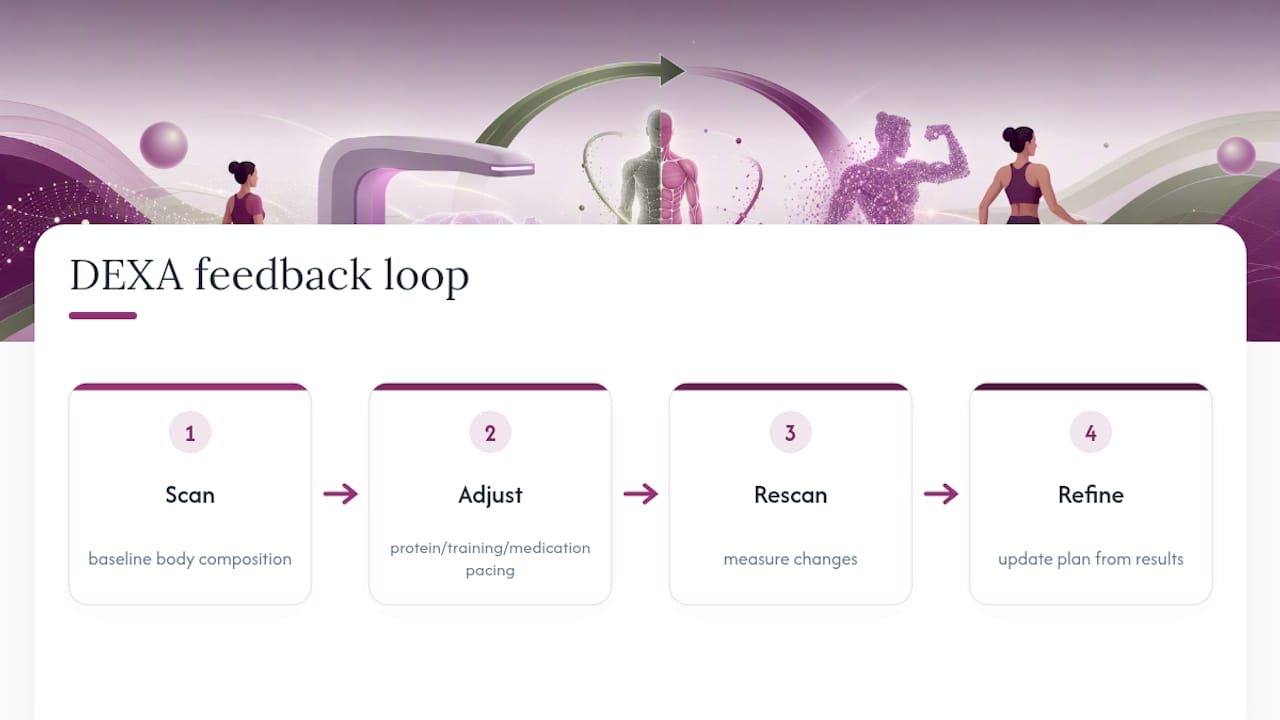
A DEXA report is only as useful as what happens after you read it. Too many people get scanned once, feel validated or alarmed by the numbers, and never scan again, which defeats the entire point of tracking a trend.
The real value shows up in the feedback loop: scan, adjust protein or training or medication pacing, scan again, adjust again. That loop is what separates people who preserve muscle and bone through a weight-loss phase from people who simply get smaller. A provider that pairs the scan with actual guidance, rather than a printout and a handshake, is doing the part that determines whether the data changes anything.
— Fitpal
Book a DEXA Scan and Match It to Your Weight-Loss Plan
Dexaslim’s edge isn’t just running the scan, it’s turning that scan into a plan you can actually follow. A Dexa Scan at $179 gives you the baseline every weight-loss effort should start with, covering total fat, VAT, lean mass, ALM, and bone density in one visit.
If you’re starting or already on a GLP-1 protocol, pair that baseline with Dexaslim’s personalized GLP-1 program support to keep lean-mass loss in check as the pounds come off. Want the fuller picture? Add a Resting Metabolic Rate test at $179 to set accurate calorie and protein targets, or a Longevity Panel at $399 to combine blood biomarkers with your scan data. Athletes chasing performance alongside composition changes can add VO2 Max Performance testing at $189. Full pricing and bundle options are on the Dexaslim pricing page. Book your baseline scan and walk in with a number to track, not just a hope.
Sources
- Body Composition by DXA - PMC - NIH
- DEXA Scan While on a GLP-1: A Beginner’s Guide | Advanced Medical Imaging
- DXA Body Composition Scan | Banner Health
- How DEXA Scans Can Improve Weight Loss | Pine Point Medical
This article is general information, not a substitute for advice from a qualified doctor. Consult a qualified healthcare professional about your own circumstances before acting on anything here.
FAQ
Are DEXA Scans Worth It for Weight Loss?
Yes, for anyone losing weight quickly, on a GLP-1, or over age 50, a DEXA scan is worth it because it separates fat loss from muscle and bone loss in a way the scale cannot. For slow, modest weight loss with no medication involved, it’s useful but less essential.
How Expensive Is a DEXA Scan for Body Fat?
A body-composition DEXA scan through Dexaslim costs $179 for a single scan, typically paid out-of-pocket since insurance more often covers bone-density-specific DEXA rather than full body-composition testing.
What Are the Downsides of a DEXA Scan?
The main downsides are a small but real radiation dose, a contraindication for pregnancy, and measurement variability caused by hydration shifts or different scanner equipment between visits. It’s also generally an out-of-pocket expense, which limits how often some people scan.
How Accurate Is a DEXA Scan for Fat?
DEXA is considered a clinical standard for body fat and visceral fat measurement, with DEXA-derived VAT correlating highly with CT-derived VAT. It’s not flawless. Repeatability depends on standardized conditions, but it remains far more precise than BMI or a bioelectrical impedance scale.