.svg)

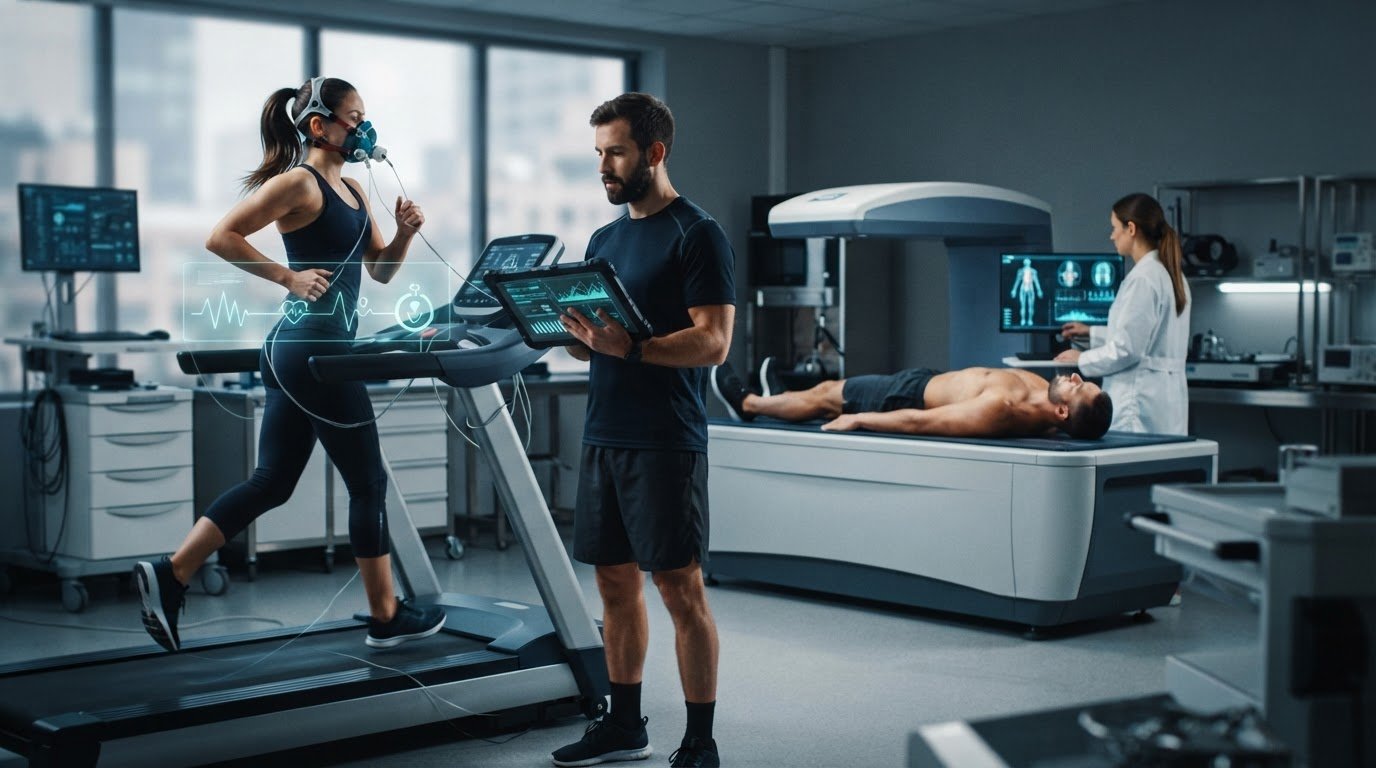
Are you testing to answer a training question, or collecting scores because they’re easy to track? Wearable metrics can be useful, but changing or confusing scores don’t always show what to adjust. Performance testing for athletes works best when each assessment has a clear purpose and gives you a baseline you can interpret.
You’re right to want more than a number. A VO2 Max test assesses aerobic capacity, a DEXA scan measures body composition, and an RMR test estimates resting energy expenditure. Other tests can focus on thresholds or power. None measures every part of performance, and no result guarantees improvement. The key is matching the test to your sport, goal, and training question.
This guide explains what common tests measure, how to read results in context, and how to track meaningful changes without overreacting to a single score. You’ll learn how to choose a useful baseline, account for the limits of wearables and testing conditions, and turn objective data into more informed training decisions.
Key Takeaways
• Start with a specific training question, then choose a test designed to answer it. No single assessment captures every dimension of athletic performance.
• Use VO2 Max testing to assess aerobic capacity, DEXA to examine body composition, and RMR testing to estimate resting energy expenditure.
• Compare results with a consistent baseline, and record training load, recovery, and test conditions before deciding what the data means.
• Use performance testing for athletes to guide training discussions, not as a guarantee of progress or a substitute for coaching.
• VO2 Max, DEXA, and RMR assessments can help establish an individualized baseline. Dexaslim also offers a VO2 Max and DEXA bundle.
Performance Testing for Athletes: Start With the Question You Need Answered
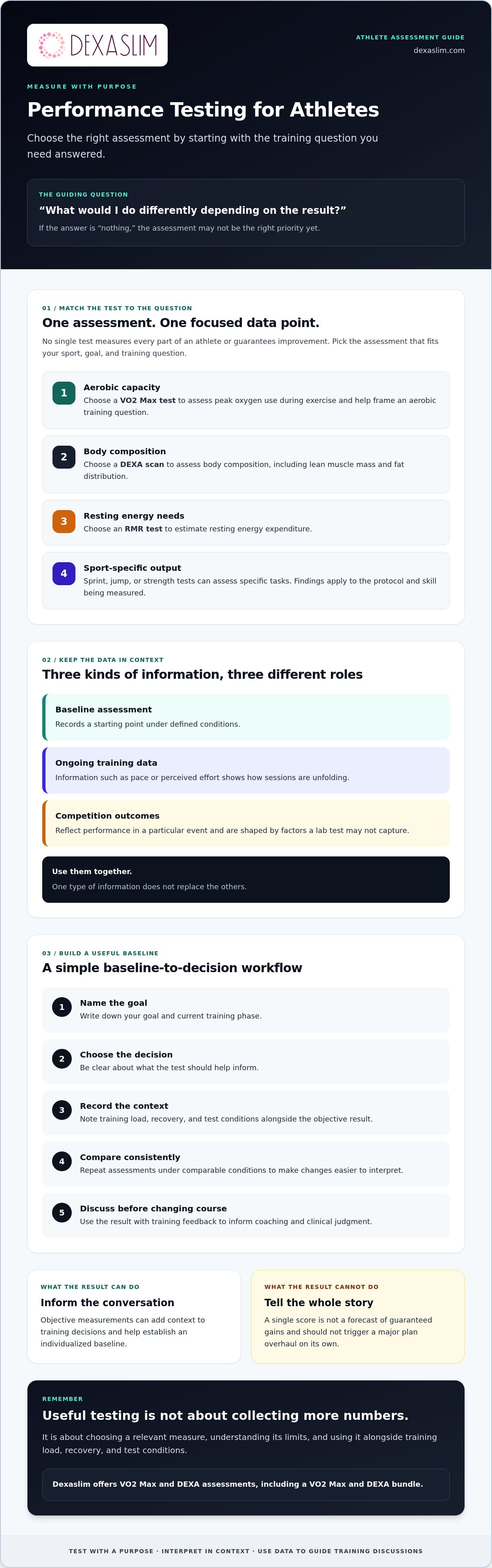
A test result is useful when it helps answer a real training question. Performance testing for athletes means measuring a physical quality to inform a specific decision, such as whether to emphasize aerobic development or monitor body-composition changes. Before booking a test, ask yourself what you would do differently depending on the result. If the answer is “nothing,” the assessment may not be the right priority yet.
Keep three types of information distinct. A baseline assessment records a starting point under defined conditions. Ongoing training data, such as pace or perceived effort, shows how sessions are unfolding. Competition outcomes reflect performance in a particular event and are shaped by factors a lab test may not capture. Each has a different role, so use them together rather than treating one as a replacement for the others.
Before choosing an assessment, watch this practical checklist on preparing to test athletes:
Which performance qualities can testing assess?
Different assessments answer different questions. A VO2 Max test measures peak oxygen use during exercise and relates to aerobic capacity. A DEXA scan assesses body composition, including lean muscle mass and fat distribution. An RMR test estimates resting energy expenditure. Sport-specific output tests can examine tasks such as sprinting, jumping, or strength, but their findings apply to the protocol and skill being measured.
No single test measures the whole athlete. Each provides a focused data point, not a forecast of guaranteed gains. An endurance athlete deciding how to develop aerobic fitness may prioritize an aerobic assessment over body-composition tracking. Submaximal protocols can estimate aerobic fitness without requiring an athlete to reach an absolute limit. See Submaximal performance testing for an overview.
Set a useful baseline before changing training
Write down your goal, current training phase, and the decision the test should inform. For example: “I’m building endurance, and I want a baseline to discuss aerobic training priorities.” That focus helps avoid collecting numbers that won’t inform your next step.
Record objective results separately from subjective signals. Test measurements provide a snapshot; perceived effort, recovery, and training load help explain how you’re responding day to day. Repeating an assessment under comparable conditions can make changes easier to interpret, but one result shouldn’t trigger a major plan overhaul. Use testing to inform qualified coaching and clinical judgment, not to replace either.
How Athlete Performance Tests Measure Aerobic Capacity, Body Composition, and Energy Needs
Each assessment captures a different aspect of an athlete’s physiology. Together, results can add context to training decisions, but none describes performance in full. VO2 Max testing measures peak oxygen use during exercise, DEXA assesses body composition, and RMR testing estimates energy expended at rest.
What VO2 Max testing can reveal about aerobic capacity
During exercise, your body takes in oxygen and uses it to support working muscles. VO2 Max reflects the highest rate of oxygen use reached during a test and is one measure related to cardiorespiratory fitness. It can help frame an aerobic training question, but it doesn’t measure technique, tactics, strength, pacing skill, or performance in every sport.
Interpret the result alongside your training history, current sport demands, and other performance measures. The testing method matters too: submaximal approaches estimate aerobic fitness without requiring an athlete to reach an absolute limit. Learn more in this complete VO2 Max test guide.
What DEXA and RMR add to an athlete's data
DEXA provides a body-composition assessment, including information about lean muscle mass and fat distribution. It doesn’t directly measure speed, endurance, skill, or competitive readiness, and it doesn’t establish an ideal body composition for every athlete. Use the findings to address a specific question, not to judge performance by body composition alone.
RMR estimates the energy your body uses at rest. That figure isn’t your total daily energy need: activity, training, and other factors contribute to energy use across a full day. An RMR result also isn’t a complete nutrition prescription. For additional context, explore this resting metabolic rate test guide.
Use these measures as distinct inputs. An endurance athlete may focus first on aerobic capacity, while an athlete investigating changes in lean mass may have a body-composition question. Dexaslim offers VO2 Max performance testing, DEXA scans, and RMR testing. These assessments can establish individual data points, but they don’t guarantee athletic improvement or replace sport-specific coaching and clinical judgment. Review Dexaslim’s testing options to consider which assessment aligns with your question.
Which Performance Test Should Athletes Choose? Match the Method to the Goal
Choose an assessment that can inform your next decision. Your sport, training phase, and current question matter more than how many metrics you can collect. This is the practical core of performance testing for athletes: test with a purpose, then interpret the result in context.
| Assessment | Primary question | Useful context | Key limitation |
|---|---|---|---|
| VO2 Max | What does my aerobic capacity look like? | Endurance training discussions and establishing an aerobic baseline. | Doesn’t capture every factor that shapes sport performance. |
| DEXA | What is my body composition? | Tracking lean mass and fat distribution when relevant to a defined goal. | Doesn’t directly measure athletic ability or identify an ideal body composition. |
| RMR | How much energy does my body use at rest? | Adding a resting-energy estimate to individualized nutrition planning. | Doesn’t measure total daily energy needs or athletic performance. |
| Sport-specific output test | How do I perform a defined movement or task? | Assessing an output relevant to the demands of a particular sport. | Results depend on the task and testing method; they may not transfer to other qualities. |
Choose testing based on the athlete's immediate decision
For endurance conditioning, consider whether aerobic-capacity data will help guide a conversation about training priorities. For body-composition tracking, first define what you need to monitor. Lower body fat isn’t automatically better performance. If energy planning is the question, an RMR measurement may add context for individualized nutrition guidance, but it isn’t a full daily calorie target. Match the test to the decision, not to a general urge to measure more.
When combining tests adds useful context
One assessment may not address two separate questions. VO2 Max testing provides an aerobic-capacity measure, while DEXA assesses body composition. Those data points may add useful context when both questions matter to your training plan. Dexaslim offers a VO2 Max + DEXA (BCA) Bundle, but a combined option isn’t necessary for every athlete. Confirm the assessment details and choose tests based on your goals.
Use your current training phase to refine that choice. An athlete building endurance may prioritize aerobic data; an athlete monitoring body-composition changes may select DEXA. Add RMR only when resting energy expenditure is relevant to the question. If objective assessment fits your needs, review Dexaslim's testing options as one way to gather data.
Using Athlete Test Results: Baseline-to-Training Workflow
A test result becomes useful when it informs a deliberate next step. Use this workflow to move from measurement to a productive training discussion, without treating one score as a complete verdict on progress.
Define the question.
State what you want to understand and what decision the result could inform. Keep the question focused, such as whether a baseline can help shape a conversation about aerobic training.
Standardize conditions.
Follow the testing provider’s preparation instructions. For repeat assessments, keep conditions as consistent as practical and note any differences that could affect comparison.
Complete the test.
Share relevant health and training information with the provider, and follow their directions throughout the assessment.
Interpret the result.
Compare it with your own baseline and the test’s purpose. Avoid relying on an unsupported universal target or treating a single number as a full measure of athletic ability.
Adjust with purpose.
Identify one practical training question to discuss with a qualified coach or clinician. Use the result as evidence for that conversation, not as an automatic instruction to overhaul your plan.
Review and retest.
Track what changes over time, then decide whether another assessment would answer a useful question. Retesting timing depends on the metric, training plan, and assessor guidance.
Prepare for a test and make results comparable
Preparation affects how confidently you can compare results. Follow the provider’s instructions rather than assuming a particular approach to food, exercise, medication, or hydration. Disclose relevant health or training information, and record the test date and conditions.
For each assessment, note recent training load, recovery, and any differences from the previous test. These details don’t prove what caused a result to change, but they can help you interpret it. A shift may reflect several factors, so don’t automatically credit or blame one workout, recovery strategy, or training adjustment.
Turn measurements into a focused training conversation
Bring one clear question to your coach or clinician. For example: “Does this result, alongside my recent training and recovery, suggest we should review my current priorities?” The answer should account for your sport, training phase, and other relevant measures. Testing supports qualified coaching and clinical judgment; it doesn’t replace either.
If both body composition and aerobic capacity are relevant to your assessment, Dexaslim offers a DEXA and VO2 Max testing bundle. Consider each measure only when it serves a defined question. To explore available options for objective athlete testing, review Dexaslim’s testing information.
Where Dexaslim Performance Testing Fits Into an Athlete's Assessment Plan
Objective assessment can help establish an individualized baseline when you have a clear question to answer. Dexaslim offers VO2 Max performance testing, DEXA body-composition scans, Resting Metabolic Rate (RMR) testing, and a VO2 Max + DEXA (BCA) Bundle. Each option measures a different aspect of physiology. None, by itself, provides a complete picture of athletic readiness or performance.
Think of performance testing for athletes as one part of a wider plan. These assessments provide data, but they aren’t a substitute for sport-specific coaching, primary care, or clinical judgment. A test result also can’t guarantee a training outcome. Its value depends on whether it answers a relevant question and how you use it alongside your training context.
What to ask before scheduling performance testing
Before choosing an assessment, get clear on what you’ll measure and how the result could support your goal. Ask the testing provider:
• What does this assessment measure, and how is it conducted?
• What information will the report include, and how will the results be explained?
• What preparation instructions should I follow?
• Does this assessment fit my sport, training phase, and specific question?
• How can I share the findings with my existing coach or a qualified healthcare professional?
These questions help set expectations without assuming a particular protocol or report format. Follow the provider’s preparation guidance, and share relevant health or training information so the assessment can be considered in context.
Choose a first assessment that answers one clear question
If your main question concerns aerobic capacity, consider VO2 Max testing. If you’re tracking body composition, consider whether DEXA data serves a defined purpose. If you need information about resting energy expenditure, an RMR test may add context, but it doesn’t represent total daily energy needs. Start with the measure that addresses your immediate question; add another only if it answers a separate, useful one.
Dexaslim’s VO2 Max and DEXA option may be relevant when you want to assess both aerobic capacity and body composition. Confirm the current assessment details and decide whether both measures fit your goals. Explore Dexaslim performance testing options to identify an assessment that aligns with your next training question.
Make Your Next Training Decision More Informed
Strong performance testing for athletes starts with a clear question, not a collection of disconnected scores. Match the assessment to your goal: VO2 Max testing for aerobic capacity, DEXA for body composition, or RMR testing for resting energy expenditure. Then compare results with your own baseline and relevant training context before changing your plan.
Objective data can sharpen a training conversation, but it doesn’t guarantee progress or replace qualified coaching and clinical judgment. Use it as one input alongside recovery, training demands, and how you feel. Reassess when a new result can help answer a meaningful question.
Dexaslim offers VO2 Max performance testing, DEXA and RMR testing, and a VO2 Max plus DEXA bundle. Explore Dexaslim's performance testing options and choose an assessment that aligns with your goals.
Frequently Asked Questions
What is performance testing for athletes?
Performance testing for athletes is structured measurement used to answer a defined sport or training question. An assessment might establish an aerobic-capacity baseline, measure body composition, or estimate resting energy expenditure. The result gives you an objective reference point to compare with later measurements and discuss alongside training, recovery, and competition outcomes. It can inform decisions, but it doesn’t predict every aspect of performance or guarantee that a particular training change will produce results.
Which performance tests are most useful for athletes?
The most useful test depends on your sport, goal, training phase, and the decision you need to make. An athlete investigating aerobic capacity might consider VO2 Max testing. DEXA can help answer a body-composition question, while RMR testing estimates energy use at rest. A sport-specific test may assess a relevant movement or output. Choose the assessment that addresses your question, and account for what it cannot measure.
Is VO2 Max testing worth it for athletes?
VO2 Max testing may be useful if you want an objective measure related to aerobic capacity and a baseline to inform an endurance-training discussion. It measures peak oxygen use during exercise, not total athletic ability. Technique, tactics, strength, sport-specific skill, and other factors also influence performance. Consider the result alongside training history and sport demands, and confirm that the testing approach fits your needs before relying on the score.
Can a DEXA scan measure athletic performance?
No. A DEXA scan assesses body composition, including lean muscle mass and fat distribution, but it doesn’t directly measure speed, endurance, strength, skill, or competition outcomes. The findings can provide context if body composition is relevant to a defined training question. They don’t establish an ideal body composition for every athlete. Interpret the result alongside your sport, training goals, and other performance measures rather than treating it as a score of athletic ability.
How often should athletes repeat performance testing?
There isn’t one retesting schedule that suits every athlete or assessment. Timing depends on the metric, training phase, purpose of the test, and guidance from the testing provider. Repeat testing when a new result could answer a meaningful question or help compare progress with a baseline. Keep test conditions as consistent as practical, and record differences in training load, recovery, or preparation. Avoid retesting so often that normal variation drives unnecessary changes.
What should athletes do before a performance test?
Follow the testing provider’s preparation instructions, since requirements can vary by assessment and protocol. Don’t assume you need to fast, avoid exercise, change medication, or adjust hydration unless the provider directs you to do so. Share relevant health and training information, and ask what the test measures, how it’s conducted, and what the report includes. For future comparisons, record the conditions surrounding the test so you can identify differences later.
Can performance testing help personalize training?
Yes. A relevant test result can add objective information to a conversation about training priorities, especially when you compare it with your own baseline and consider sport demands, training load, and recovery. Bring one focused question to a qualified coach or clinician, such as whether the findings support reviewing an existing plan. Testing can inform that discussion, but it doesn’t create a complete training program, replace professional judgment, or guarantee a particular outcome.